
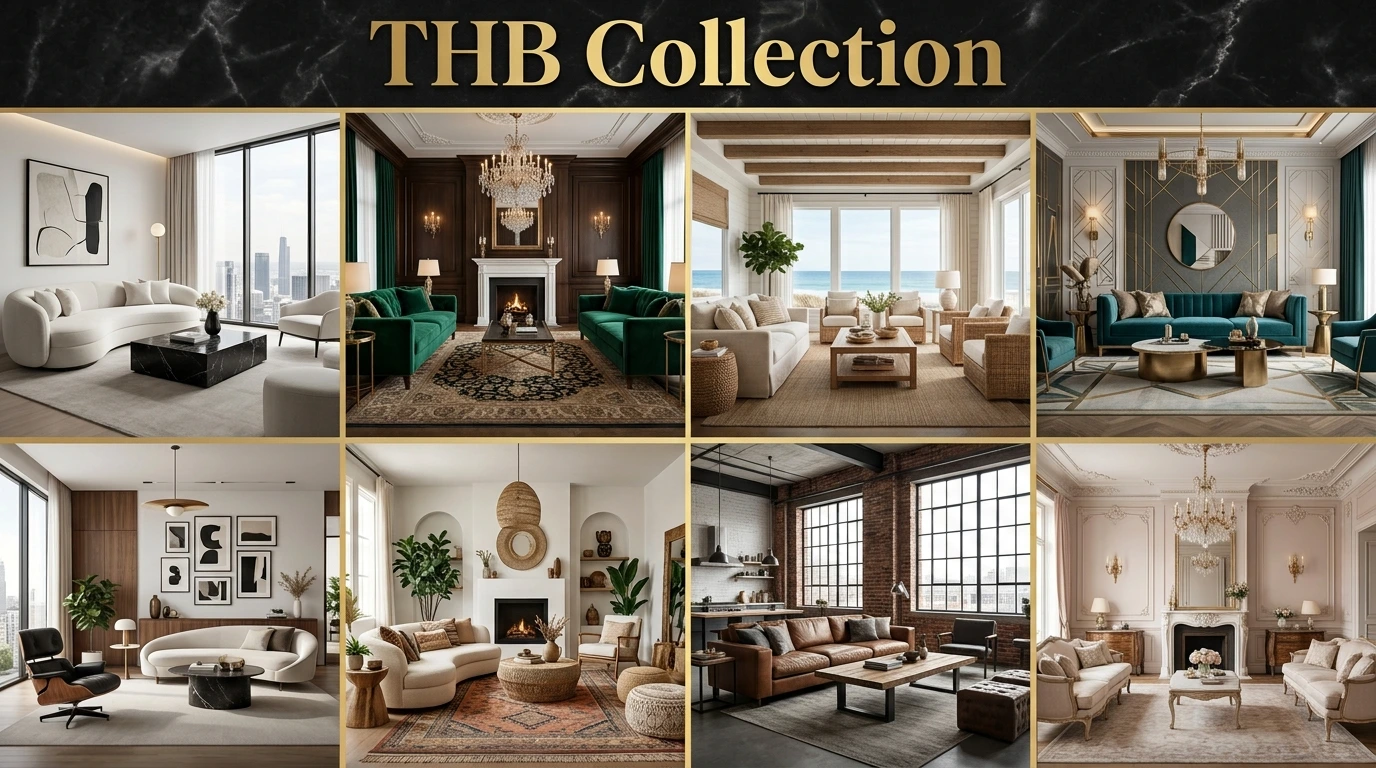
The modern living room is no longer a formal parlor reserved strictly for receiving guests. It operates as the undisputed workhorse of the home – a dynamic space that must seamlessly transition between a tranquil sanctuary for relaxing, an engaging hub for entertaining, and, increasingly, a focused environment for remote work. Designing a room that handles all these functions without feeling like a chaotic compromise requires intentionality. The architecture of the space, the layout of the furniture, and the selection of materials must all coordinate to serve your daily habits while maintaining a distinct aesthetic viewpoint. Whether you require the visual silence of minimalism to decompress after a long day or the energetic embrace of maximalism to fuel your creativity, establishing a clear design language is the first step toward building a purposeful, multi-functional living area.
Here is a breakdown of four distinct interior design styles, detailing how to execute them with precision and how they function in a multi-use environment.
Modern Minimalist
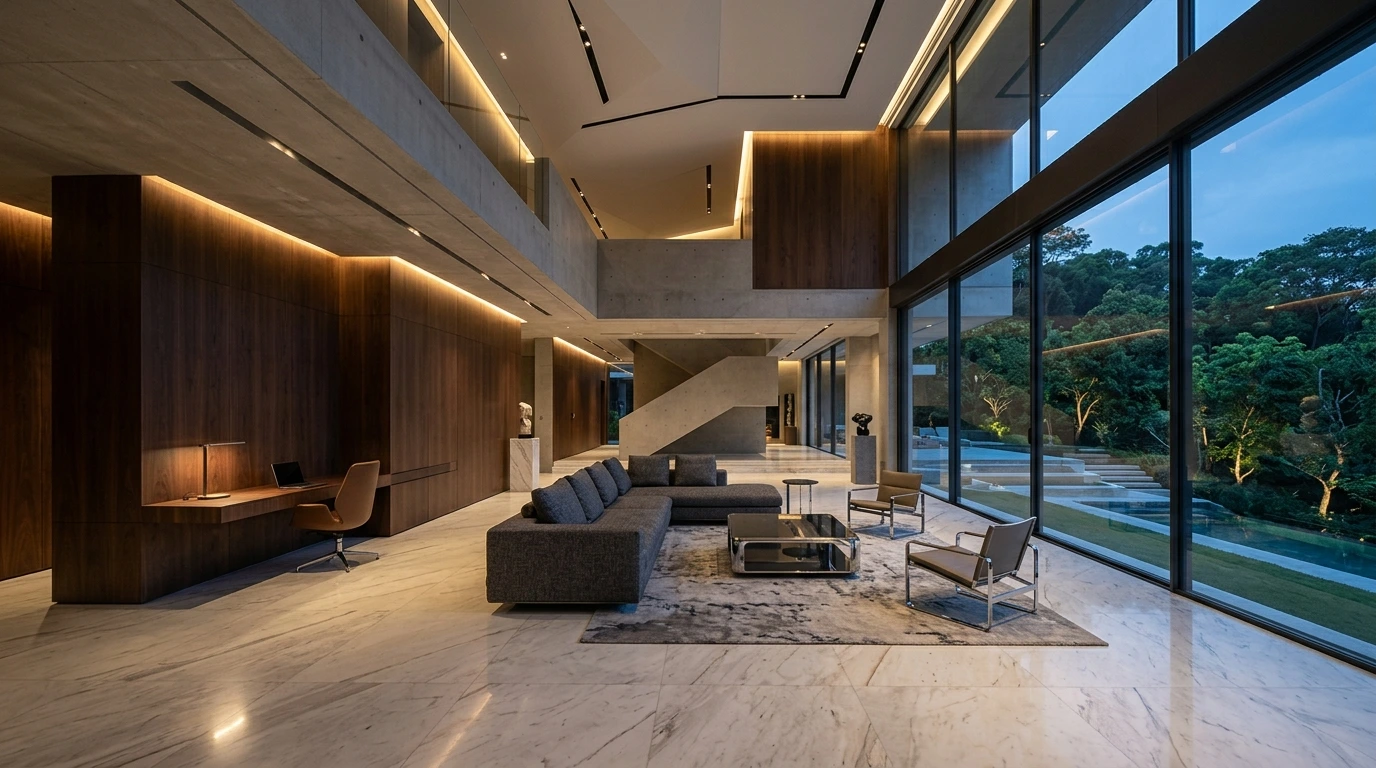
Modern minimalism prioritizes the elimination of the unnecessary, focusing strictly on line, form, and scale. This style relies on negative space as a primary design element, allowing the architecture and the selected furniture to breathe. In a multi-functional room, this aesthetic reduces visual friction, making it exceptionally easy to transition from a daytime workspace to a sophisticated evening entertaining zone.
Who this style suits: The overwhelmed professional seeking visual silence, or individuals who prefer a highly disciplined, structured environment where every object serves a distinct purpose.
Specific Ideas:
- Concealed Monolithic Storage: To maintain a rigorous, uncluttered aesthetic, replace open shelving with flat-front, push-to-open cabinetry that spans floor to ceiling. Painting these cabinets the exact same shade as the surrounding walls camouflages them entirely. This provides immense volume for hiding away laptops, filing systems, television cables, and children’s toys at a moment’s notice, instantly restoring the room’s calm baseline.
- Low-Profile, Architectural Seating: Select seating with rigid exterior frames and low backs to keep sightlines clear across the room. A sofa with a continuous, solid plinth base rather than individual legs eliminates the distracting shadow lines beneath the furniture, grounding the piece heavily to the floor and contributing to a sense of unshakeable permanence.
- Practical Styling Tip: A room devoid of clutter can easily tip into feeling sterile or clinical. To prevent this, vary your textures aggressively within a monochromatic palette. Pair a smooth, honed limestone coffee table with a deeply textured bouclé sofa and a matte, hand-troweled plaster wall finish. The friction between these surfaces provides the necessary warmth that color and clutter otherwise would.
Warm Traditional
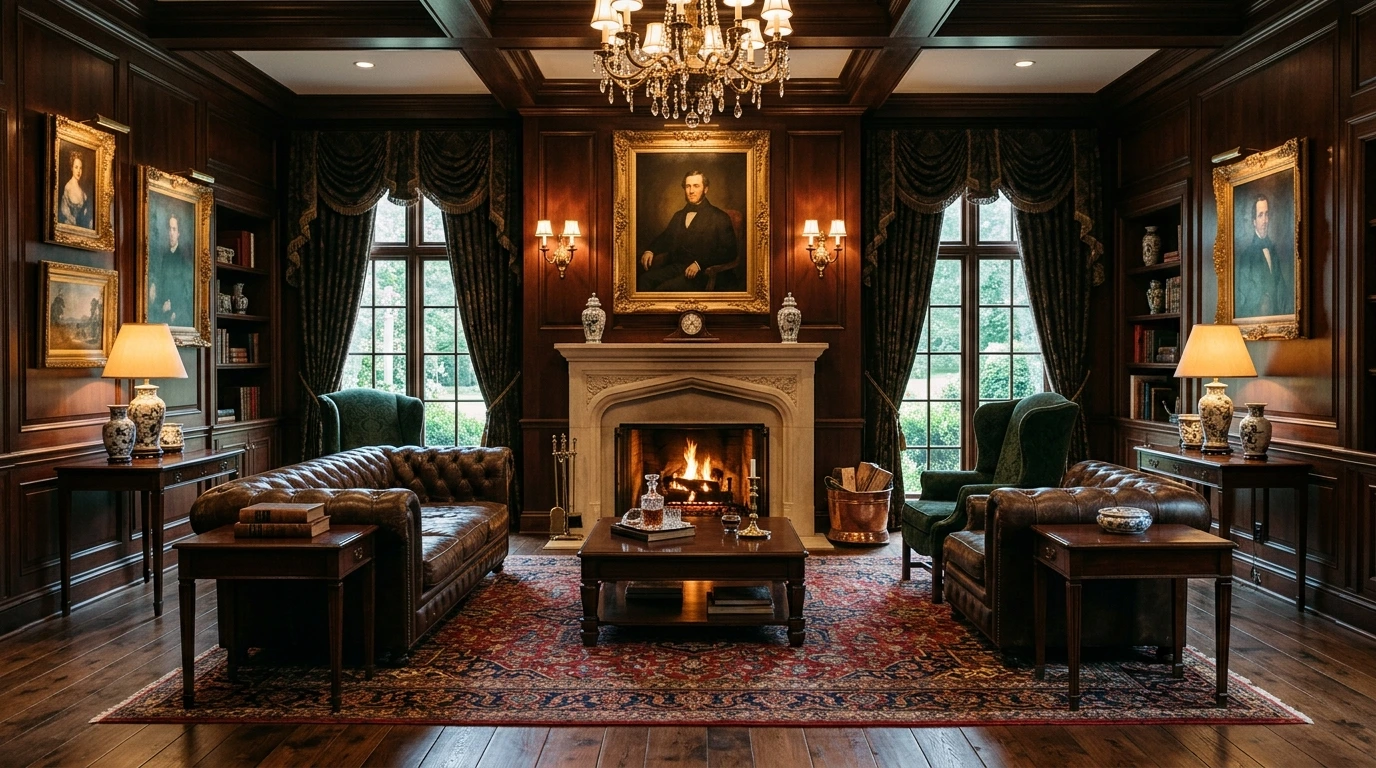
Warm Traditional design embraces history, symmetry, and comfort. It rejects the fleeting nature of trends in favor of enduring silhouettes and heavy, substantial materials. This style creates an atmosphere of established permanence. For those who use their living room primarily for relaxing and hosting long, conversational evenings, the structured comfort of traditional design provides an unmatched sense of grounding.
Who this style suits: Homebodies, frequent hosts, and those who value a sense of heritage, craftsmanship, and enveloping comfort over avant-garde experimentation.
Specific Ideas:
- Symmetrical Layouts Anchored by a Focal Point: Traditional design thrives on order. Arrange the seating plan to mirror itself across a central axis, typically anchored by a structural element like a fireplace mantel or a large-scale, framed landscape painting. Placing two identical sofas facing each other, or a sofa flanked by a matching pair of wingback chairs, facilitates direct eye contact and encourages sustained conversation during gatherings.
- Layered, Task-Specific Lighting: Abandon harsh overhead recessed lights in favor of multiple, localized light sources at eye level. Utilize brass wall sconces flanking the primary focal point, paired with heavy ceramic table lamps topped with pleated fabric shades. This approach casts a warm, diffused glow that flatters guests and creates distinct, intimate zones for reading or working.
- Heavy, Tactile Textiles: Incorporate fabrics that carry physical weight. Install floor-to-ceiling pinch-pleat drapery in rich velvet or heavy linen to absorb sound and insulate the room. Layer the floor with a dense, hand-knotted wool rug featuring intricate, historic motifs to anchor the seating arrangement.
- Practical Styling Tip: To keep a traditional room from feeling like a stagnant museum exhibit, integrate hardware with a living finish. Unlacquered brass or oil-rubbed bronze knobs, pulls, and light fixtures will oxidize, patina, and change color where they are touched most frequently, adding an authentic, evolving layer of history to the space.
Eclectic Maximalist
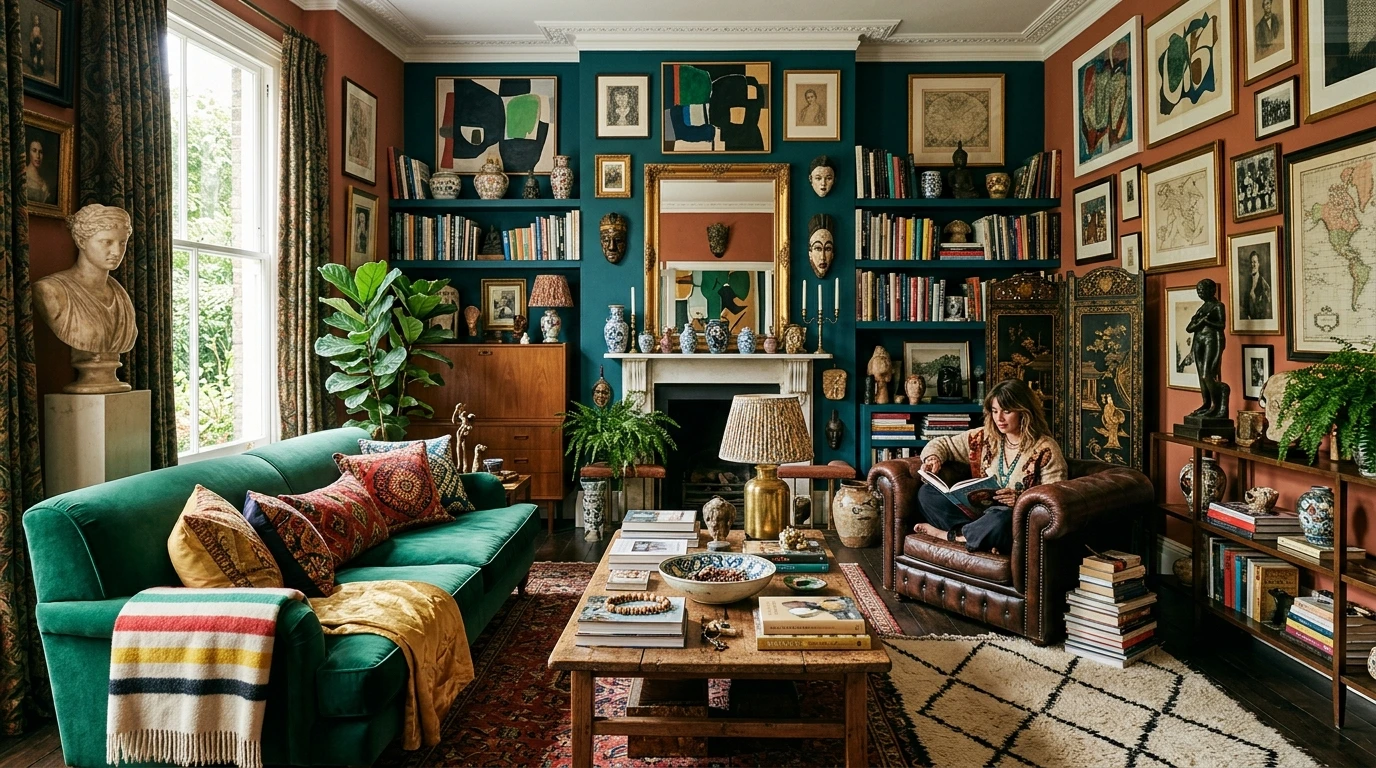
Eclectic Maximalism is a highly curated collision of eras, textures, and colors. It is not an excuse for hoarding, but rather a deliberate layering of contrasting elements to create a highly stimulating, narrative-driven environment. This style transforms the living room into a gallery of personal history, providing an endlessly engaging backdrop for entertaining and a deeply inspiring atmosphere for creative work.
Who this style suits: Collectors, creatives, avid travelers, and highly expressive individuals who view their living space as a direct extension of their personality and experiences.
Specific Ideas:
- High-Contrast Color Drenching: Instead of relying on a safe, neutral backdrop, envelop the room entirely in a saturated hue. Paint the walls, the baseboards, the crown molding, and the ceiling in the same deep tone – such as an oxidized copper green or a rich aubergine. This technique blurs the hard architectural boundaries of the room, making the space feel expansive and providing a dramatic, high-contrast canvas that makes eclectic artwork and furniture pop sharply.
- Chronological Friction in Furniture: Intentionally pair pieces from entirely different centuries and design movements. Position a pair of hyper-modern, transparent lucite side chairs opposite a deeply tufted, Victorian-era Chesterfield sofa. The friction generated by placing industrial, futuristic materials next to traditional, handcrafted upholstery creates immediate visual tension and acts as a built-in conversation starter for guests.
- Floor-to-Ceiling Gallery Installations: Treat vertical space as premium real estate. Hang artwork in a dense, salon-style arrangement that spans from just above the baseboards entirely to the ceiling. Mix framed oil paintings, modern typography, sculptural wall hangings, and ornate mirrors, ensuring the frames themselves vary between gilded wood, sleek metal, and raw timber.
- Practical Styling Tip: The line between masterful maximalism and overwhelming chaos is extremely thin. To maintain control, establish a unifying color thread. Identify one specific, highly saturated accent color (for example, a sharp mustard yellow) and repeat it a minimum of three times across the room – perhaps in a throw pillow, a lamp base, and a stripe in the rug. This deliberate repetition provides a subconscious roadmap for the eye to follow through the dense layering.
Scandinavian
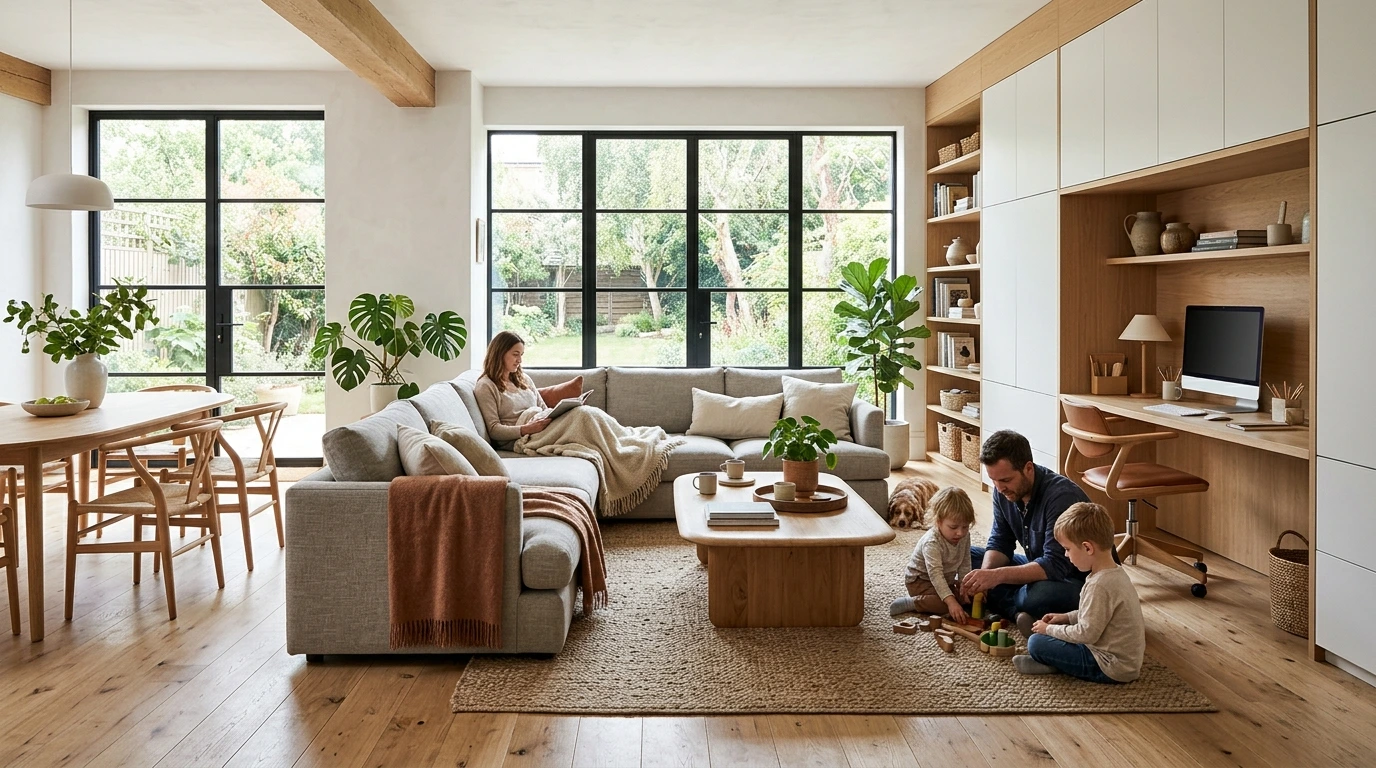
Scandinavian interior design is defined by its rigorous commitment to functionality, organic materials, and the maximization of natural light. It balances the starkness of modernism with the warmth of nature, resulting in a highly livable, forgiving aesthetic. For homes that demand the living room to serve as a high-traffic family zone, a home office, and a relaxation space, the durable, light-filled nature of this style is incredibly practical.
Who this style suits: Young families, apartment dwellers dealing with limited square footage, and anyone who gravitates toward natural materials, gentle curves, and an airy, unpretentious atmosphere.
Specific Ideas:
- Blonde Wood Application: Utilize pale, unstained woods like white oak, ash, or birch as the foundational material. Apply this not just to the flooring, but vertically as well. Installing vertical, slatted wood paneling on a single accent wall provides acoustic dampening – crucial for a room hosting both television viewing and remote work – while injecting organic texture without the heaviness of dark stains.
- Curvilinear Silhouettes: Reject the sharp, aggressive angles of strict modernism. Select sofas with curved backs, rounded track arms, and oversized, cylindrical cushions. Opt for circular or kidney-shaped coffee tables. These softer silhouettes facilitate smoother traffic flow in smaller footprint rooms and reduce the risk of injury in households with energetic toddlers.
- High-Performance, Cozy Textures: The concept of hygge relies on physical comfort. Layer the seating with textiles that invite touch but withstand heavy daily use. Drape a genuine sheepskin over a rigid wooden reading chair to soften the seat, and utilize heavy-weight, stonewashed linen for sofa slipcovers. Linen grows softer with every wash and its natural, slightly wrinkled state means you never have to waste time steaming it to achieve a pristine look.
- Practical Styling Tip: In regions with long winters or in apartments with limited windows, maximizing light is paramount. Hang semi-transparent, sheer linen curtains close to the ceiling to diffuse incoming harsh sunlight, and strategically mount a large, frameless mirror on the wall directly opposite your largest window to bounce the available daylight back into the darkest corners of the room.
Navigating Lifestyle vs. Style
Choosing between these four styles requires a frank assessment of your daily realities – specifically regarding pets, children, and how frequently you entertain. If your household includes young children and shedding pets, the Scandinavian approach is highly forgiving; its emphasis on slipcovers, durable woods, and rounded edges accommodates high-energy living without showing immediate wear. Alternatively, Warm Traditional design excels in busy homes because heavily patterned rugs and darker, robust textiles effectively mask minor stains and pet hair. If you entertain large, lively groups frequently, Eclectic Maximalism provides the most engaging environment, naturally encouraging guests to explore the room and start conversations based on your varied collections. Conversely, if your living room doubles as your primary, 9-to-5 workspace, Modern Minimalism is often the most productive choice; its concealed storage and lack of visual clutter allow you to focus deeply during the day and physically pack the “office” away into a monolithic cabinet when it is time to transition into evening relaxation.
Frequently Asked Questions
How do I mix two distinct interior design styles without the room looking chaotic?
The most reliable method for merging two distinct styles is the 80/20 rule. Select one style to serve as the dominant architectural baseline (accounting for 80% of the room, including wall treatments, rugs, and major seating). Use the second style strictly as a disruptive accent (accounting for the remaining 20%, applied through lighting fixtures, side chairs, and artwork). For example, a deeply Warm Traditional room with classic molding and a rolled-arm sofa becomes instantly updated when illuminated by a stark, geometric, Modern Minimalist chandelier. Splitting styles 50/50 almost always results in a room that looks confused and unresolved.
What is the most durable sofa fabric for households with pets and children?
Tightly woven synthetic blends and performance velvets are the most resilient options. Performance velvet is particularly effective for households with cats; because velvet lacks the looped threads found in tweed or bouclé, cats are far less likely to use it as a scratching surface. Additionally, tightly woven fabrics prevent pet hair from embedding deeply into the fibers, allowing it to be easily vacuumed or wiped away with a damp cloth. Always look for fabrics treated with a stain-repellent finish at the manufacturing level, rather than sprays applied aftermarket.
How can I define separate zones in an open-concept living room?
In an open-concept space lacking physical walls, you must use furniture and materials to imply boundaries. Area rugs are the most effective tool; placing the living room seating entirely on a large rug instantly creates a “room within a room,” distinguishing it from the adjacent dining or kitchen areas. You can also utilize a low-profile console table placed directly against the back of a floating sofa to act as a physical partition. Finally, lowering a pendant light directly over a seating arrangement visually anchors that specific zone, creating an invisible ceiling that makes the vast open space feel intimate and contained.