
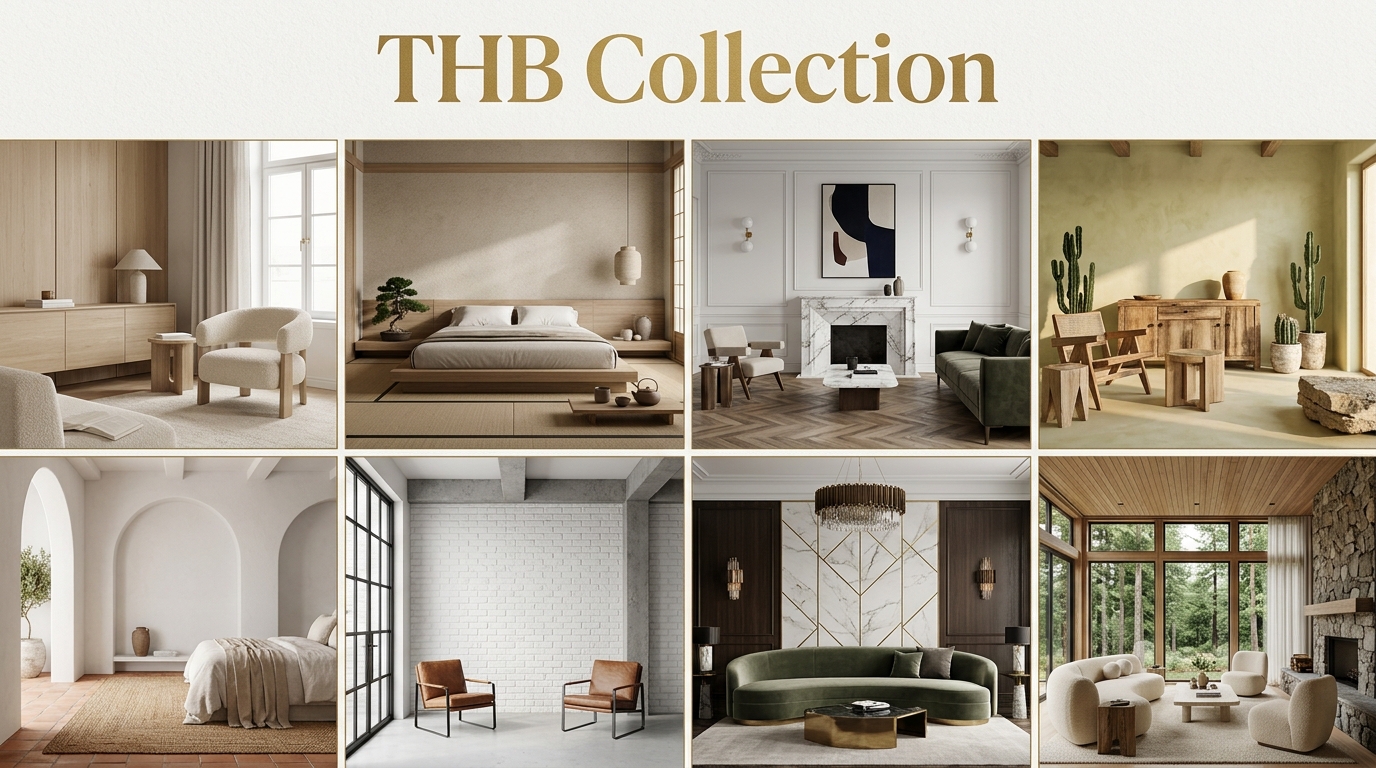
We have all walked into a room that tried entirely too hard to be minimalist. You know the exact kind of space I am talking about. The stark white walls bounce every sound back at you with a hollow echo. The singular, severe leather chair sits perfectly angled in the corner, daring you to actually sit in it. The surfaces are so utterly devoid of life that setting down a coffee mug feels like an act of vandalism.
When people say they want a minimalist home, they rarely mean they want to live in an art gallery waiting room. What they are actually craving is the mental clarity that comes from removing excess. They want the visual peace of an uncluttered environment, but they still want to feel held, comfortable, and at home.
This sweet spot is what we call “cozy minimalism.” It is the delicate art of stripping away the unnecessary while fiercely protecting the elements that bring warmth. Achieving this balance doesn’t require buying more things; rather, it requires a deeply intentional approach to the few things you choose to keep.
If you are trying to find that perfect intersection between clean and comfortable, here are ten styling principles that actually work.
1. Layer Texture, Not Color
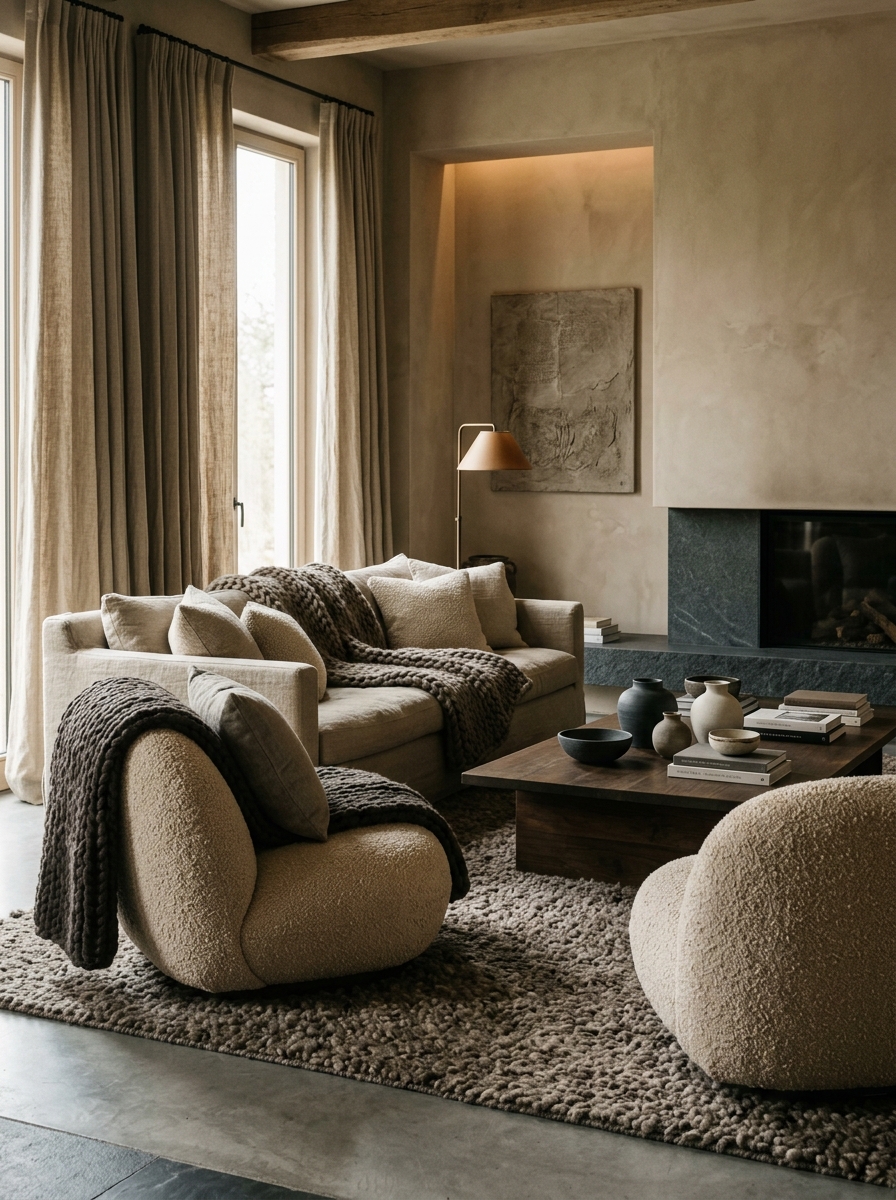
In a maximalist room, visual interest is usually created by splashing contrasting colors across the space. In a minimal room, you have to rely heavily on texture to do that exact same heavy lifting. Think chunky wool throws, nubby bouclé chairs, heavy linen drapery, and honed matte ceramics.
Why it works psychologically: Human beings are highly tactile creatures. When our eyes scan a room and register a variety of soft, woven, or deep textures, our brain translates that visual input into a feeling of physical warmth and safety. A monochromatic room full of flat, glossy surfaces reads as sterile and cold. That exact same color palette rendered in a mix of linen, velvet, and raw wood feels instantly inviting.
2. Embrace Imperfect, Natural Materials
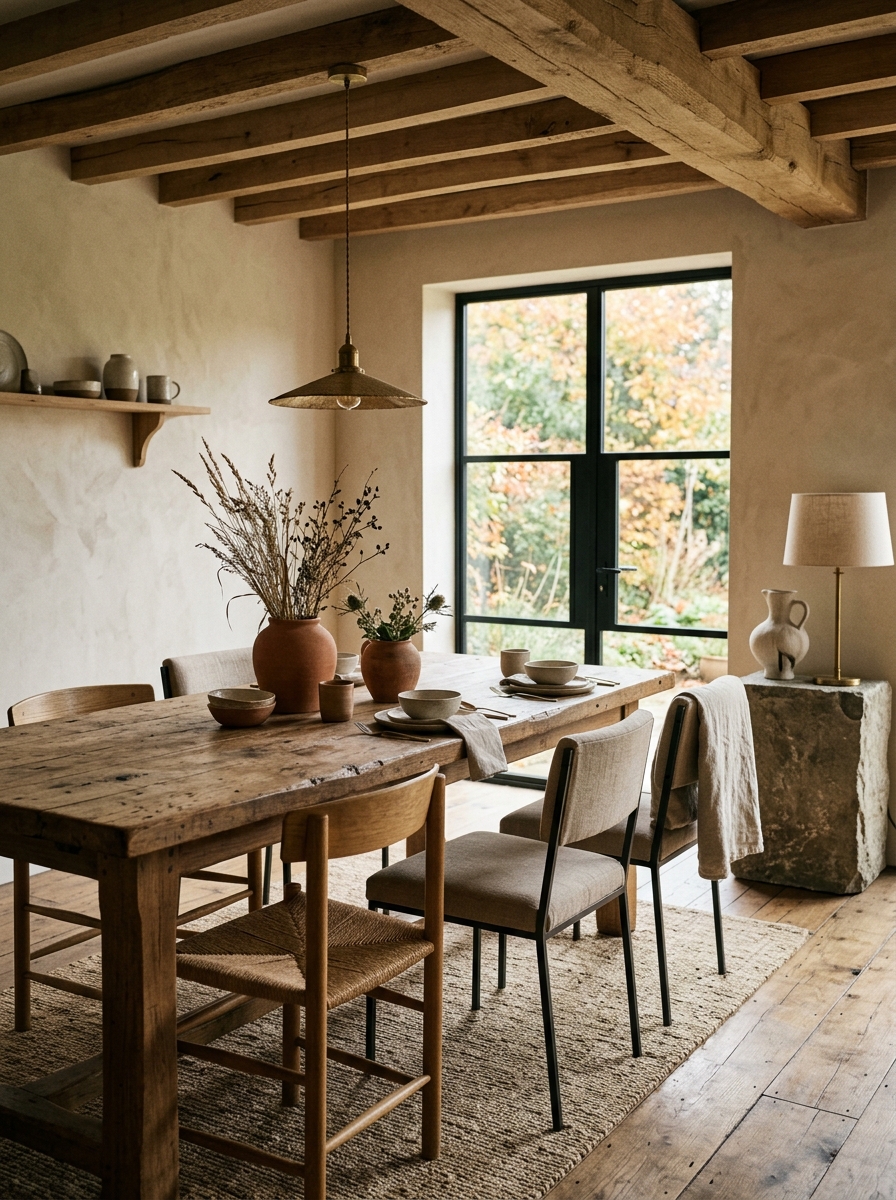
There is a time and place for high-gloss lacquered finishes and polished chrome, but cozy minimalism isn’t it. Instead, bring in materials that have a bit of a past. Opt for a reclaimed wood dining table, unglazed terracotta pots, brushed brass that will patina over time, or a raw stone plinth.
Why it works practically: Nature is inherently imperfect, and incorporating those natural irregularities breaks up the rigid, harsh geometry of modern architecture. This touches on the Japanese concept of wabi-sabi – finding beauty in imperfection. When every surface in a room is factory-perfect, the space feels anxious, as if it cannot withstand the friction of daily life. Natural materials give the room permission to actually be lived in.
3. Create Visual Gravity with Low, Solid Furniture
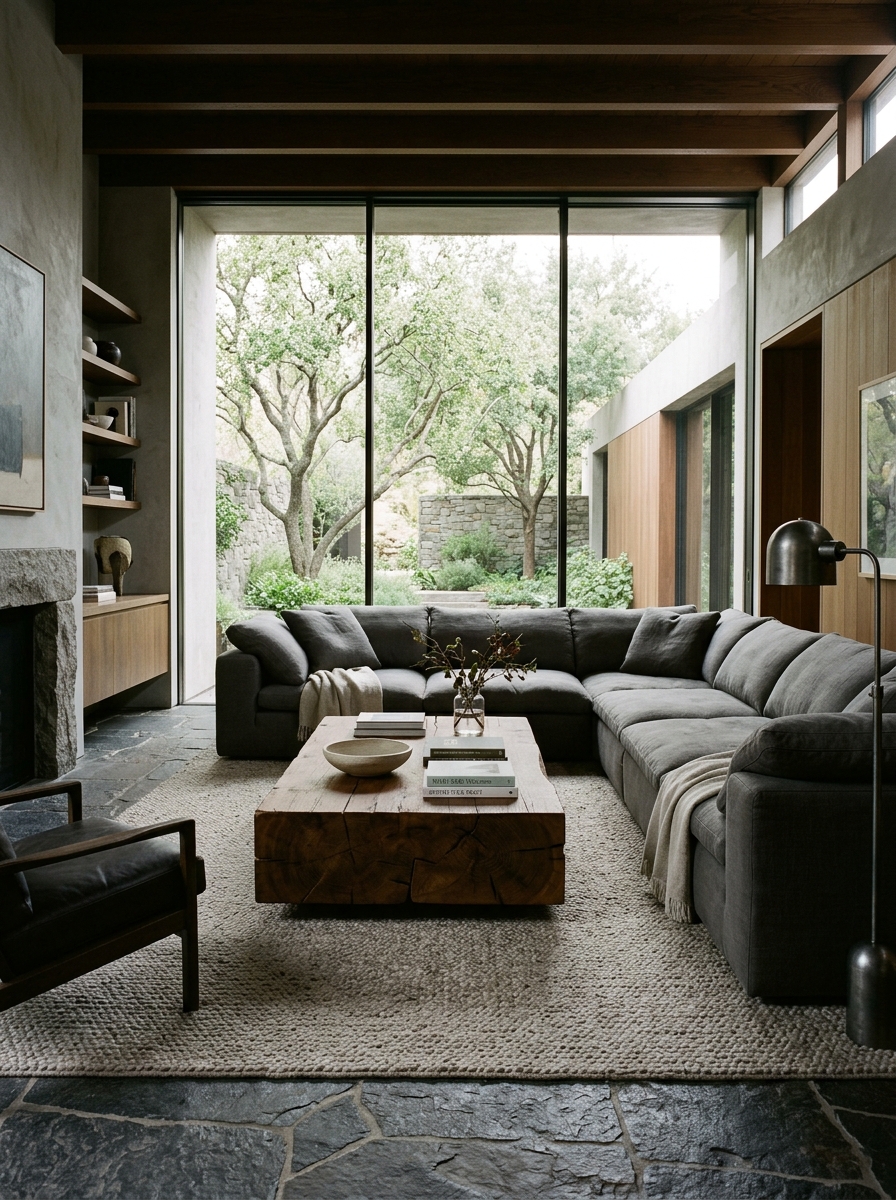
A common pitfall in modern design is selecting too many pieces of furniture with thin, spindly legs. A sofa on high metal legs, a delicate wire coffee table, and a thin-framed media console will make the entire room feel like it is floating away. You need to anchor the space.
Why it works psychologically: Grounding a room with substantial, heavy pieces – like a solid block wood coffee table or a low-profile, floor-skimming sofa – creates what stylists call “visual gravity.” This subtle physical weight translates to emotional weight. It tells your brain that the room is settled, permanent, and safe, which subconsciously encourages you to sit down and stay awhile.
4. Engineer Your Lighting Temperature
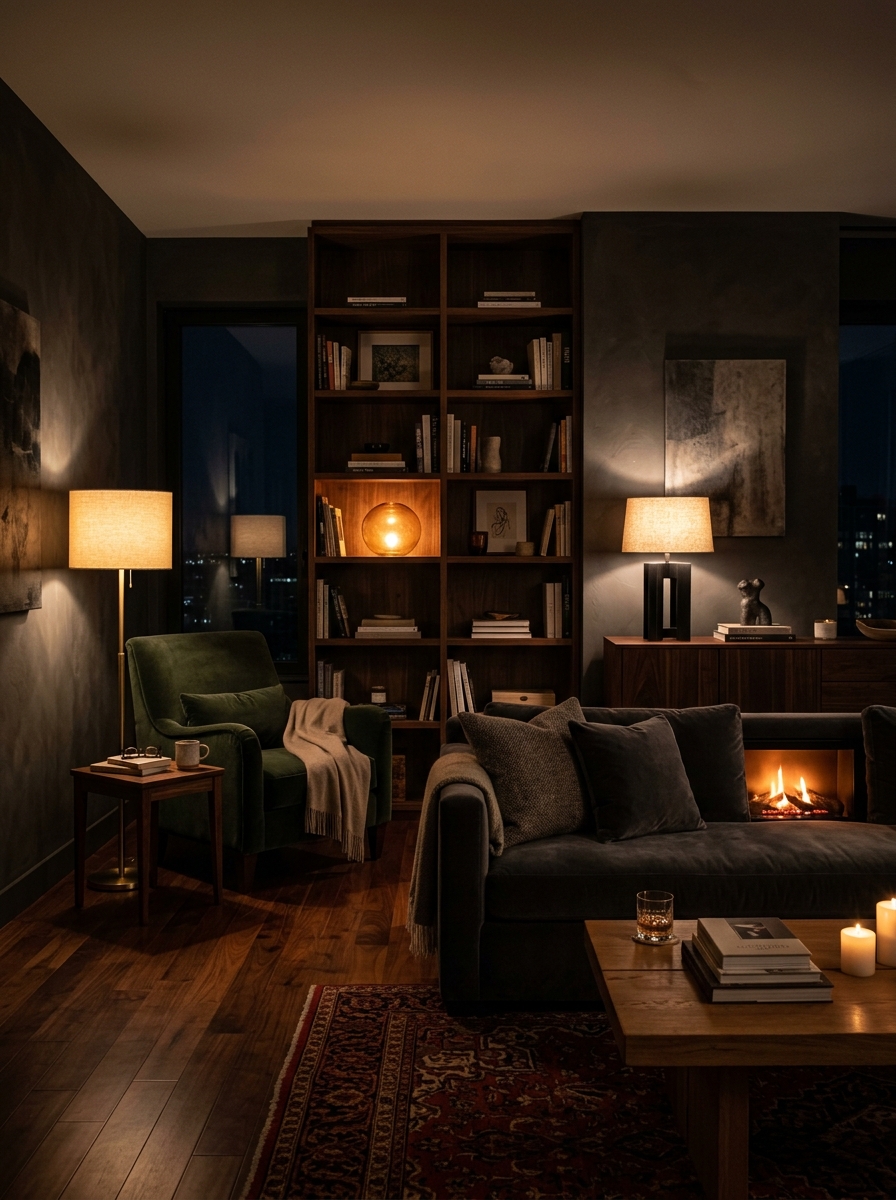
Nothing will ruin the atmosphere of a beautifully curated space faster than the wrong light bulbs. Ban the bright, cool-toned overhead “big light.” Instead, scatter multiple sources of lower-level lighting throughout the room: a floor lamp reading nook, a small glowing orb on a bookshelf, and a shaded table lamp on a credenza. Ensure every bulb is warm-toned (ideally around 2700K).
Why it works biologically: For thousands of years, humans ended their days gathered around the low, warm, flickering glow of a fire. Cool, bright overhead lighting mimics the midday sun, which triggers cortisol production and keeps us alert. Warm, low-level lighting signals to our nervous system that the day is winding down, immediately dropping our shoulders and putting us at ease.
5. Swap Stark White for Complex Neutrals
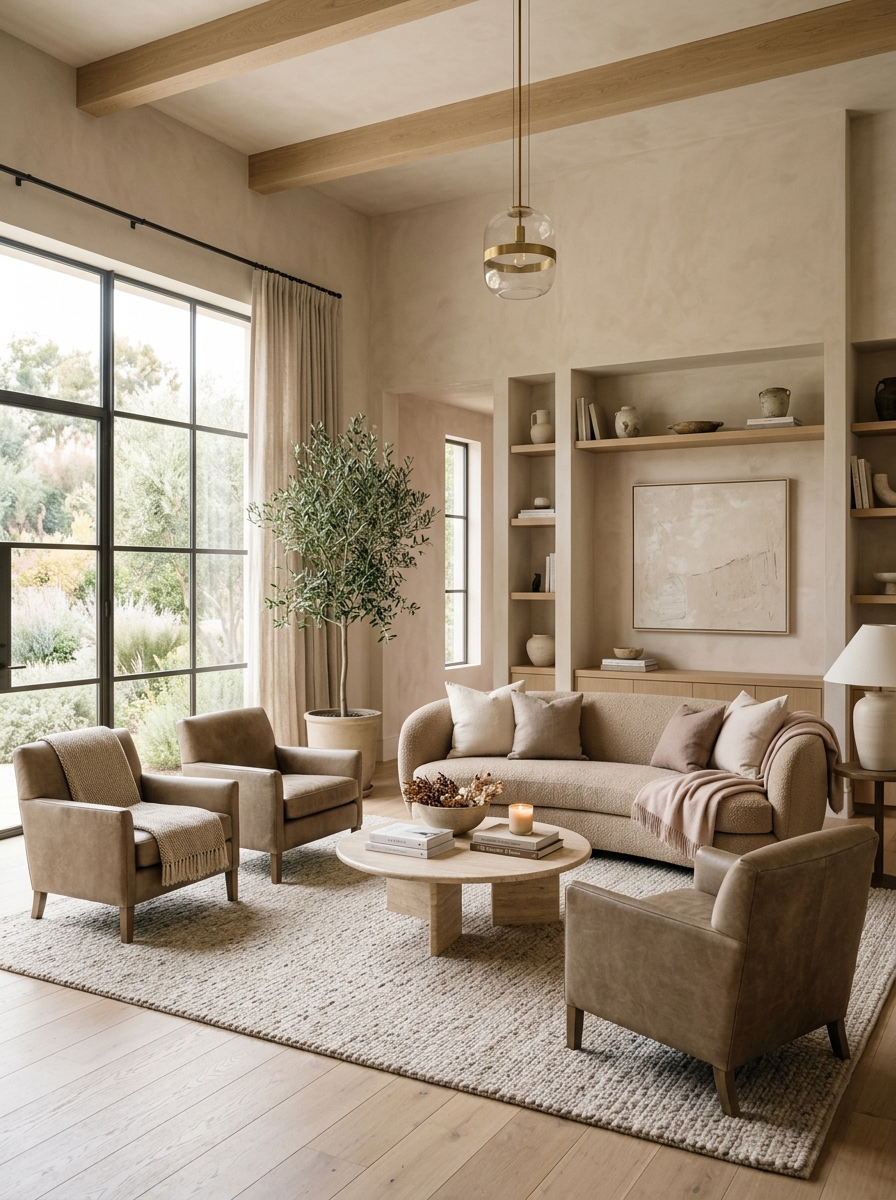
Bright, blinding gallery white is notoriously difficult to pull off in a standard home. Unless you have massive floor-to-ceiling windows flooding the room with brilliant southern light, pure white paint tends to shadow blue or grey, making the corners of your room look chilly and dingy.
Why it works practically: Complex neutrals – like warm oatmeal, soft putty, limewashed beige, or even the faintest blush-taupe – hold their own warmth regardless of what the weather is doing outside. These tones reflect a soft, flattering light back into the room. They maintain the airy, light feeling you want from minimalism, but they wrap the space in a subtle, comforting glow.
6. Curate Intentional Groupings (The Rule of Clustered Display)
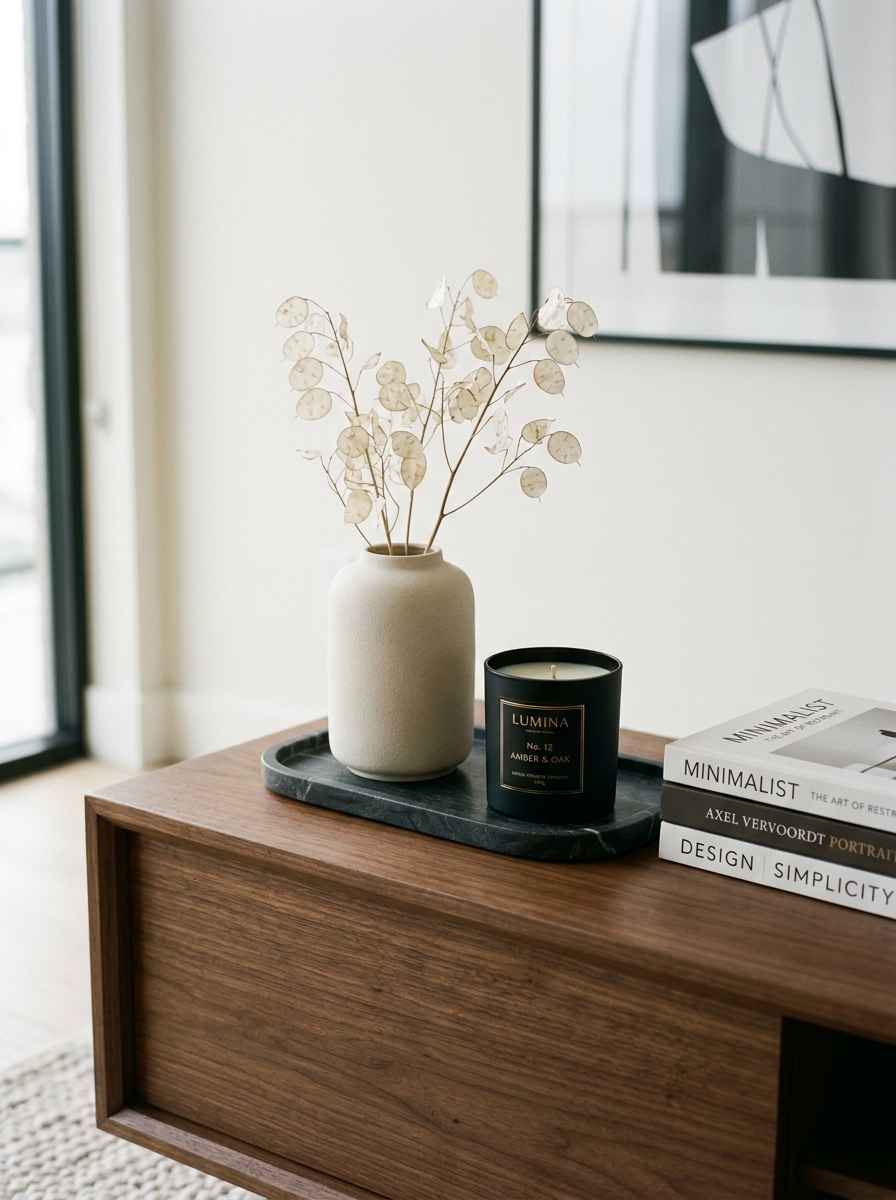
Minimalism doesn’t mean you have to hide everything you own. The difference between clutter and curation is simply how items are arranged. Instead of spacing out your decorative objects evenly across every available surface, group them together in deliberate, tightly knit clusters – often in odd numbers like three or five.
Why it works psychologically: When you scatter objects across a room, your eye has to dart around to process each one individually, which creates cognitive fatigue. By grouping a vase, a candle, and a small stack of books together on a tray, your brain processes the entire cluster as a single, cohesive focal point. This maintains the clean, empty expanses of your surfaces while still allowing you to display things you love.
7. Soften Hard Edges with Flowing Window Treatments
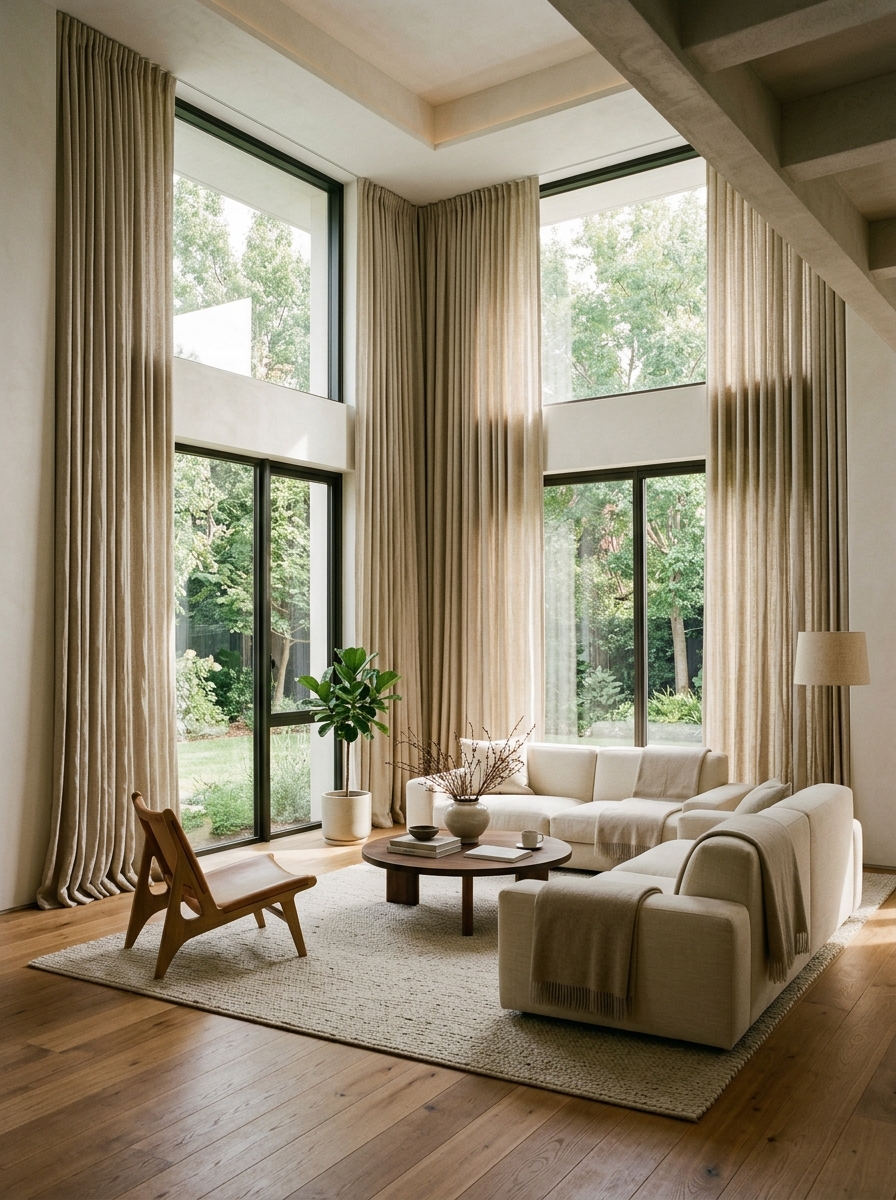
Naked windows or rigid metal blinds belong in an office building. In a home, windows are essentially massive, hard sheets of glass encased in hard architectural framing. To make a minimalist room feel cozy, you must soften those edges. Hang natural linen curtains high above the window frame and let them kiss the floor.
Why it works practically: Beyond the obvious visual softening, window treatments are critical for a room’s acoustics. Bare, minimal rooms suffer from terrible sound bouncing. Fabric absorbs the high-frequency echoes of footsteps and conversation. When you soften the acoustics of a room, the air itself literally feels heavier, quieter, and more intimate.
8. Utilize the Power of “Active” Negative Space
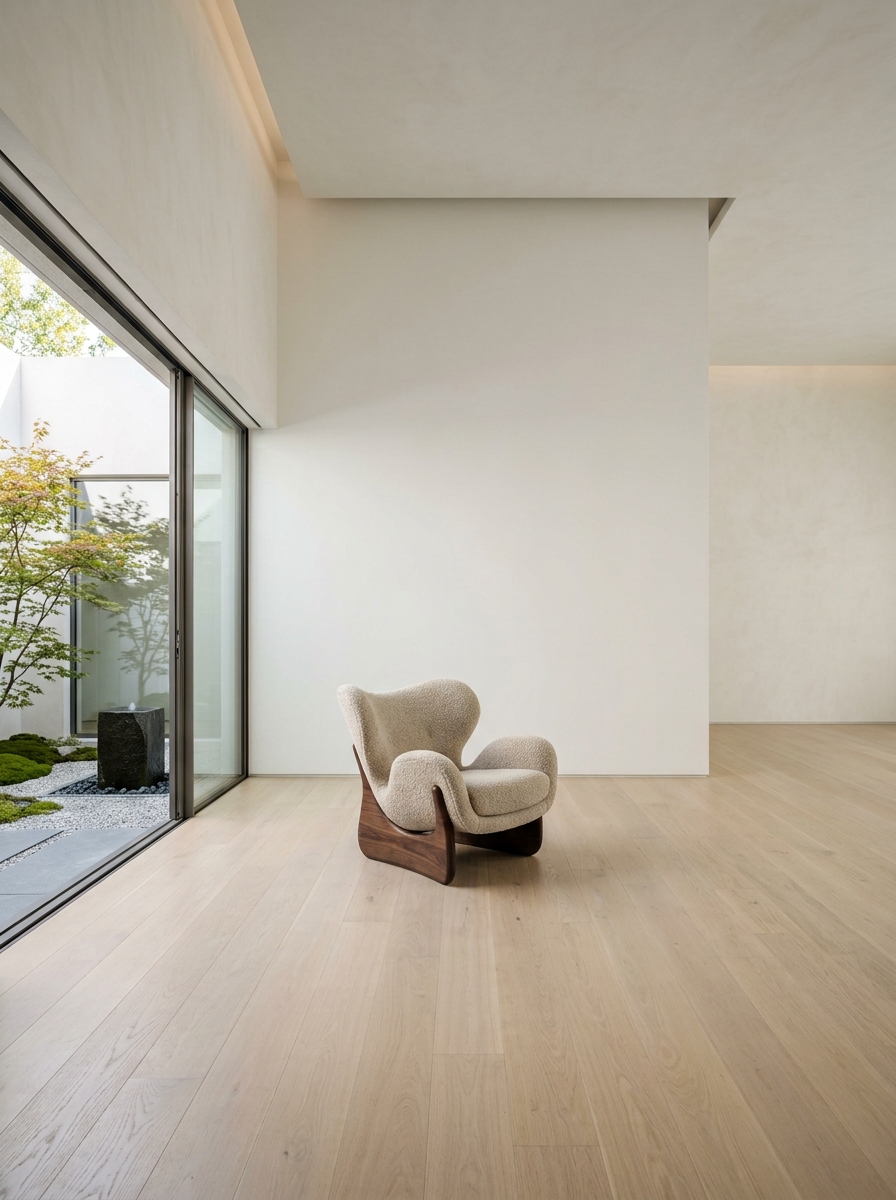
In styling, negative space is not just the empty area where you forgot to put furniture. It is an active, vital design element. Resist the urge to fill every corner with a plant or a basket. Leave breathing room around your sofa. Let a beautiful armchair stand entirely on its own against a blank wall.
Why it works psychologically: Negative space acts as a frame. When you surround a beautiful piece of furniture or art with empty space, you elevate its importance. More importantly, negative space gives the eye a place to rest. A room that offers visual resting places drastically reduces anxiety and creates that coveted feeling of zen.
9. Go Large-Scale with Organic Artwork
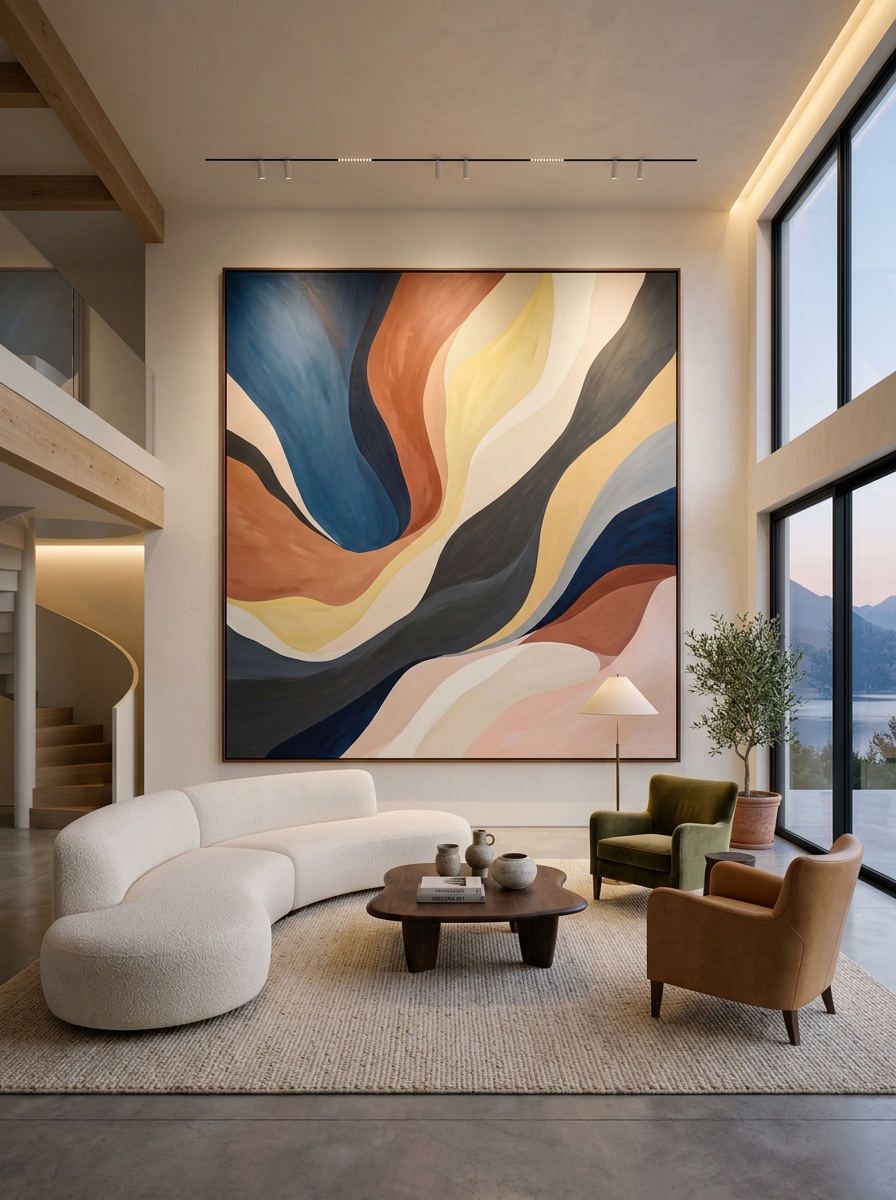
Gallery walls are beautiful, but they can quickly introduce a chaotic, busy energy that works against a minimalist aesthetic. If you want to keep the visual noise down but still need to fill a large blank wall, opt for a single, oversized piece of art. Look for canvases that feature organic, sweeping shapes or soft, abstract color blocks rather than rigid geometric patterns.
Why it works practically: Large-scale art brings sweeping drama to a room without adding clutter. Furthermore, rooms are basically boxes built out of right angles – straight walls, square rugs, rectangular sofas. Introducing art with organic, curved shapes disrupts that harsh geometry, making the room feel softer and more human-centric.
10. Introduce Sculptural, Living Elements
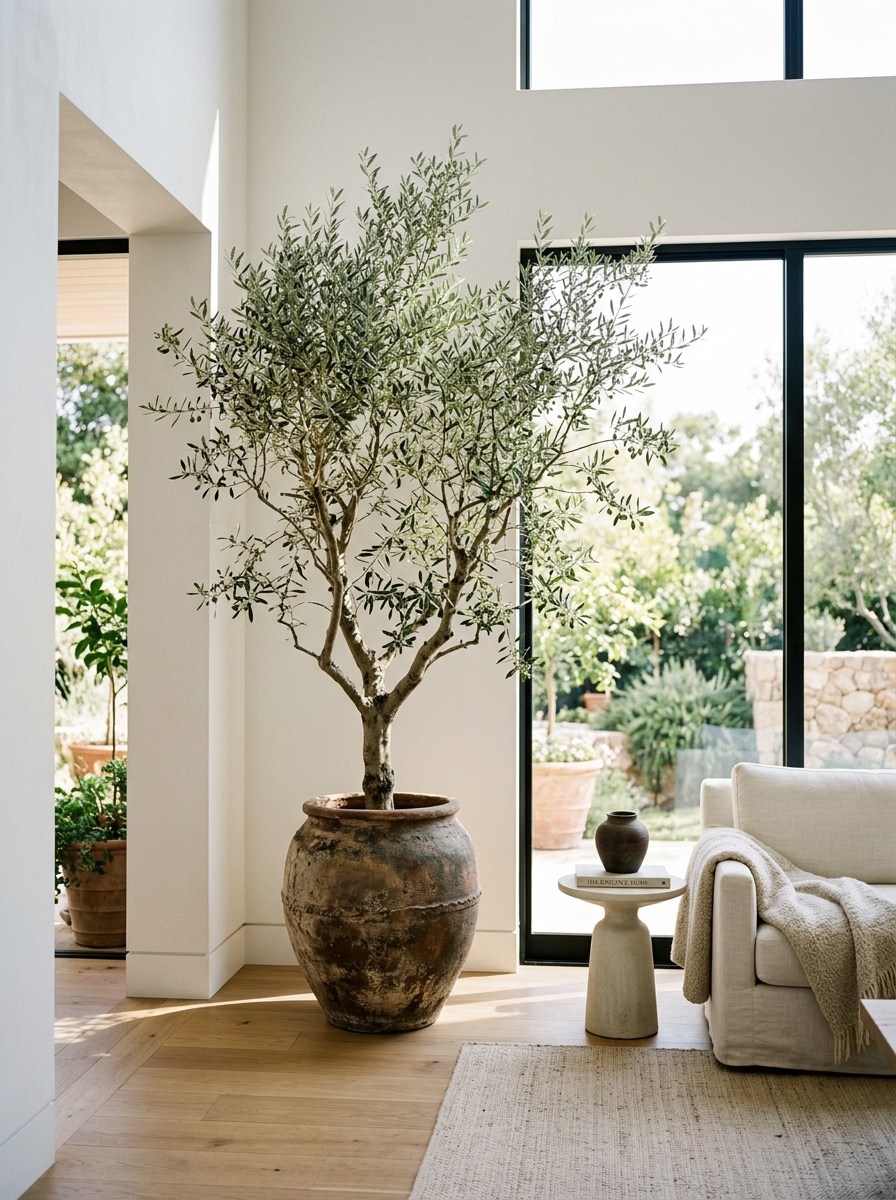
No room is truly finished until there is something living inside of it. But instead of cluttering your windowsill with a dozen tiny potted succulents, go for one dramatic, sculptural statement. A tall olive tree in a weathered pot, or a single oversized branch cut from the yard placed in a heavy ceramic vase on the dining table.
Why it works biologically: This taps into biophilia – our innate human desire to connect with nature. A minimalist room is, by definition, very static and controlled. A large branch or a softly weeping tree introduces a subtle, unpredictable, and organic geometry to the space. The gentle movement of leaves casting shadows across a blank wall breathes literal life into a quiet room.
DESIGNER CALLOUT: The “Matchy-Matchy” Mistake If there is one thing that will instantly ruin the warmth of a minimal space, it is buying matching furniture sets. When your sofa perfectly matches your loveseat, which perfectly matches your wood side tables, the room stops looking like a home and starts looking like a furniture showroom. Cozy minimalism thrives on a collected, evolved look. Mix a vintage leather chair with a modern linen sofa. Pair a contemporary steel lamp with an antique wooden stool. It is the friction between different eras and styles that generates character.
Frequently Asked Questions
Q: How can I make my rental apartment feel cozy without painting the walls?
A: Focus entirely on textiles and lighting. Use oversized, thick area rugs to cover standard-issue flooring, hang heavyweight curtains using tension rods or damage-free brackets, and swap out the bulbs in all existing fixtures to warm, 2700K LEDs.
Q: Does a minimalist style mean my home can’t be cozy?
A: Not at all. “Warm minimalism” is incredibly popular and effective. You achieve this by restricting your color palette but maximizing texture. Use warm woods, lime-wash wall treatments, and highly tactile fabrics like bouclé and raw linen without cluttering the surfaces.
Q: What is the best color temperature for cozy living room lights?
A: The absolute sweet spot for a cozy atmosphere is between 2700K (warm white) and 2200K (amber glow). Anything 3000K or higher is too cool and should be reserved strictly for task lighting in garages or utility rooms.
Q: How do I make a room with very high ceilings feel intimate?
A: Visually lower the ceiling by painting it a darker shade than the walls, dropping dramatic, oversized pendant lights low over seating areas, and using tall, potted indoor trees (like a Black Olive or Ficus) to bridge the empty gap between the furniture and the ceiling.
Q: Can leather furniture be cozy?
A: Yes, but it requires the right type of leather and styling. Avoid cold, stiff, high-gloss leathers. Opt for top-grain, distressed, or aniline leathers that have a matte finish and a soft hand-feel. Always drape a soft wool or cashmere throw over a leather piece to break up the smooth texture.