

Your bedroom is the architectural equivalent of a deep breath. It is the first thing you see when you wake up and the last environment you process before drifting off. Consequently, the design of this specific space directly dictates the quality of your rest and the trajectory of your daily mood. Interior stylists and architectural psychologists have long understood that a room is never just a visual experience; it is an active environment that either supports or disrupts our natural biological rhythms.
Clutter, harsh lighting, and chaotic color schemes require your brain to actively process visual noise, elevating stress hormones right when you need them to plummet. Conversely, a thoughtfully composed bedroom lowers your cognitive load. By making deliberate choices regarding layout, texture, and light, you are essentially building a physical cue for your nervous system to power down. The goal isn’t merely a space that looks beautiful in a photograph. The goal is crafting a highly functional sanctuary that actively participates in your daily recovery.
8 Essential Ideas for a Restful Bedroom
1. Grounding the Room with Desaturated Earth Tones
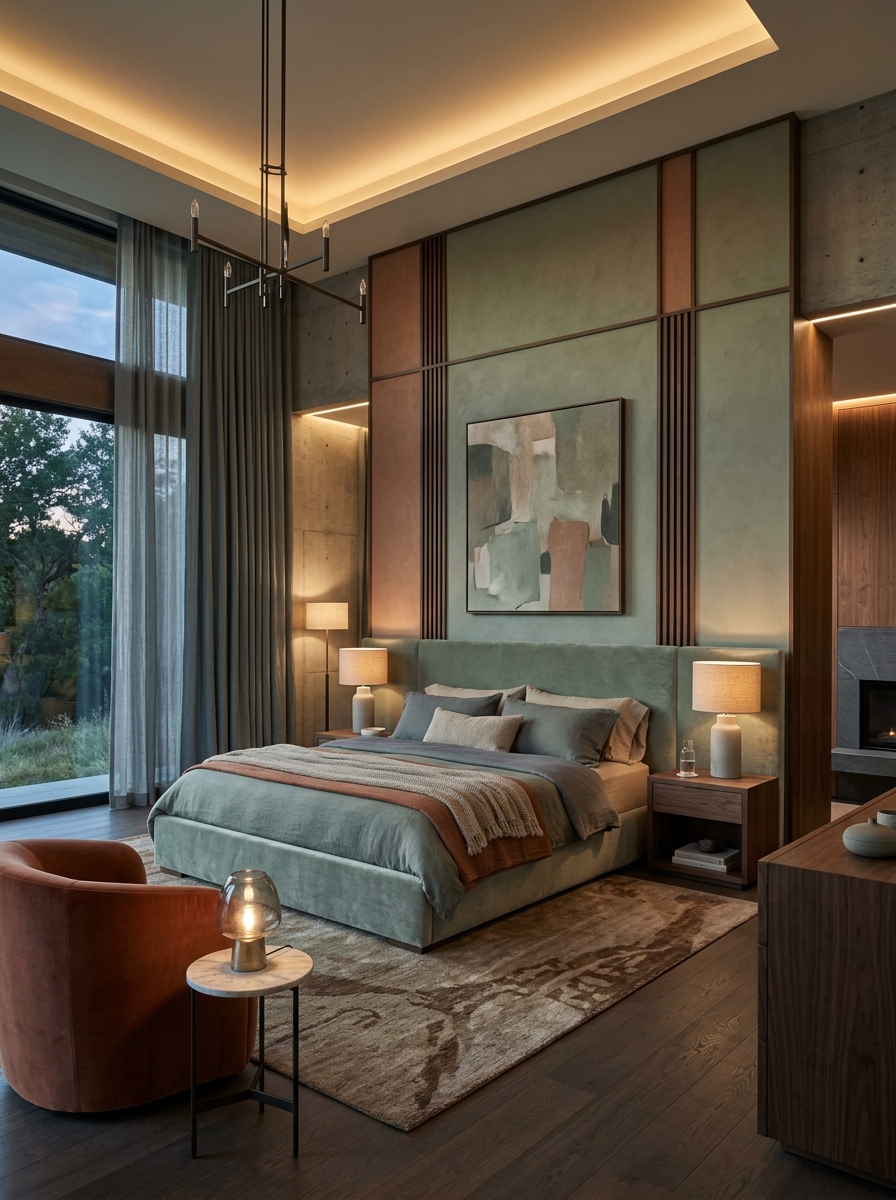
While stark white might seem clean and minimalist, it can often feel clinical, bouncing too much aggressive light around the room. Instead, look toward desaturated earth tones – think sage green, muted terracotta, warm greige, and dusty slate. The practical reasoning here leans heavily on visual psychology. These low-chroma hues mimic the natural world, subtly signaling to our primitive brains that we are in a safe, sheltered environment. Furthermore, deeply saturated or highly contrasting colors demand attention from your optic nerve. By turning down the saturation, you create an envelope of color that recedes gracefully into the background as the evening progresses, allowing your mind to switch off rather than stay engaged.
2. Designing the Wind-Down Glow via Lighting Layers
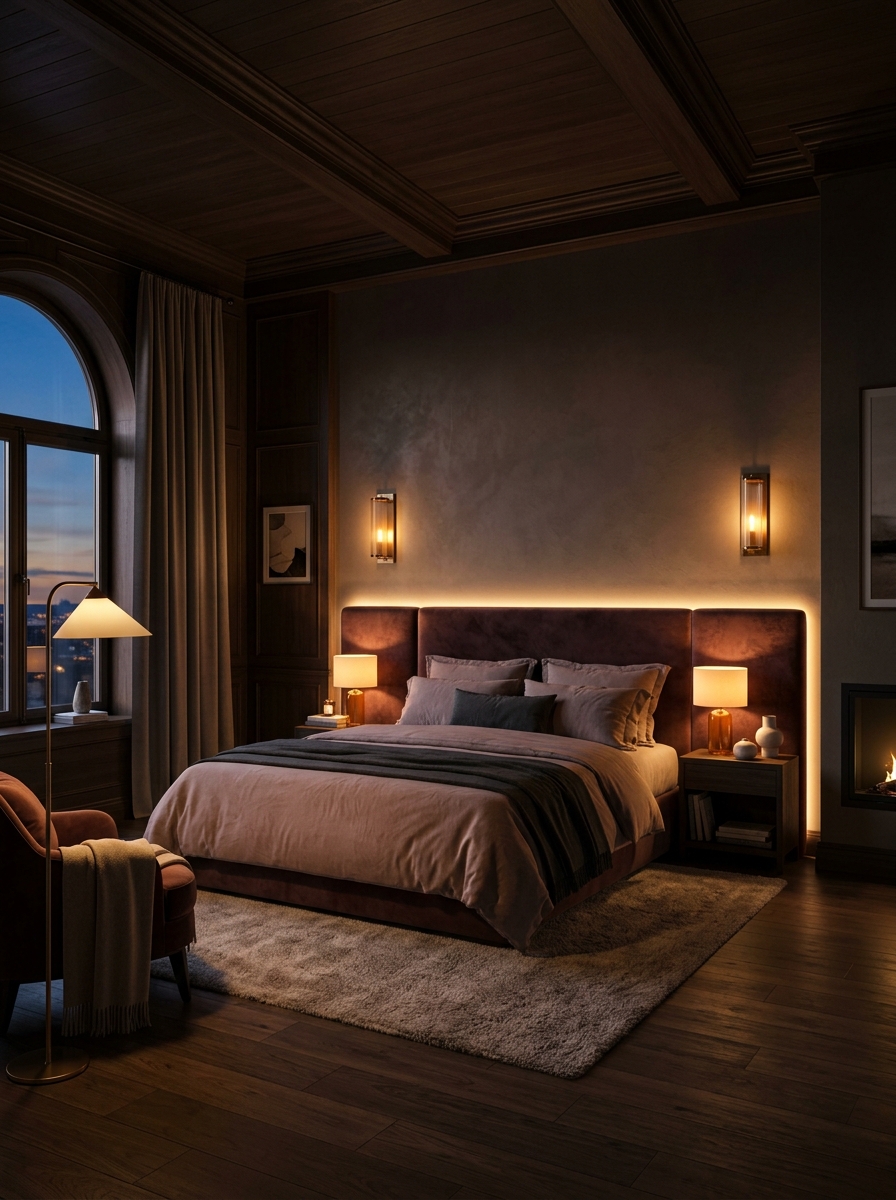
A single overhead light is the enemy of a restful bedroom. Instead, you need a robust layering strategy: ambient, task, and accent lighting. To prepare the body for sleep, you must convince your circadian rhythm that the sun is setting. You achieve this by shifting away from bright, blue-toned overheads and relying entirely on warm, lower-level light sources – like bedside sconces, a low-wattage floor lamp, or hidden LED strips behind a headboard. Keeping the light sources below eye level and using bulbs in the 2700K (warm white) range mimics a sunset. This gentle, horizontal glow naturally triggers your pineal gland to begin producing melatonin, easing you into a state of drowsiness.
3. The Upholstered Anchor of a Soft Headboard
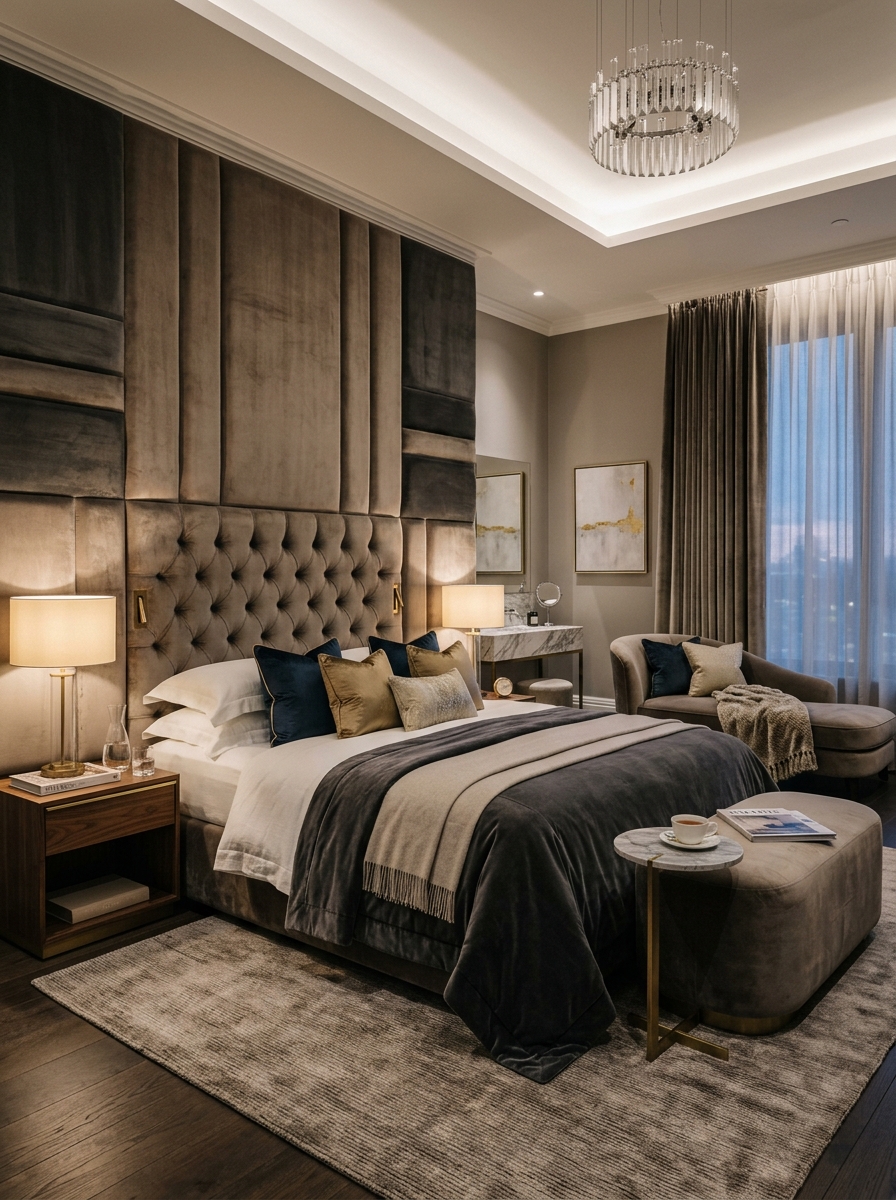
A bed frame is arguably the most critical piece of furniture you own, and moving away from rigid wood or cold metal headboards can completely transform your nightly routine. Upholstered headboards offer profound practical benefits beyond their tailored appearance. First, they provide excellent acoustic dampening; fabric absorbs the high-frequency sounds that bounce off bare drywall, creating a genuinely quieter room. Secondly, they serve as a physical and psychological buffer. Having a soft, padded surface to lean against encourages reading or gentle conversation before sleep, transitioning the bed into a multi-use relaxation zone rather than just a flat surface for unconsciousness.
4. The Tactical Comfort Equation of Textile Mixing
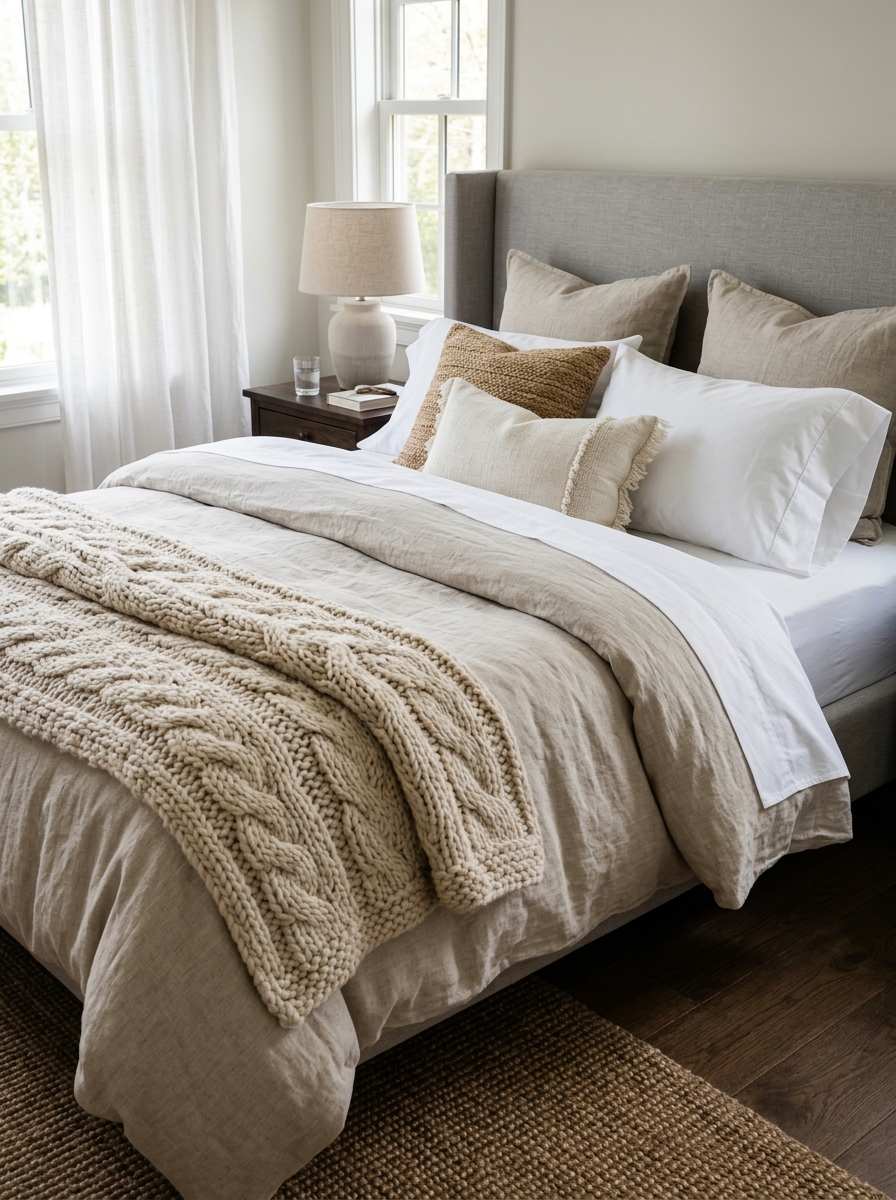
Matching your bedding perfectly from a single collection often results in a flat, uninspired look. The secret to a deeply inviting bed lies in strategic textile mixing. Pair a relaxed, breathable linen duvet with crisp percale cotton sheets, and anchor the foot of the bed with a heavy, chunky-knit wool throw. The rationale here is deeply rooted in thermoregulation. Throughout the night, your core body temperature fluctuates. Layering different natural fibers allows you to easily adjust your coverage to avoid waking up in a sweat. Additionally, the tactile variety engages your sense of touch, providing a comforting, weighted sensation – similar to the grounding effect of a weighted blanket – that eases anxiety and restlessness.
5. Closed Cabinetry for “Out of Sight” Organization
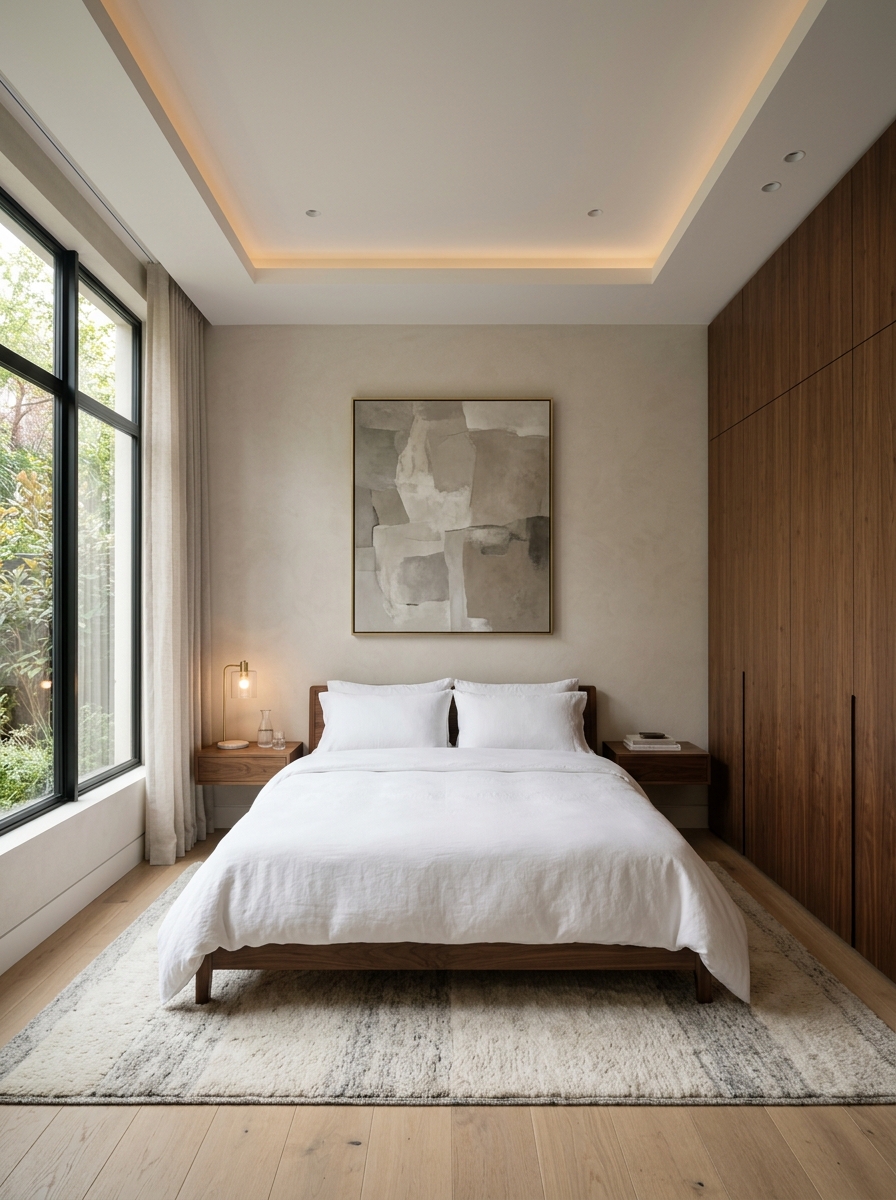
There is a direct correlation between visual clutter and elevated cortisol levels. Open shelving and exposed clothing racks may look trendy in boutique hotels, but in a functional, everyday bedroom, they are a recipe for underlying stress. Implementing closed storage solutions – such as built-in wardrobes with solid doors, under-bed drawers, or a beautiful, solid-wood armoire – is vital. When your laundry, books, and accessories are hidden behind clean lines, your eyes have nowhere to catch and snag. This “out of sight, out of mind” approach physically reduces the amount of visual data your brain has to process, allowing your nervous system to truly relax the moment you cross the threshold.
6. Tactile Wall Treatments to Reduce Harsh Bounces
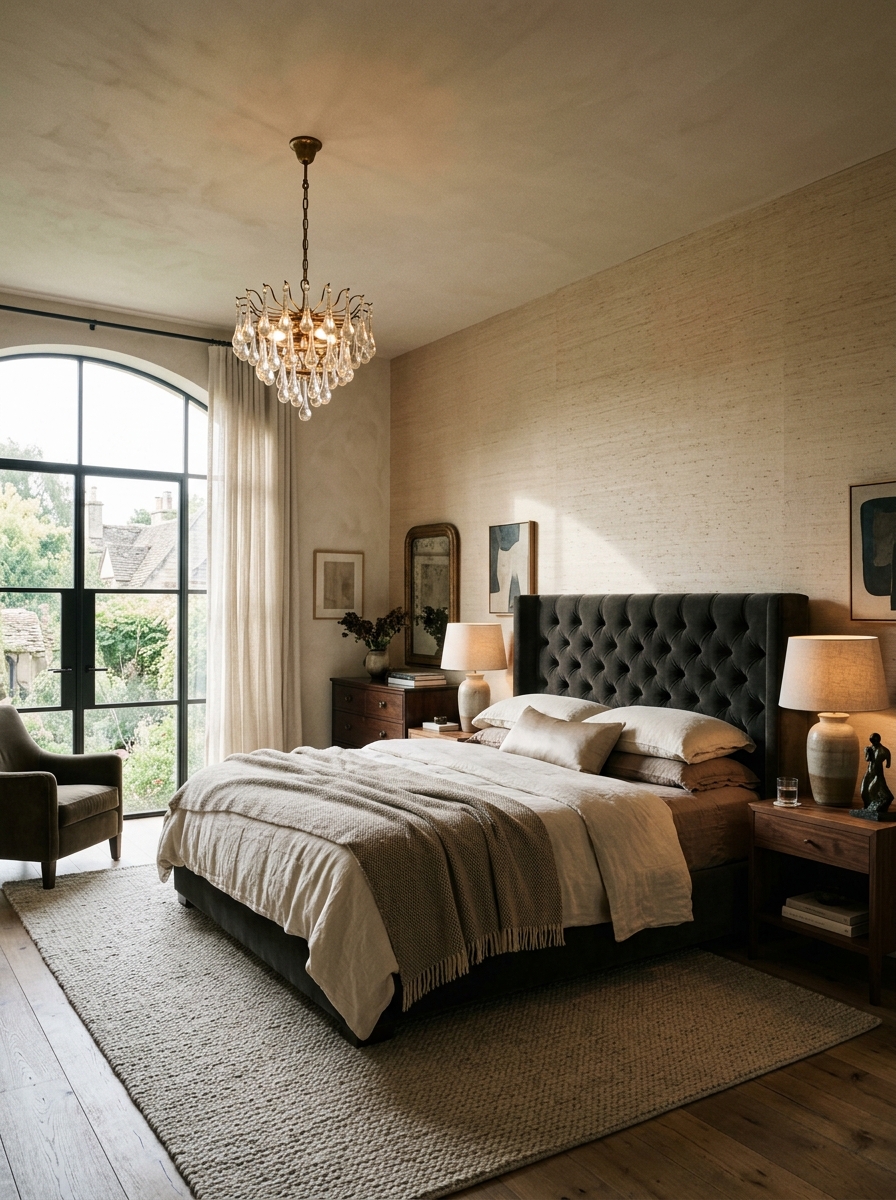
Standard flat, matte wall paint can sometimes feel lifeless. Introducing a subtle wall treatment, such as authentic Roman limewash, a very fine grasscloth wallpaper, or even Roman clay, elevates the space instantly. Beyond aesthetics, these textured treatments serve a brilliant practical purpose: they diffuse light rather than reflecting it directly. A limewashed wall scatters the morning sun and softens the harsh glare of artificial light at night. This lack of sharp reflection softens the entire perimeter of the room, creating a subtle, velvety cocooning effect that feels incredibly intimate and secure.
7. The Soft Landing of Intentional Flooring
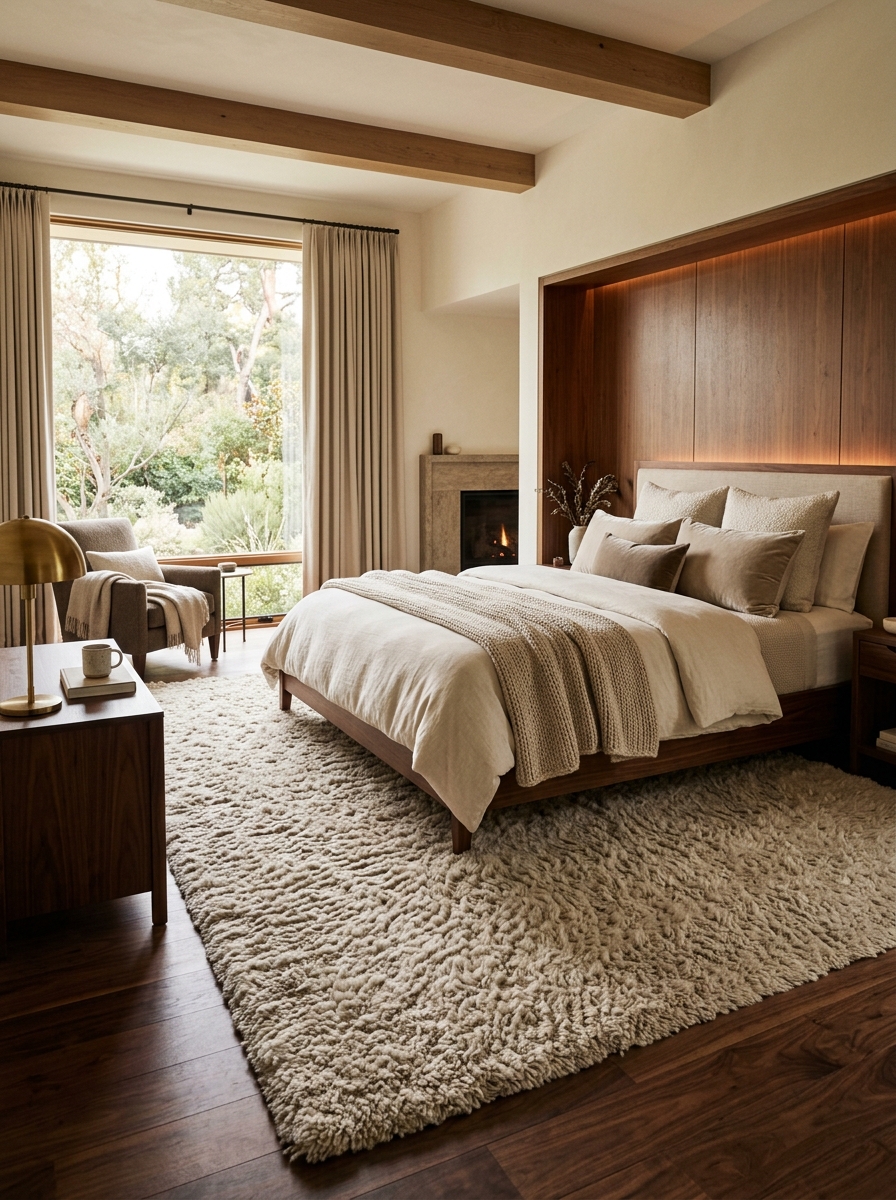
Hardwood floors are undeniably gorgeous, but stepping out of a warm bed onto a cold, hard surface is an abrupt, unpleasant shock to the nervous system. The tactical use of rugs is essential for bedroom harmony. If you have hard floors, introduce a large area rug that extends generously (at least two feet) around the sides and foot of the bed. This provides vital thermal insulation, keeping the room warmer in winter months. More importantly, the thick pile acts as a sound-absorbing acoustic layer, muting footsteps and preventing the hollow, echoing quality that makes a room feel empty and unsettled.
8. Biophilic Elements and Organic Flow
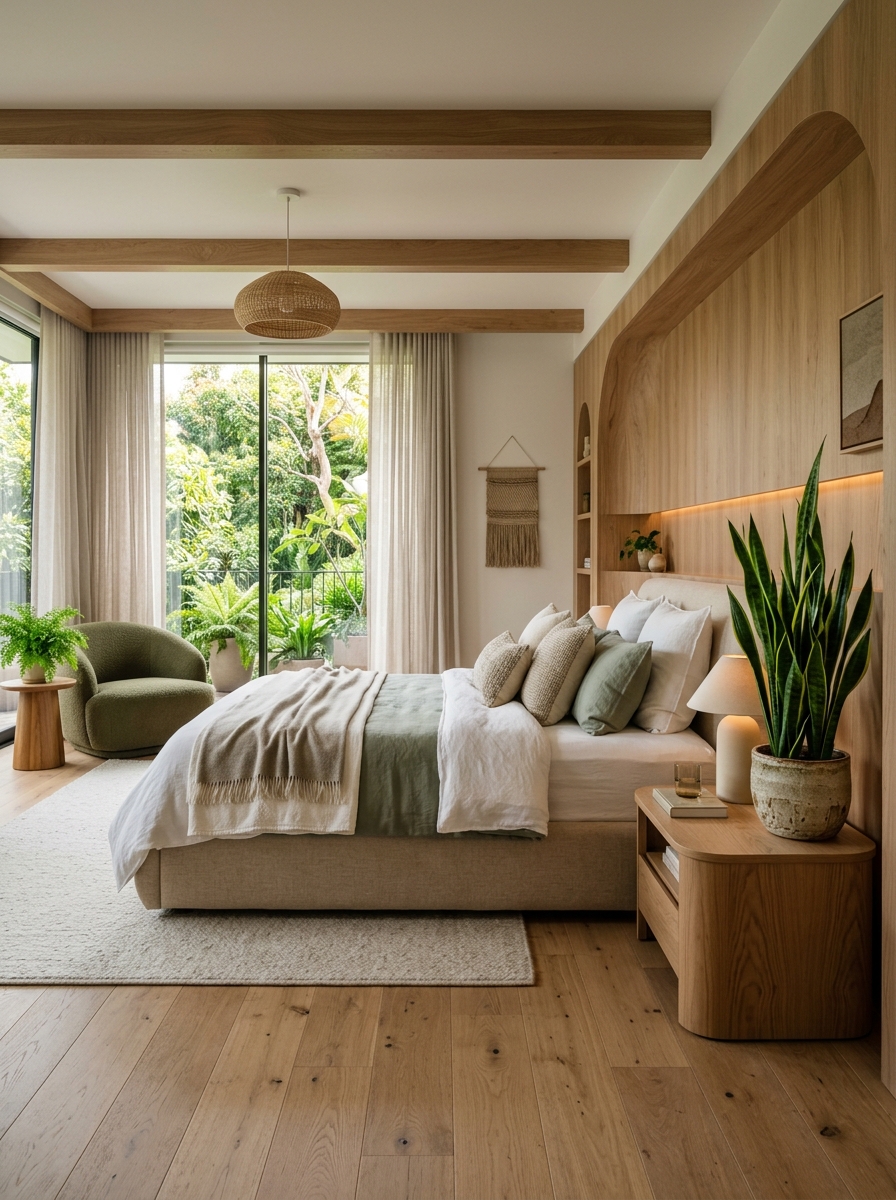
Integrating natural elements into your bedroom design isn’t just about keeping a fern alive on a dresser. Biophilic design – the concept of connecting indoor environments to nature – has measurable impacts on our well-being. Incorporate organic shapes, natural wood grains, and carefully selected live plants. Low-maintenance species like Snake Plants or Pothos not only introduce a calming, organic green tone but also actively purify the air and release oxygen overnight. The presence of living things and natural textures grounds the sterile, man-made architecture of a standard house, satisfying an innate human need for connection with the outdoors and subsequently lowering blood pressure.
How to Adapt These Ideas for a Small Bedroom
When square footage is severely limited, creating a calm sanctuary requires ruthless editing and clever spatial manipulation. You do not have to abandon the principles above; you simply need to scale them appropriately.
First, maximize your vertical real estate. Instead of a wide, low dresser that eats up floor space, opt for a tall, narrow chest of drawers. Swap out bulky bedside table lamps for wall-mounted sconces or dramatic pendant lights hanging from the ceiling. This clears your nightstands entirely, instantly making the room feel less cramped and significantly more intentional.
When it comes to color in a small space, consider the technique of “color drenching” painting the walls, baseboards, window trim, and even the ceiling the exact same muted hue. This erases the visual boundaries of the room, tricking the eye into perceiving a vast, continuous space rather than a small, defined box. Finally, invest in multi-functional furniture. A bed with integrated, sliding storage drawers underneath eliminates the need for extra freestanding furniture. Keep your textile palette incredibly cohesive; too many contrasting patterns in a tight space will read as chaotic, whereas a tonal, monochromatic bedding scheme will look airy and visually expansive.
Frequently Asked Questions About Bedroom Design
How high should bedside wall sconces be mounted?
The ideal height depends entirely on your bed frame and mattress thickness, but a reliable industry standard is mounting the backplate between 55 and 60 inches from the floor. However, the most functional way to measure is from your actual sitting position in bed. Sit comfortably against your headboard and have someone measure from the floor to just above your shoulder height. The bottom of the sconce shade should sit roughly at eye level when you are reading. This specific placement prevents uncomfortable glare from the bulb while casting direct, targeted light exactly where you need it.
What is the optimal rug size for a standard Queen bed?
The most common mistake in bedroom design is buying a rug that is far too small, which visually chops up the floor plan and makes the room feel disproportionate. For a Queen bed, the absolute minimum size should be an 8×10 foot rug. You want the rug to sit perpendicular to the bed frame, pushed about two-thirds of the way under the bed. It should extend out generously on both sides and well past the footboard. This guarantees that your feet will hit soft wool, not cold wood or tile, whenever you get out of bed on either side.
How can I block out morning light without resorting to heavy, unattractive blackout drapes?
The most elegant and flexible solution is utilizing a double-track window treatment. Install a sleek, custom-fit blackout roller shade or a lined Roman blind mounted securely completely inside the window frame. This inner layer handles the heavy lifting of light-blocking and temperature control. Then, mount a decorative curtain rod high and wide outside the frame, hanging sheer or unlined linen curtains. During the day, the blackout shade practically disappears at the top of the window, leaving only the beautiful, breezy linen visible to filter the daylight perfectly.