
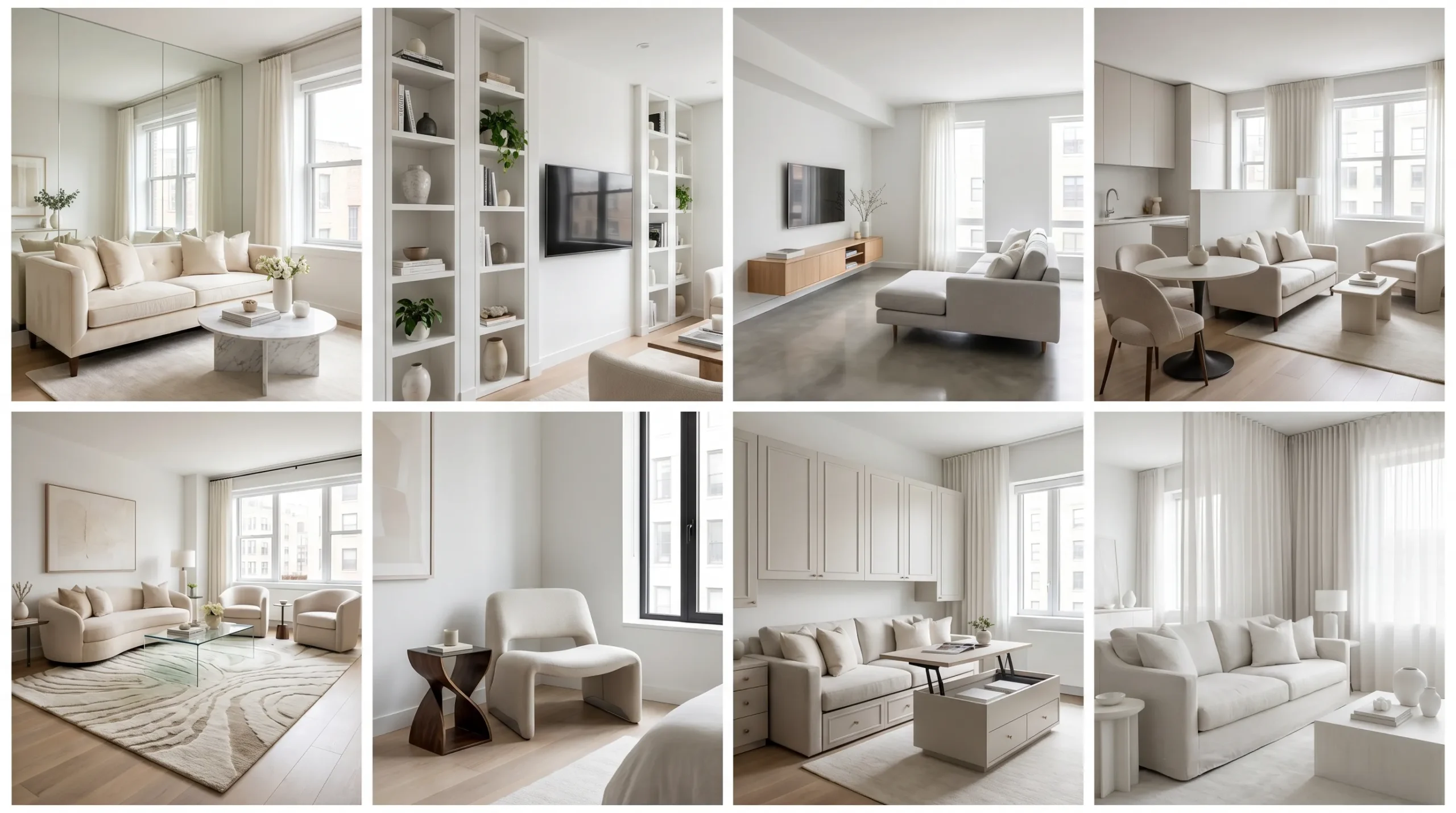
Let’s be honest: living in a small space can feel like a constant battle against the walls. You want the big, plush lifestyle, but your floor plan is giving you “shoebox” vibes. At Trendy Home Bloom, we believe that square footage is just a number – it’s the layout that determines the luxury. Finding the right Small Living Room Layout Hacks is about more than just buying smaller chairs; it’s about understanding the geometry of your room and how to trick the eye into seeing an expansive sanctuary.
Design is 10% furniture and 90% psychology. When you arrange a room correctly, you change the way energy and light flow through it. Whether you are in a studio apartment or a cozy townhouse, these 25 professional strategies will help you reclaim your space. If you are curious about how the most creative minds are currently rethinking traditional floor plans, take a look at these eclectic layout inspirations that are making waves this year. Let’s help your small home bloom.
1. The “Floating” Furniture Secret
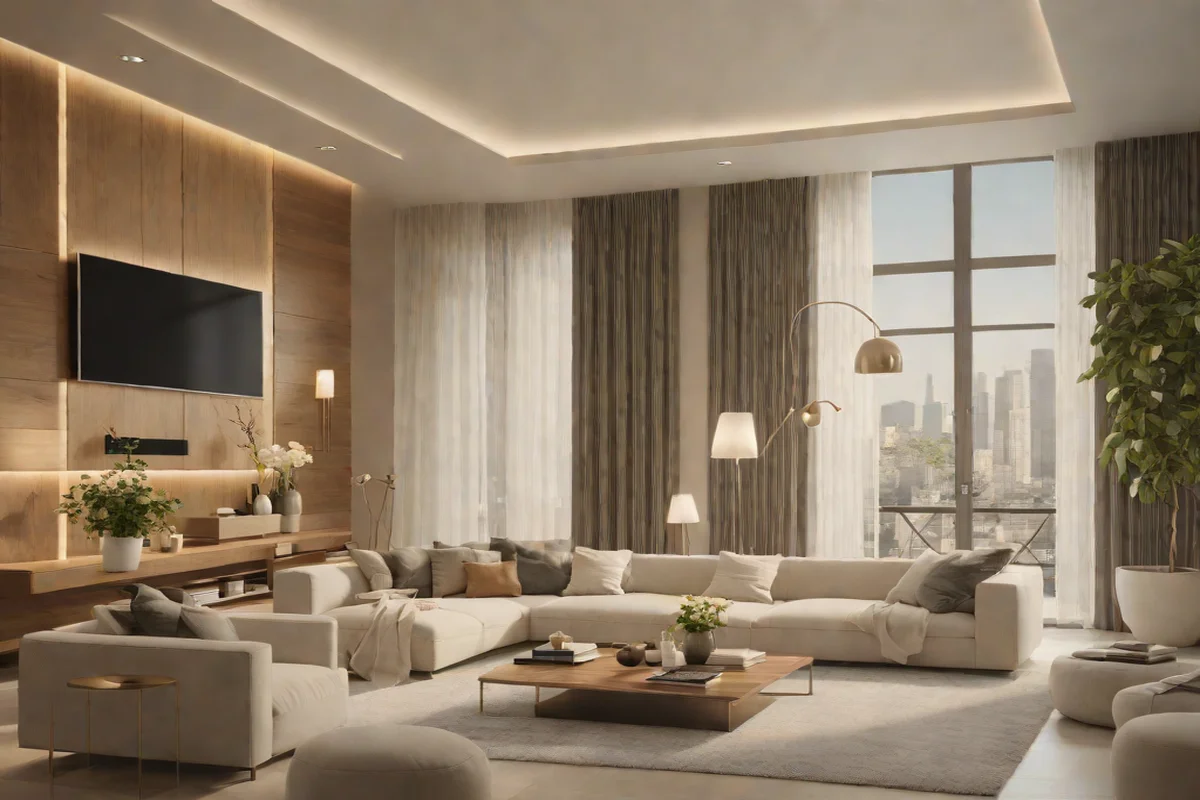
Most people instinctively push every piece of furniture against the walls to “open up” the floor. This is actually a major design mistake. Pushing everything to the edges highlights the room’s small dimensions. Instead, try “floating” your furniture. By pulling your sofa even just six inches away from the wall, you create a sense of breathing room. It suggests that the room is large enough to have space behind the seating, which is a powerful psychological trick to make the space feel much more expensive and airy.
2. Define Zones with Properly Scaled Rugs
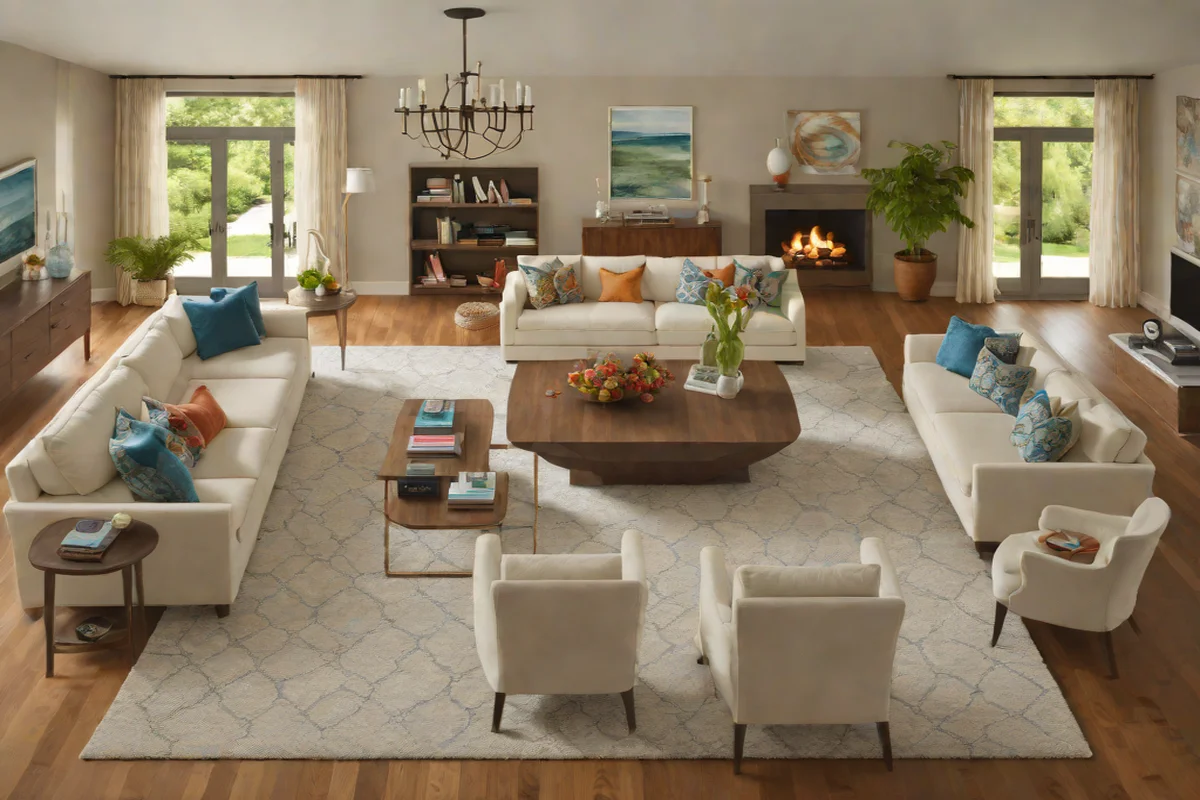
In an open-concept small home, the biggest challenge is “Visual Chaos.” To fix this, you need to use rugs as invisible walls. A properly scaled rug defines exactly where the living area ends and the walkway begins. Ensure that at least the front legs of all your furniture sit on the rug. This anchors the layout and creates a “Cohesive Island” that feels intentional and professionally organized rather than a random collection of chairs.
3. Prioritize “Leggy” Furniture for Light Flow
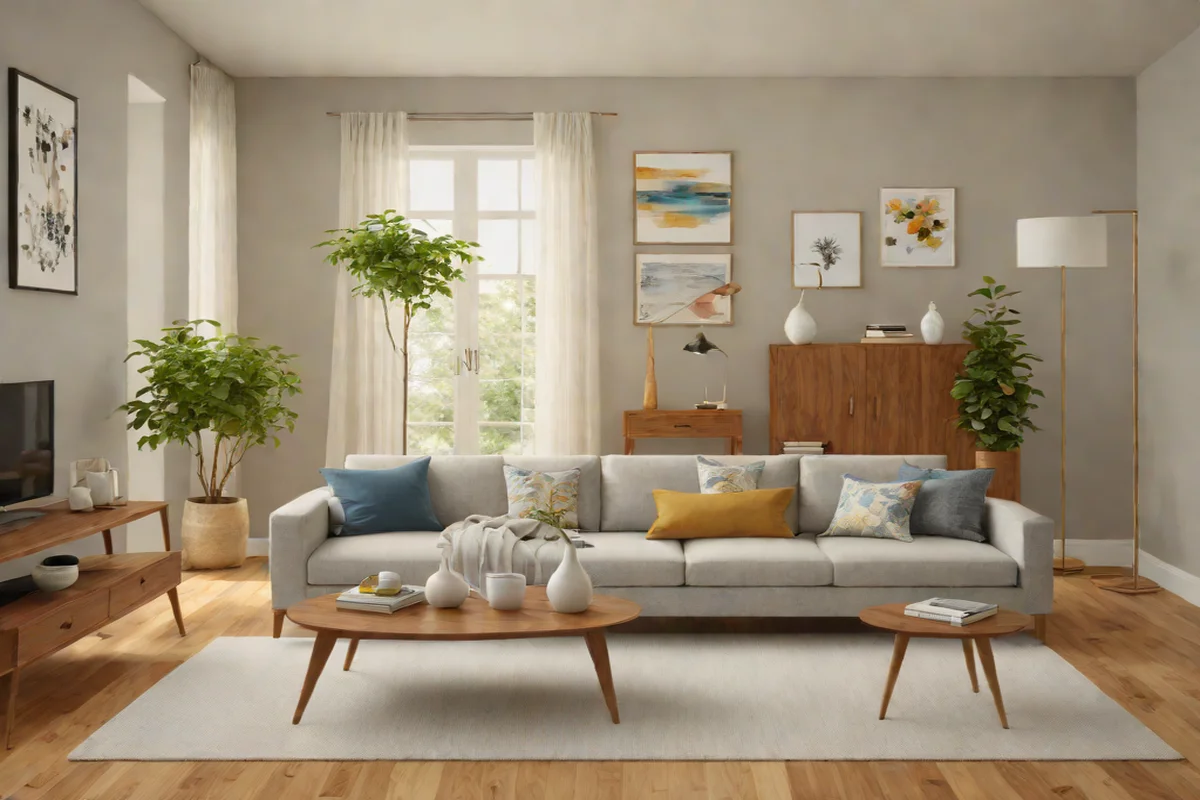
Visual weight is everything in a compact layout. Furniture that sits flat on the floor acts like a solid barrier, blocking your line of sight. Professional designers always recommend “leggy” furniture – sofas, armchairs, and coffee tables with slim, tapered legs. When you can see the floor continuing underneath your furniture, your brain perceives the entire floor area as open, which instantly makes the living room feel less crowded and much more modern.
4. The Diagonal Layout Hack
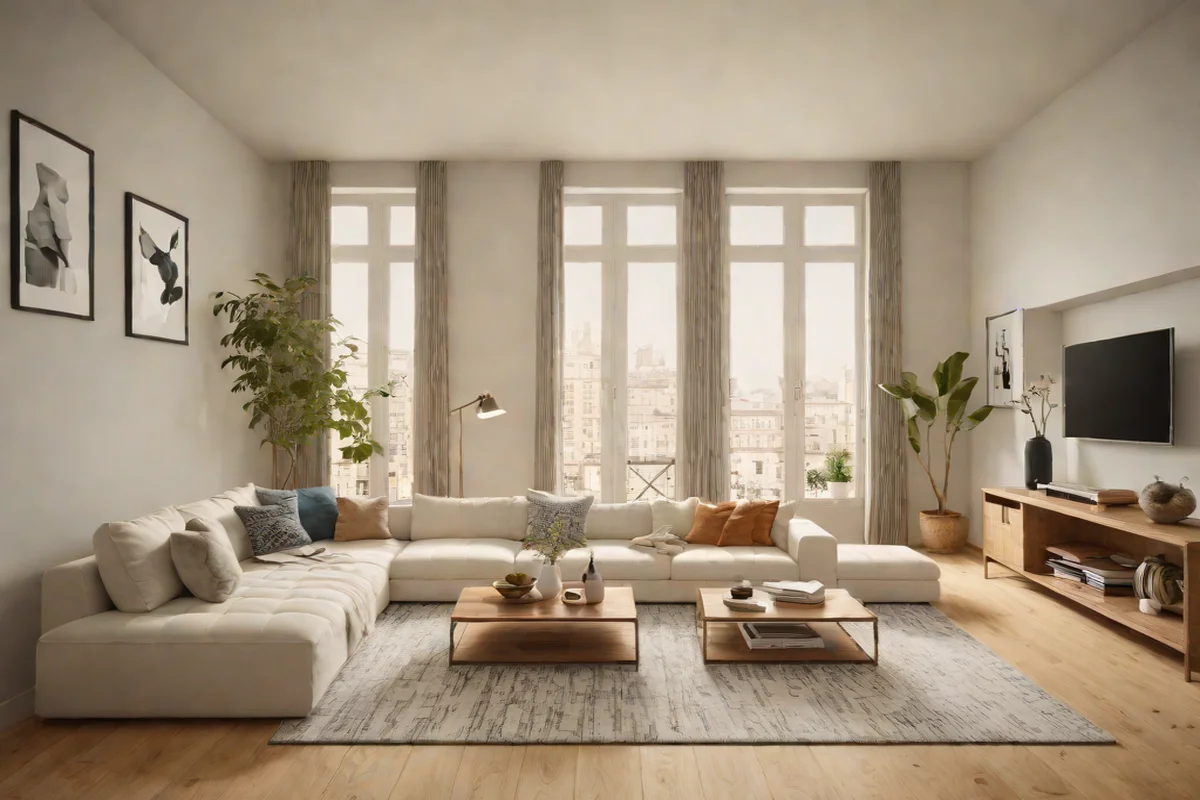
If your room is a perfect square and feels boxy, try placing your furniture on a diagonal. Angling your sofa and rug at a 45-degree angle across the room creates the longest possible line of sight. This “Diagonal Hack” tricks the eye into following the longest dimension of the room, making it feel much more expansive. It’s a bold move that breaks the rigid geometry of standard apartment walls and adds a dynamic, designer-level energy to your home.
5. Establish Clear “Traffic Paths”
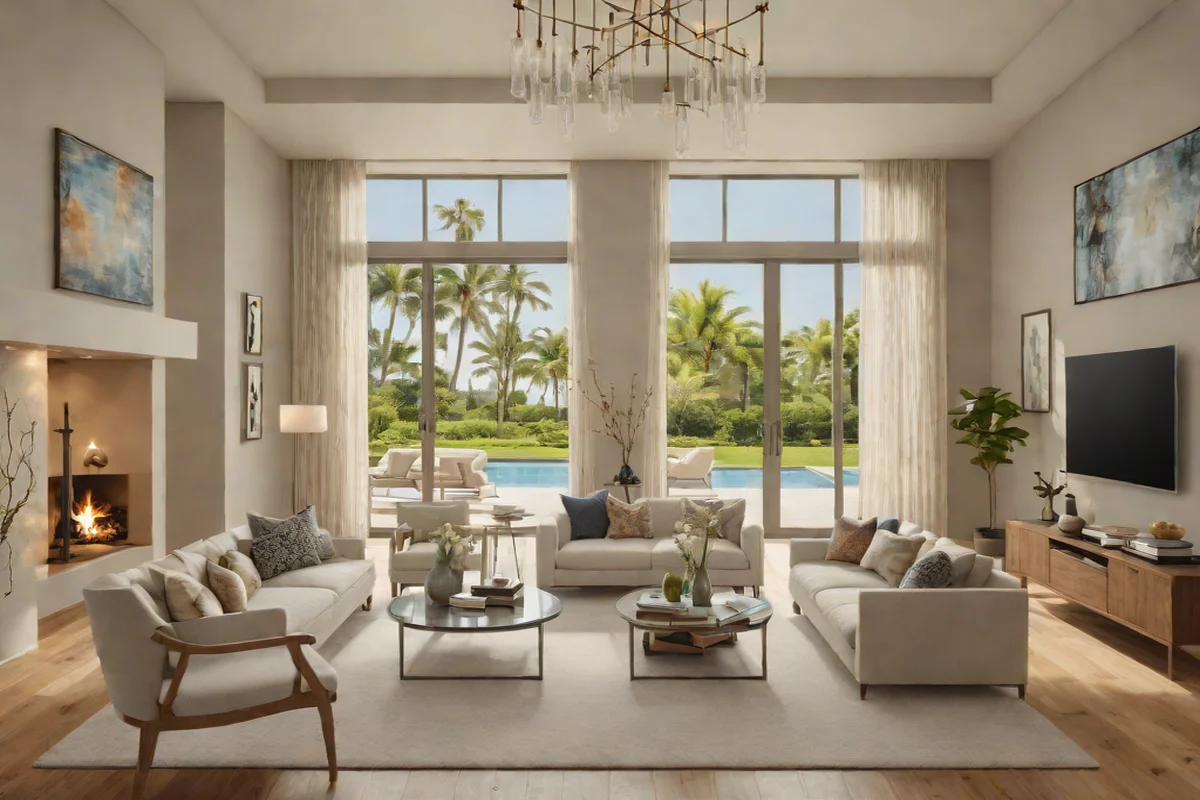
A cramped room feels smaller because it’s hard to move around in. To solve this, you must leave clear walkways – ideally 18 to 36 inches wide – between furniture pieces. Don’t block the natural path from the door to the window. When you can walk through a room without bumping into a table or a sofa, the space feels professionally planned and much larger. For more on how we approach these functional flow challenges, see our core design principles.
6. The 2/3 Sofa-to-Rug Ratio
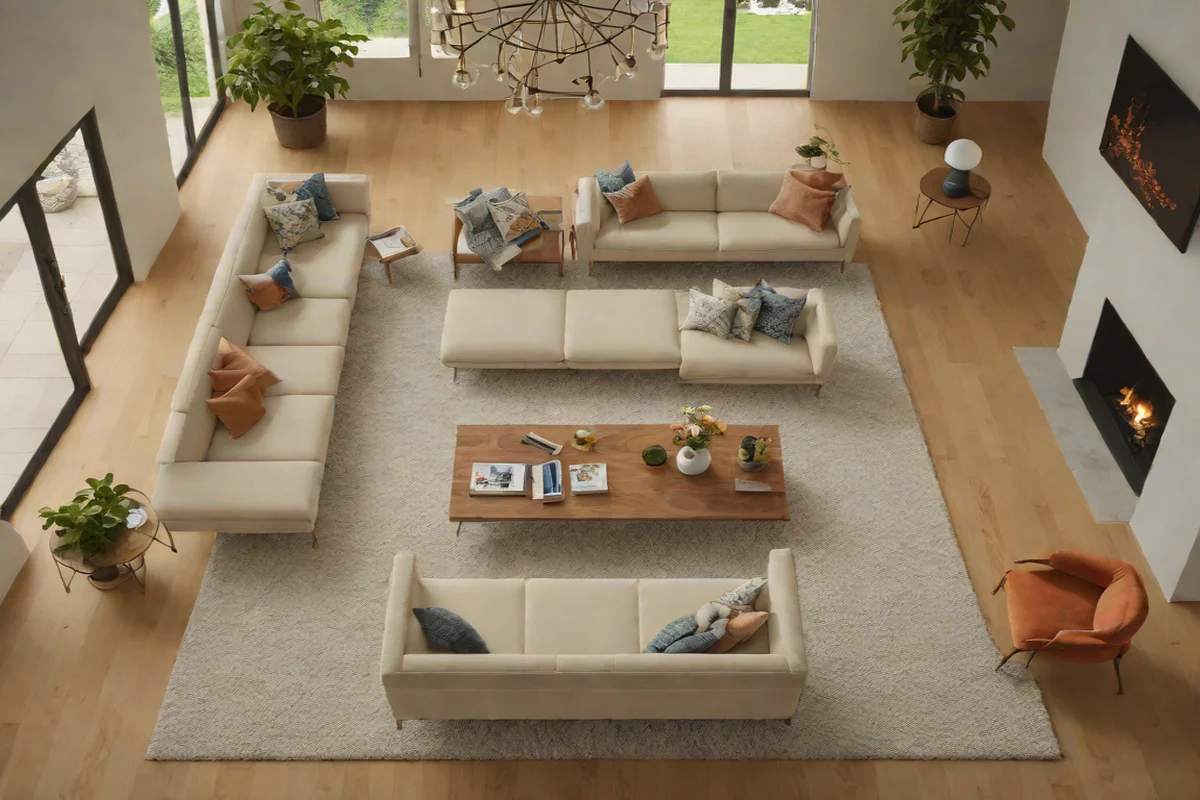
Proportion is the key to a balanced layout. A common mistake is using a sofa that is too large for the rug it sits on. For a high-end look, your sofa should take up about two-thirds of the rug’s width. This ratio ensures the rug is large enough to “ground” the sofa without overwhelming it. It creates a sense of “Architectural Order” that makes the room feel structured, stable, and much more expensive than its actual size suggests.
7. Maximize Verticality via Floor-to-Ceiling Shelves
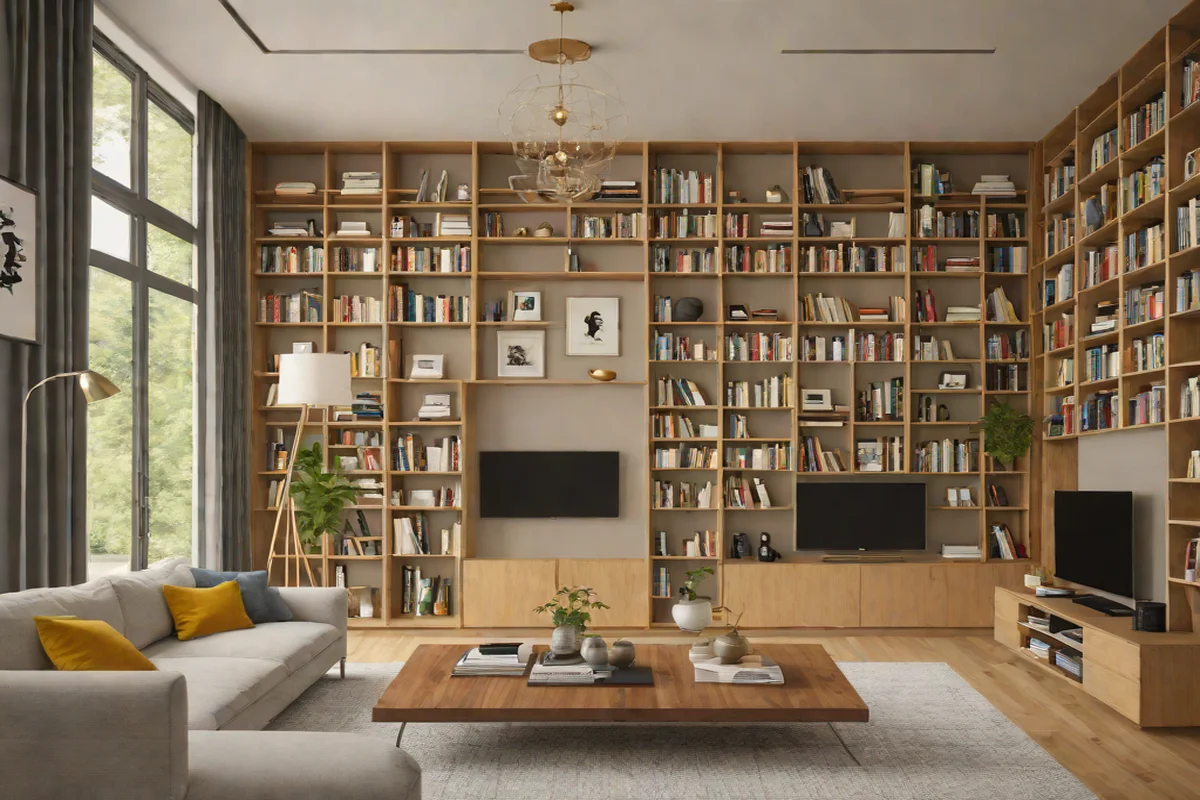
When horizontal floor space is a luxury you don’t have, the only way is up! Most people leave the top half of their walls empty, which is a massive waste of real estate. Floor-to-ceiling shelving draws the eye upward, highlighting the height of your ceiling. It turns your wall into a functional and decorative masterpiece, keeping the floor clear of bulky standalone cabinets. It’s an essential hack for any modern urban dwelling.
8. Wall-Mounted “Floating” Media Consoles
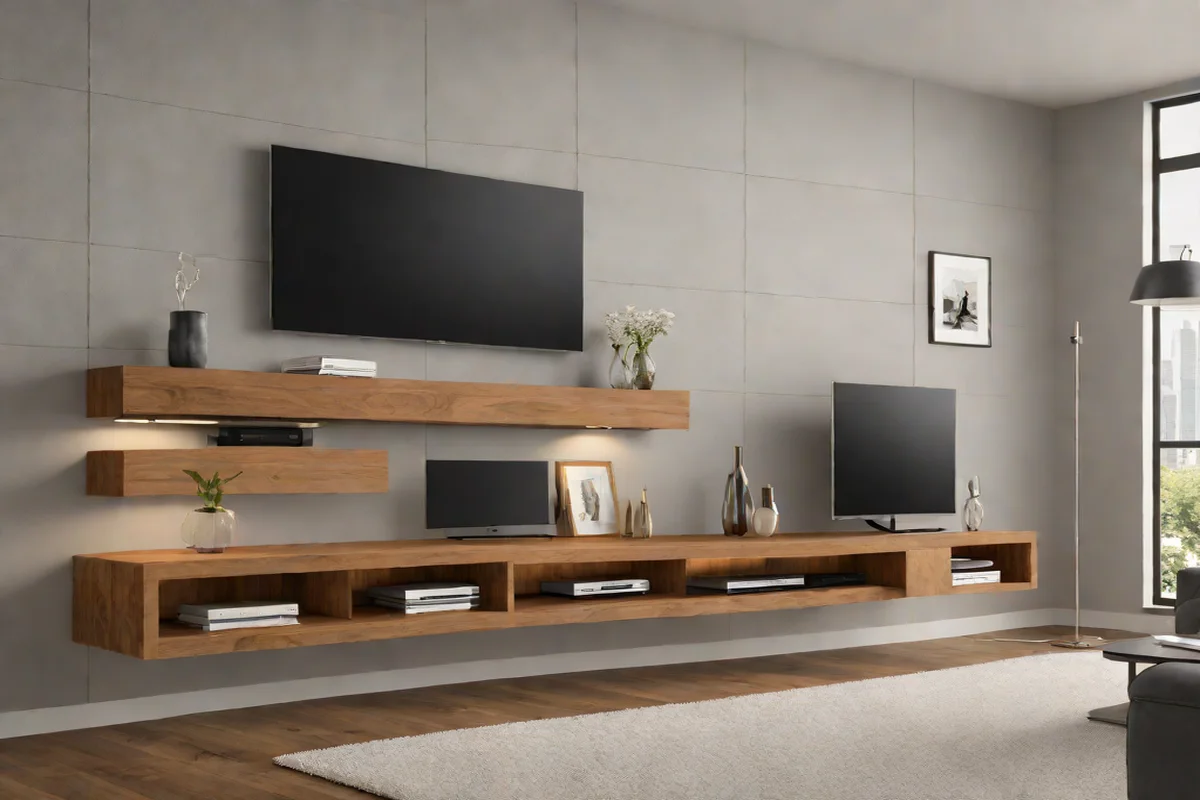
To maintain a professional and minimalist aesthetic, you must clear the floor. Wall-mounted or “floating” media consoles for your TV and electronics are perfect for this. By revealing the floor underneath the console, you create a sense of continuous space. This sleek, modern approach eliminates the bulkiness of traditional TV stands and provides a clean, architectural finish that is a hallmark of high-end trendy homes.
9. Corner-Centric Seating (The L-Shaped Power)
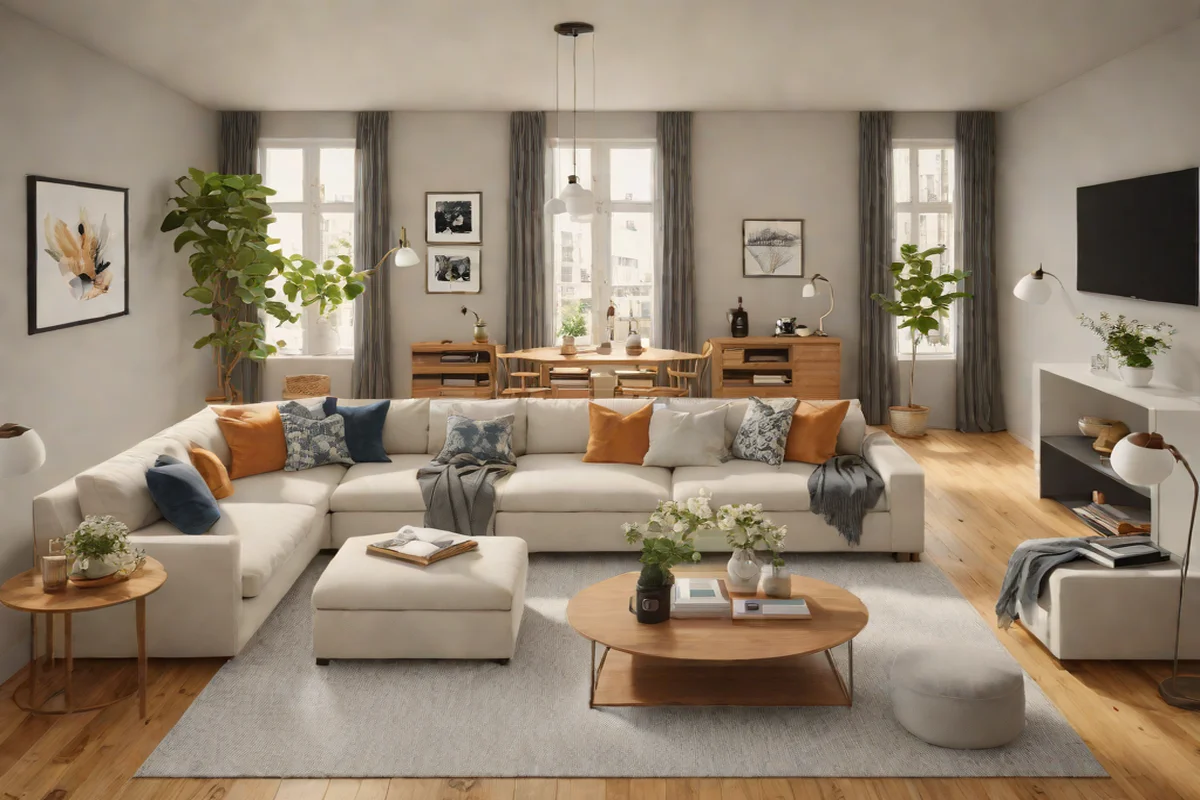
In small apartments, every corner is a goldmine. Using a sleek L-shaped sectional that fits snugly into a corner can actually provide more seating than a separate sofa and chair, while taking up less floor space. It defines the corner as a dedicated “Cozy Zone” and leaves the rest of the room open for movement. It’s about being smart with the “awkward” spaces that most people ignore.
10. The Magic of Transparent Furniture
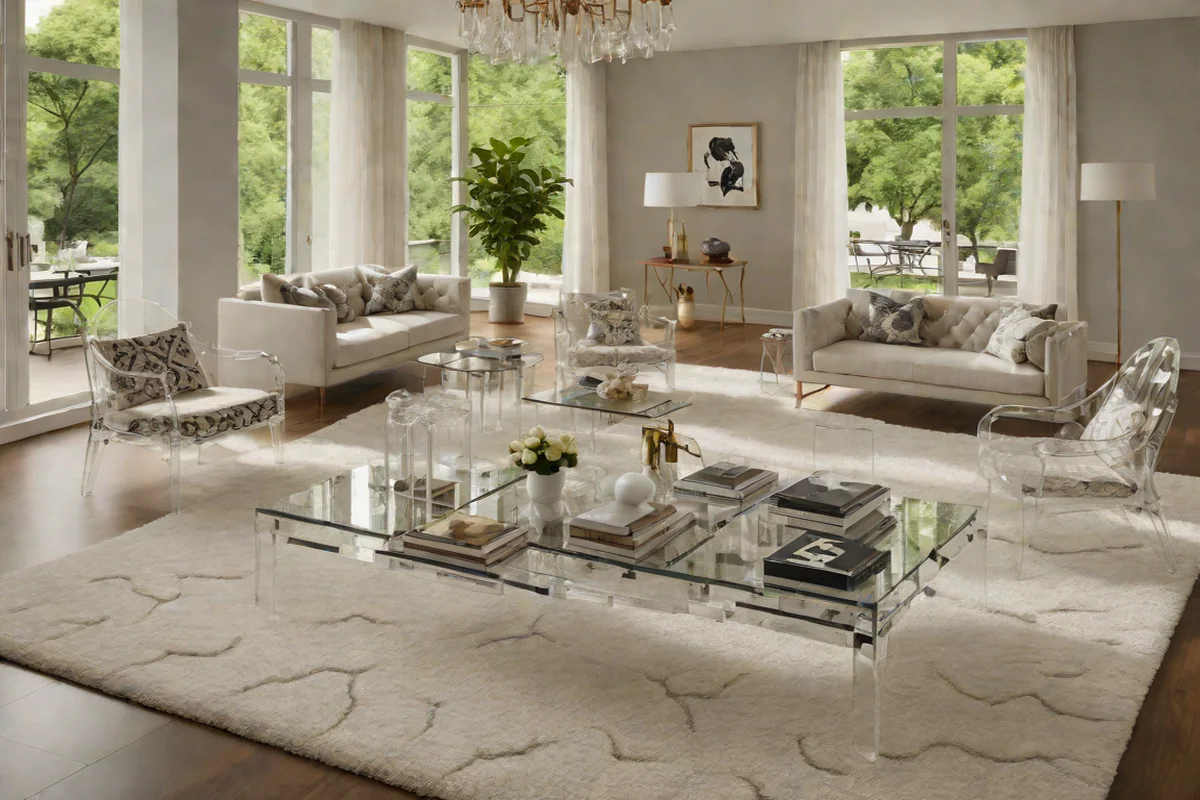
Acrylic, glass, and Lucite are the “hidden gems” of small-space design. Because these materials are transparent, they have zero visual weight. A glass-topped coffee table or an acrylic “ghost” chair provides all the functionality you need without blocking your view across the room. It’s like the furniture isn’t even there, allowing your beautiful rug or floor to shine through and keeping the room’s energy “Breezy” and airy.
11. Multi-Functional Ottomans as Coffee Tables
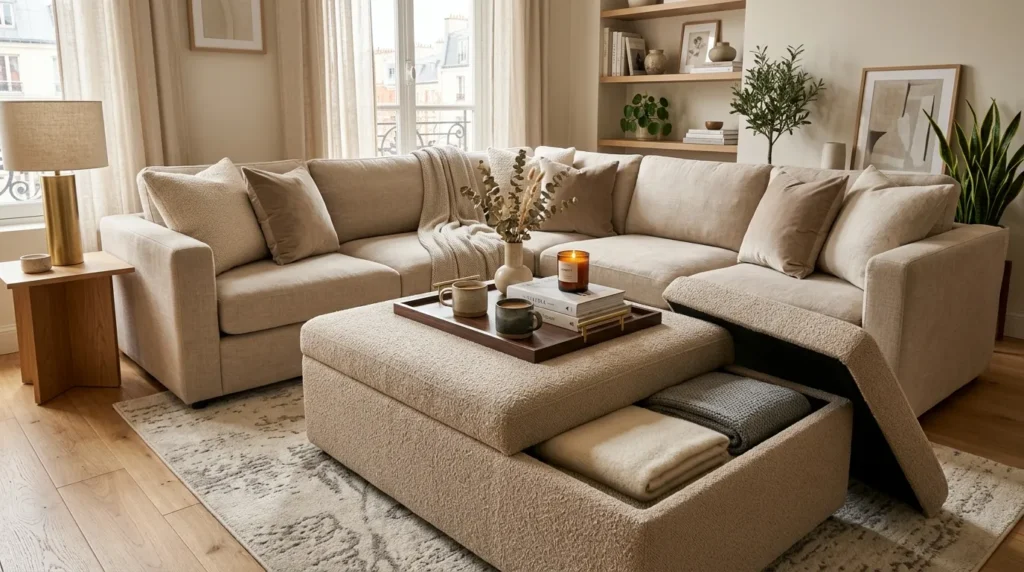
In a small home, every piece of furniture must earn its place. Replace a standard hard coffee table with a large, plush ottoman. It acts as a table when you use a tray on top, extra seating when you have guests, and a footrest for movie nights. Choosing one with hidden storage inside makes it an “Overachiever” in your layout, reducing clutter while adding a layer of tactile luxury.
12. Use Mirrors Opposite Windows
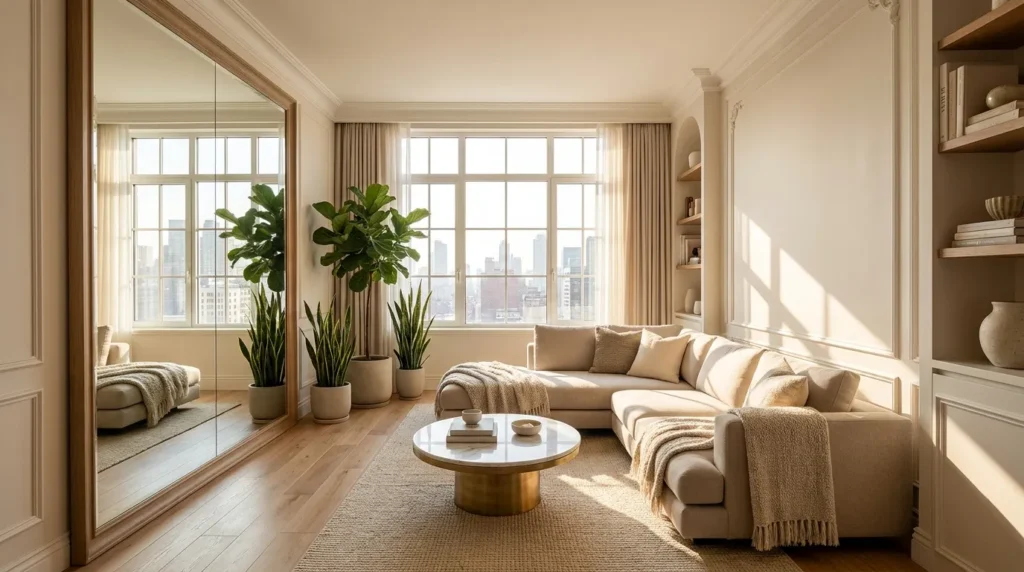
You’ve heard this before, but the “Layout” part is crucial. Don’t just hang a mirror anywhere; place it directly opposite your main window. This acts as a secondary light source, reflecting the natural sunlight and the outside view deep into the room. It doubles the visual narrative and makes the apartment feel like it has “Double Depth,” which is a classic professional cheat code for small spaces.
13. Layer Lighting at Different Heights
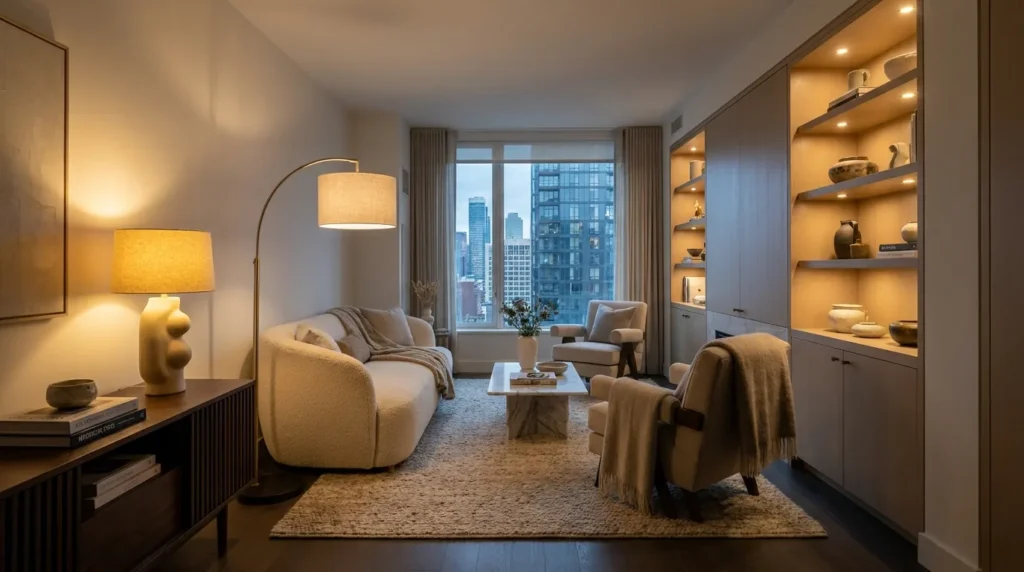
A single overhead light creates harsh shadows that make a room feel smaller and colder. To get that “designer glow,” you must layer your light sources at different heights. Combine a tall floor lamp, a medium-height table lamp on a sideboard, and low-level “puck lights” in your shelves. By having different “pockets of light,” you break up the single room into multiple interesting areas, making the whole place feel larger and more complex.
14. Embrace Low-Profile Furniture Aesthetics
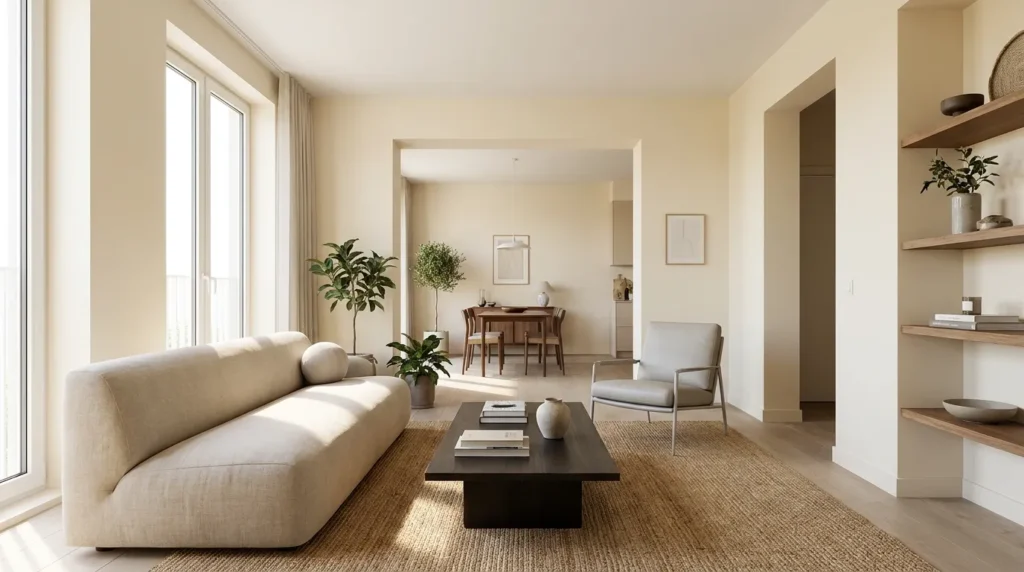
When you are working with standard ceiling heights, high-back sofas can make the room feel like a cave. Low-profile furniture – where the back of the sofa is lower – keeps the visual line of sight open across the room. This prevents the furniture from acting like a wall and keeps the overall atmosphere of the apartment breezy. It’s a sophisticated move that prioritizes the sense of “Volume” in the room.
15. Symmetry to Reduce “Visual Noise”
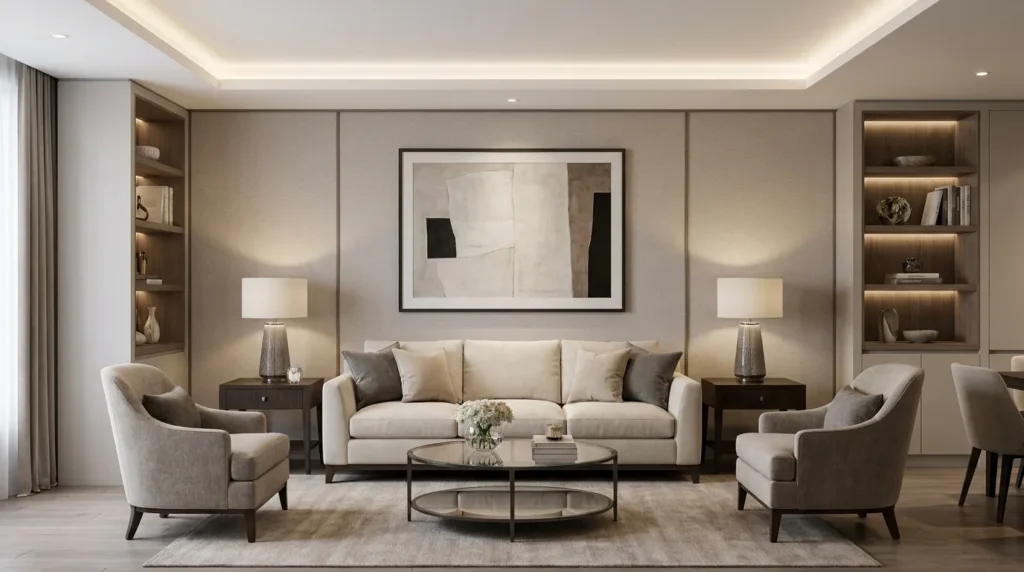
Symmetry to Reduce “Visual Noise”
In a small space, visual chaos is the enemy of luxury. Our brains find symmetry naturally soothing. By creating a symmetrical layout – like two matching lamps on either side of a sofa or two identical chairs facing each other – you create a sense of order. This organized “Rhythm” prevents the room from feeling cluttered, even if you have several pieces of furniture in a compact area.
16. The Slim-Arm Sofa Hack
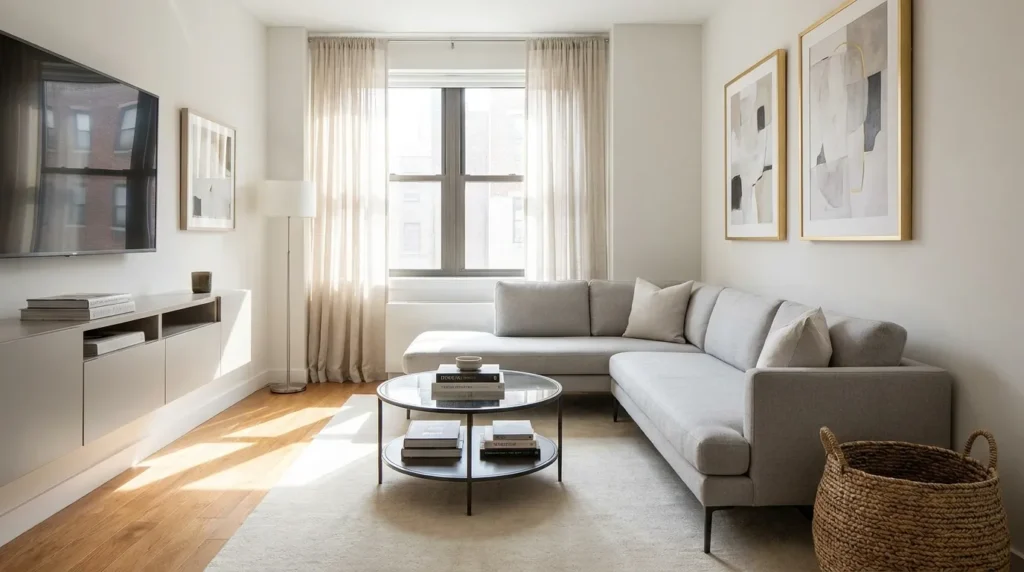
Standard sofas often have wide, rolled arms that can take up to 12 inches of floor space without adding any actual sitting room. In a small apartment layout, every inch is a battle. Choose “track arm” or “slim arm” designs. You get the same amount of seating space but with a much smaller overall footprint, allowing you to fit a larger sofa into a smaller room without it looking “stuffed.”
17. C-Tables for Side Utility
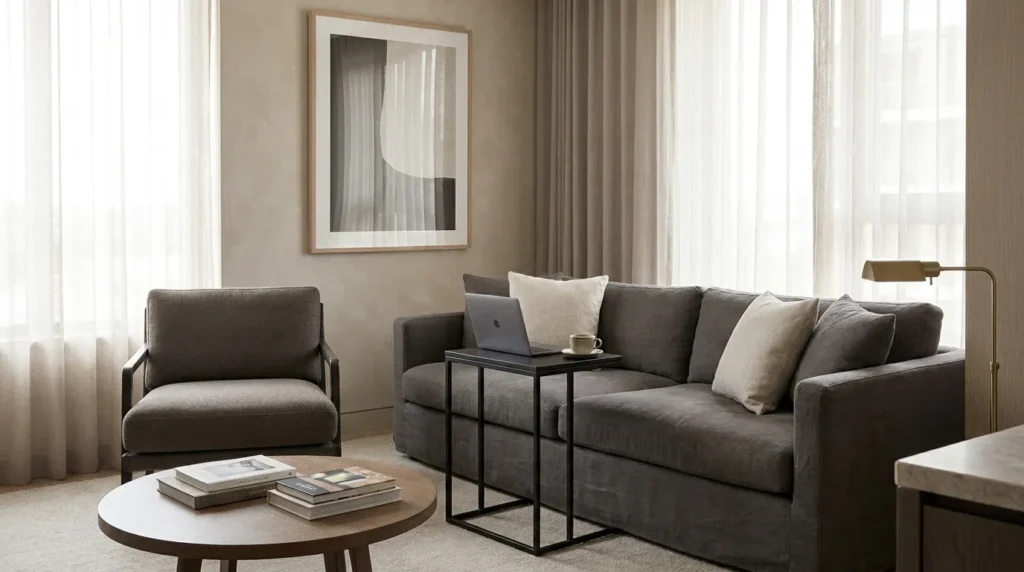
Bulky side tables can clutter up your walkway. Instead, use “C-tables.” These are shaped like the letter C, so the base can slide right under your sofa while the tabletop sits over your lap. They take up virtually zero floor space and are incredibly handy for your coffee or laptop. They provide the function you need without the “visual footprint” of a traditional table, keeping your layout clean and efficient.
18. Window Seating Integration
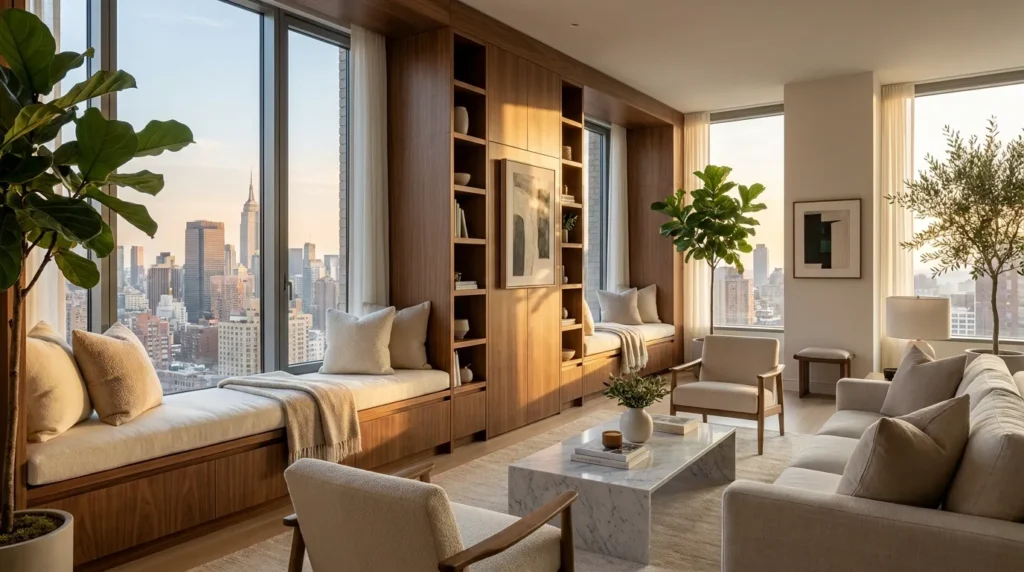
Don’t let the space under your window go to waste. A custom built-in window seat or a simple low bench provides extra seating without blocking the view or the light. It adds a bespoke, architectural element that makes the room feel truly custom-designed and high-end. It turns an unused “dead space” into a functional destination within the room.
19. Camouflage Large Storage Units
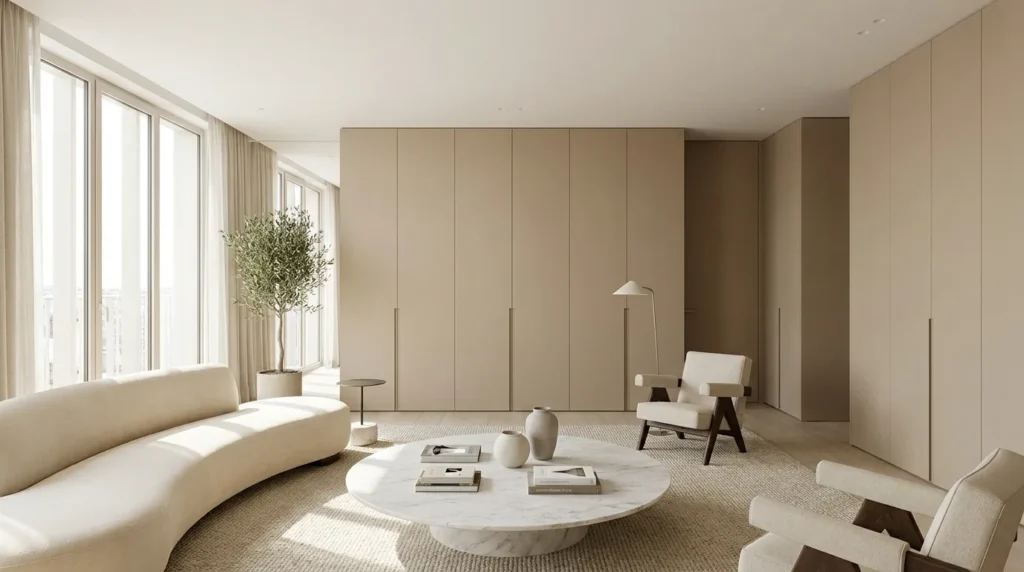
If you have a massive bookshelf or a storage cabinet that feels overwhelming, try the “Camouflage Hack.” Paint the unit the exact same color as your walls. This makes the furniture “disappear” into the background, preventing it from looking like a heavy, dark block. When the large items blend in, the room looks much cleaner and more open, which is essential for a high-end minimalist look.
20. The Scale of Art: One Large vs. Many Small
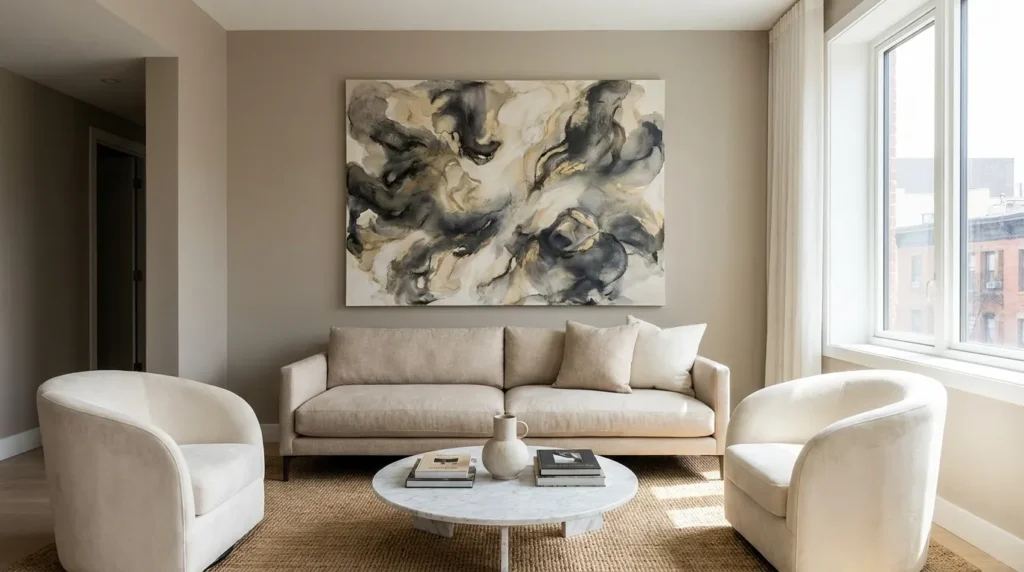
A gallery wall with 20 small frames can look like “Visual Noise” in a tiny room, making it feel cluttered. Instead, opt for one massive piece of statement art. A single large canvas anchors the room and gives it a grand sense of scale. It simplifies the visual narrative and tricks the brain into thinking the wall – and therefore the room – is much bigger than it actually is.
21. Hang Drapes “High and Wide”
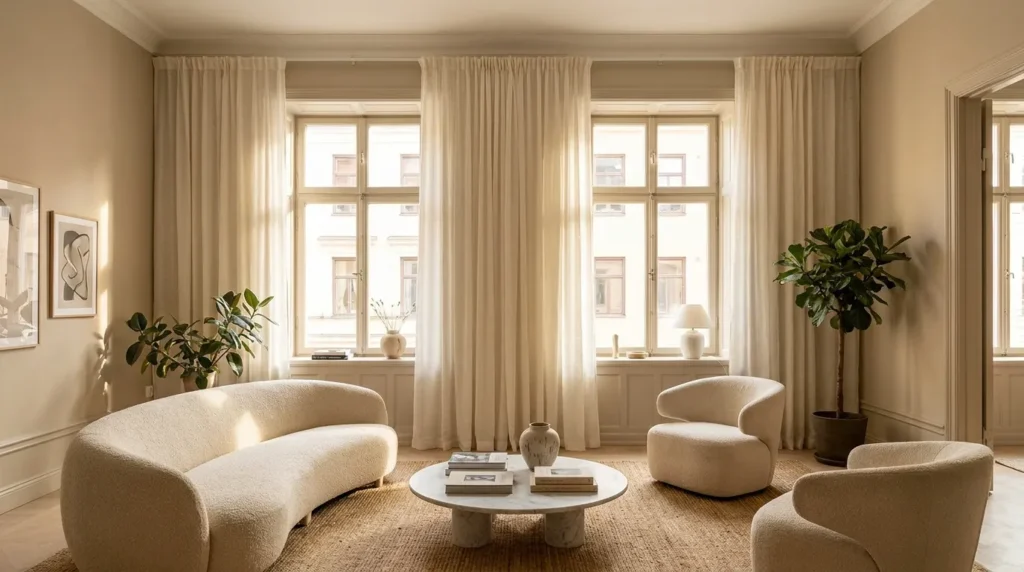
Don’t just cover the window; frame the wall. Hang your curtain rods right at the ceiling line and extend them 10 inches wider than the window on both sides. This makes the window look massive and creates long, vertical lines that add incredible height to the room. Use sheer fabrics to keep the natural light flowing, ensuring the apartment feels fresh and “Blooming” throughout the day.
22. Round Tables for Better Flow
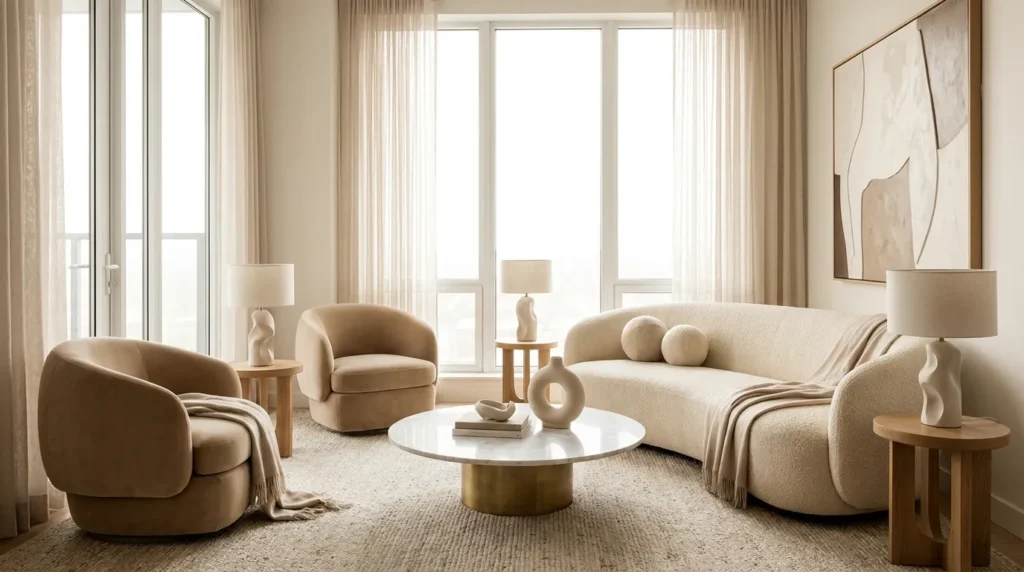
In tight layouts, sharp corners are “circulation killers.” You’ve probably bumped your knee on a rectangular coffee table more than once. Round coffee tables and circular side tables encourage an organic flow throughout the room. Without sharp corners, navigating a tiny apartment becomes much easier and the overall aesthetic feels softer, more inviting, and less rigid.
23. Utilize the Space Behind the Sofa
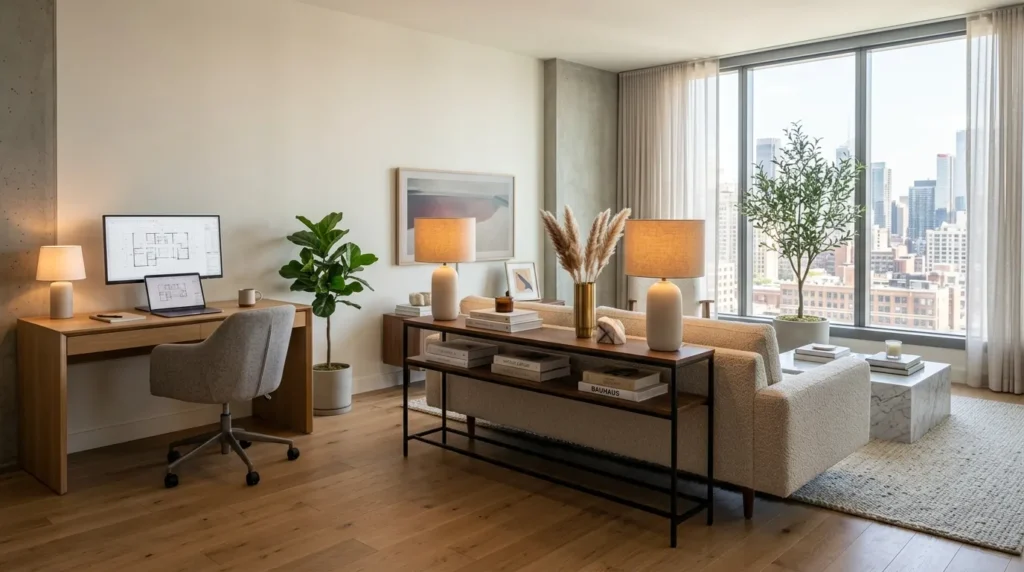
If you have “floated” your sofa in the center of the room, don’t leave that space behind it empty. A slim console table can act as a desk, a breakfast bar, or a place for lamps. This “bonus” surface area is incredibly useful in tiny apartments for adding functionality without taking up additional wall space, making your home work twice as hard for you.
24. “Ghost” Bar Carts on Wheels
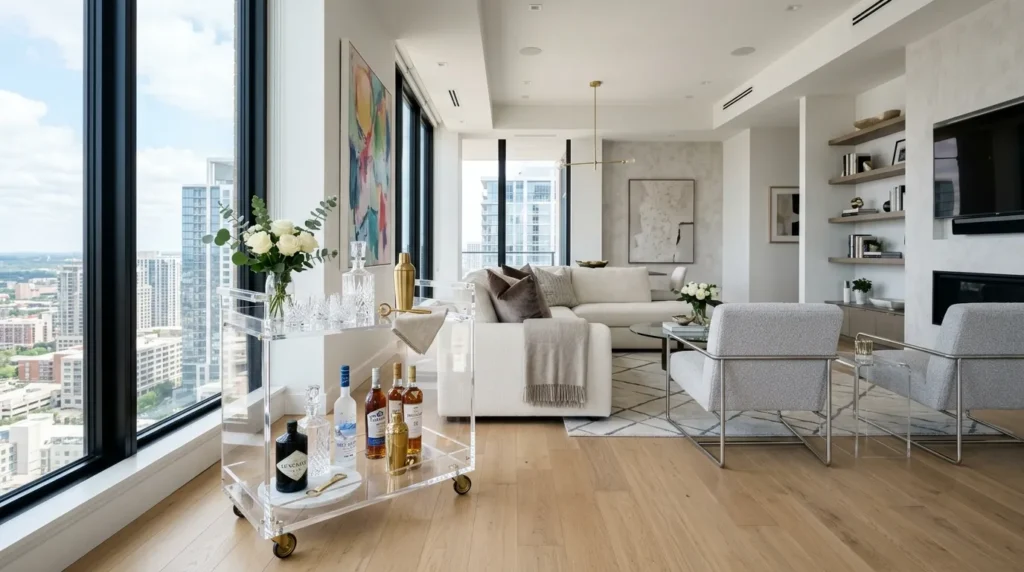
Flexibility is the hallmark of modern living. An acrylic bar cart on wheels is a perfect “Ghost” piece. It provides a surface for drinks or decor, but because it’s clear and movable, it doesn’t block the view or the light. If you need more floor space for a gathering or a workout, you can easily push it to the side. It adds a touch of “party-ready” luxury without the bulk.
25. The Seasonal “Bloom” Refresh
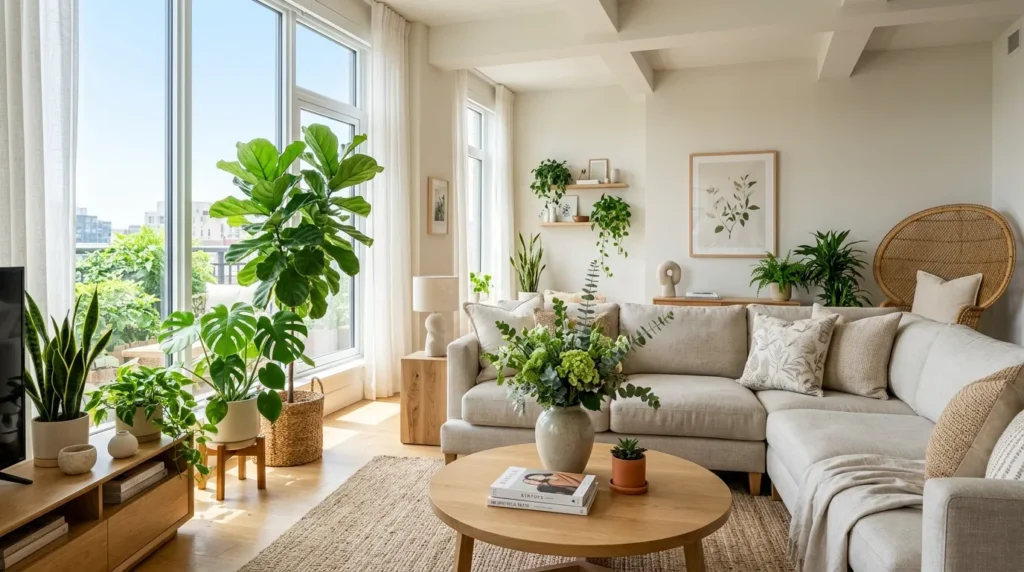
Finally, remember that your layout should never be static. A Trendy Home Bloom is a home that evolves. Swap your heavy rugs for light linens in the summer, move your chairs around to catch the winter sun, and always refresh your greenery. A home that feels “Alive” and changing will always feel more luxurious and spacious than one that is stuck in time.
Conclusion: Reclaim Your Floor Plan What is it?
Professional small living room layout is the art of using geometry, light, and visual weight to maximize every square inch. How to achieve it? Float your furniture, think vertically, use transparent materials, and always maintain clear traffic paths. Why does it matter? A well-planned layout reduces mental stress and provides a high-end sanctuary, regardless of the size of your home. When to start? Start today by pulling your sofa six inches away from the wall – feel the “Bloom” of space instantly!