
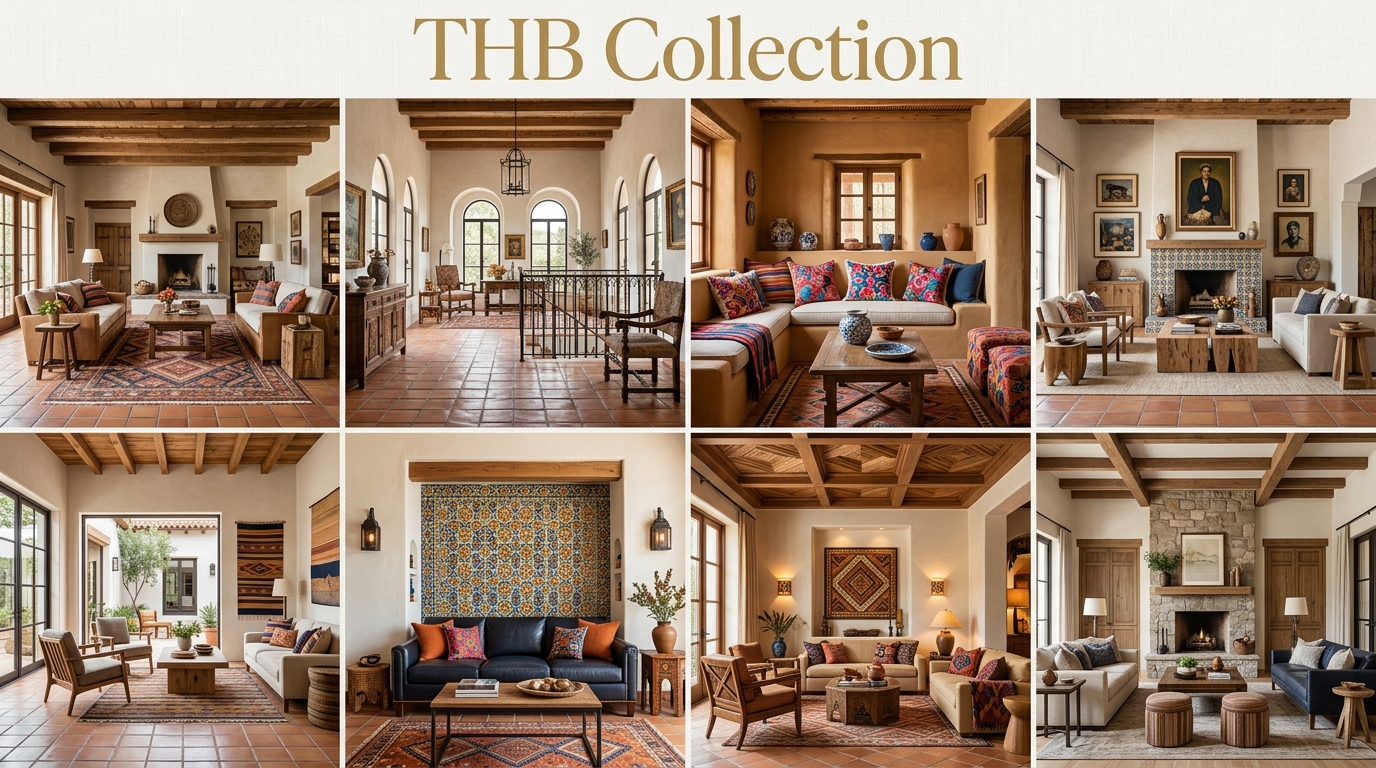
Incorporating the right 24 Mexican & Spanish Living Room Aesthetics into your house can completely transform a bland space into a warm, culturally rich sanctuary. People searching for this style usually crave an atmosphere that feels earthy, inviting, and deeply rooted in traditional craftsmanship. Moving away from cold minimalism, this approach embraces bold colors, heavy architectural details, and natural materials that tell a visual story. If you are browsing our interior design tips for a way to make your seating area feel more like a sun-drenched hacienda, you are looking in exactly the right place.
The beauty of this design approach lies in how seamlessly it blends rustic textures with vibrant, artistic details. You do not need to live in a historic adobe house to achieve the look; you just need to understand how to layer specific materials like wrought iron, terracotta, and carved wood. We are going to walk through practical ways to bring these elements into your layout, focusing on authentic touches that avoid looking like a themed restaurant. By paying attention to the intricate details and balancing heavy furnishings with bright accents, you can create a gorgeous gathering space for family and friends.
1. Authentic Saltillo Tile Flooring
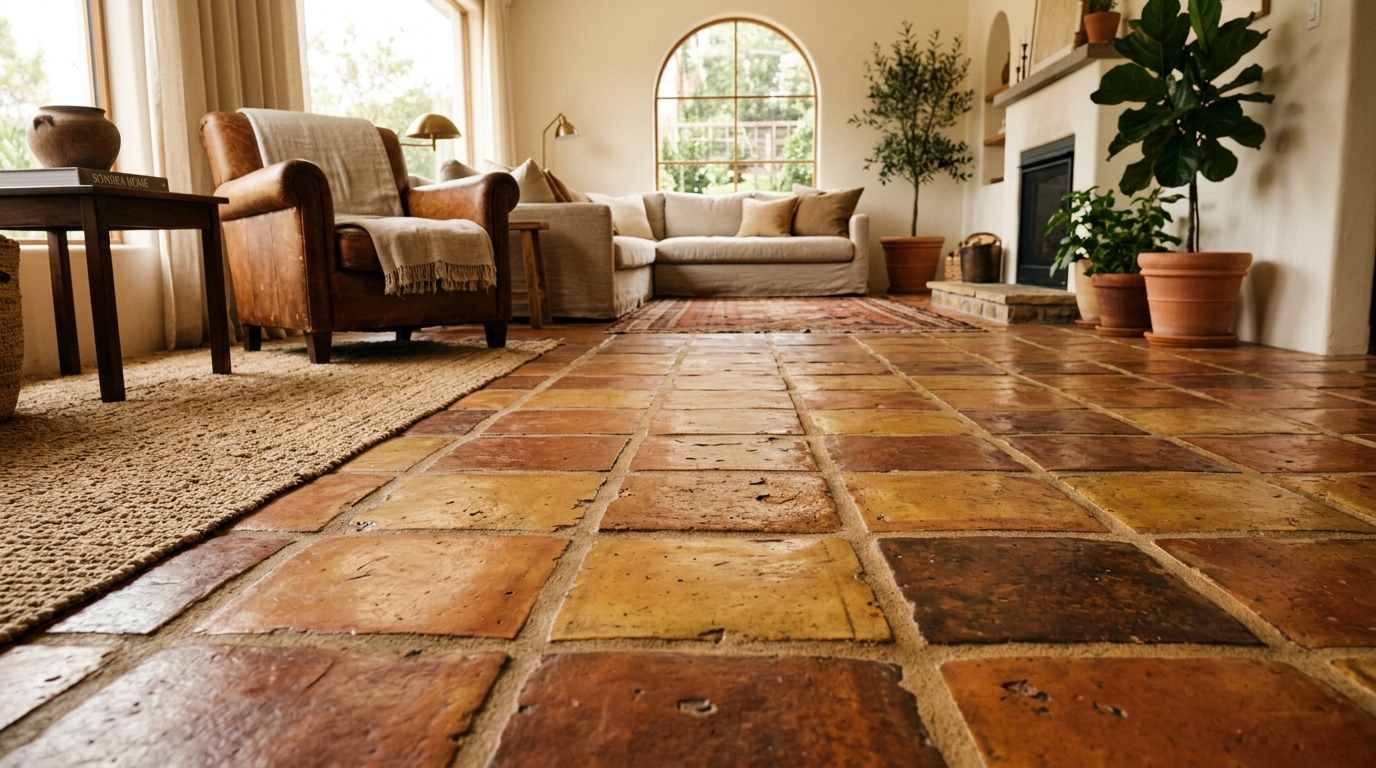
When you want to capture the true essence of Southwestern or Mediterranean-inspired design, flooring is the best place to start. Saltillo tiles, which are handmade terracotta tiles originating from Mexico, provide an incredible foundation full of earthy warmth and rustic charm. Because these tiles are sun-dried, you will often find beautiful imperfections, color variations ranging from golden yellow to deep red, and occasionally even a stray dog paw print baked right into the clay. To make this work in your home, it is crucial to use a high-quality sealant, as genuine Saltillo is highly porous and prone to staining. The rich, varying colors of the floor mean you can keep your walls relatively neutral while still enjoying a space that feels vibrant and alive. The natural cooling effect of clay is also incredibly practical if you live in a warmer climate.
2. Exposed Dark Wood Beams
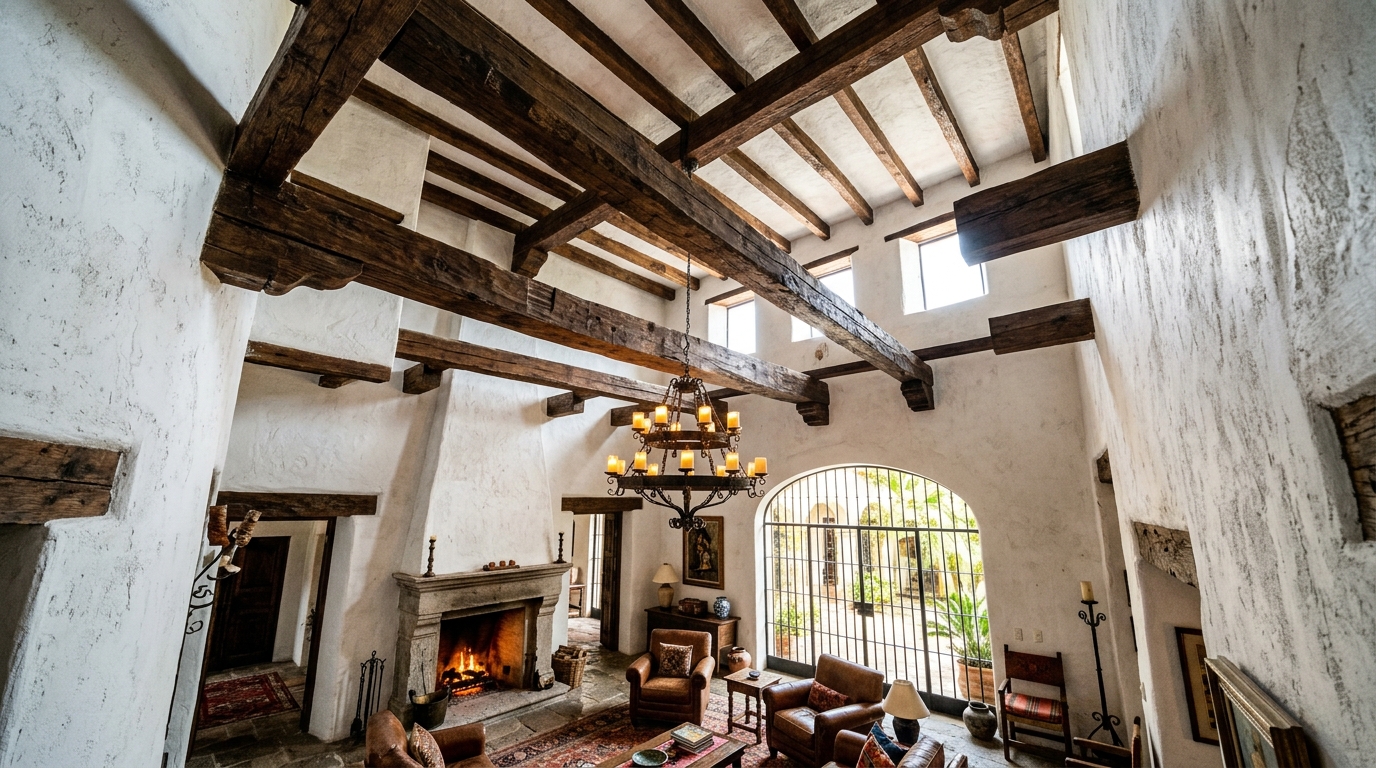
Traditional hacienda architecture relies heavily on exposed structural elements, making dark wooden ceiling beams a highly sought-after feature. These large, heavy timbers immediately draw the eye upward and provide a strong contrast against crisp, white plastered walls. If your house does not naturally have structural beams, you can easily install lightweight faux wood beams that mimic the look of aged, hand-hewn lumber perfectly. The secret is to choose a dark walnut or espresso stain to ensure the wood stands out and feels historically accurate. This rugged architectural detail adds a sense of history and permanence to the room, preventing the ceiling from feeling empty or ignored. It brings a cozy, grounded feeling to the entire layout.
3. Vibrant Woven Textile Accents
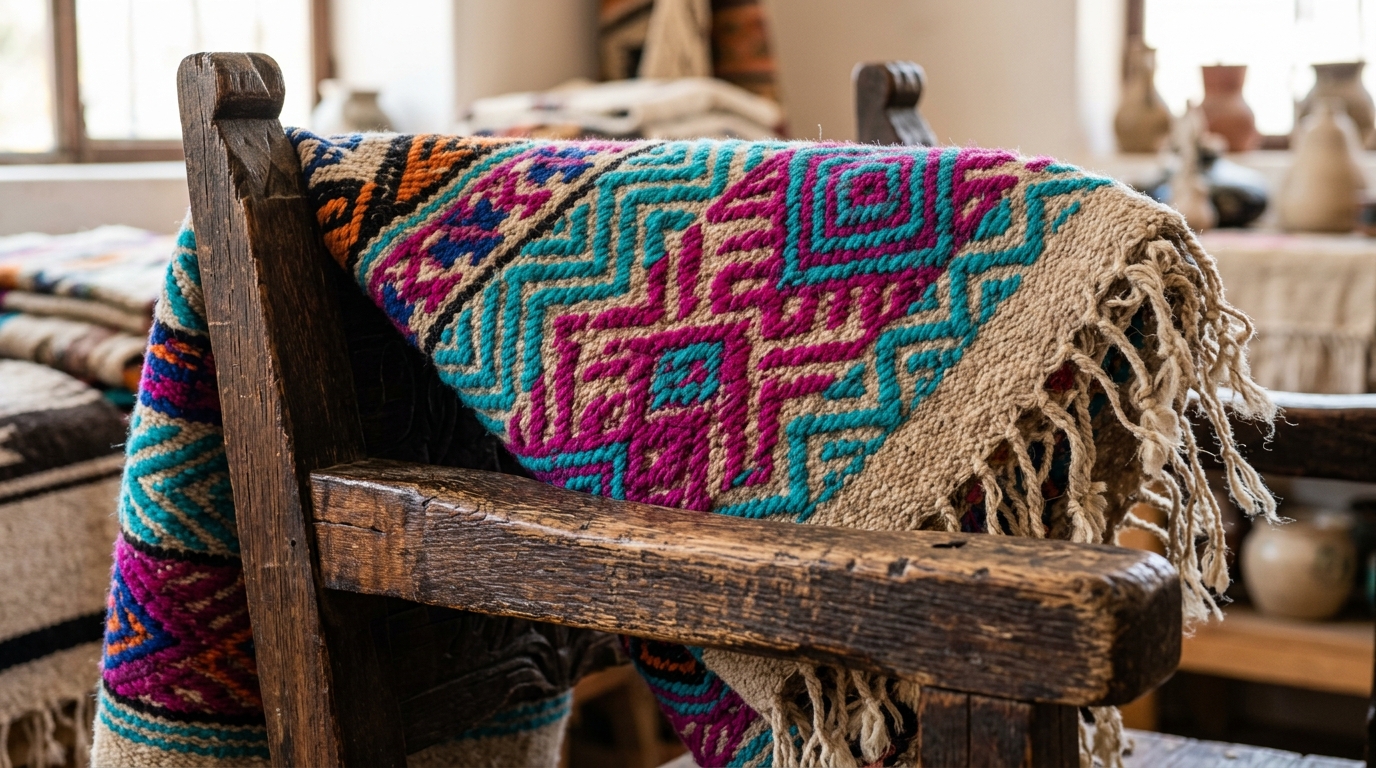
You cannot achieve this look without incorporating bold, hand-woven textiles that celebrate indigenous craftsmanship. Think about throwing a vibrant Serape or a beautifully patterned Zapotec rug over the back of a solid-colored sofa. These textiles inject intense colors – like bright magenta, turquoise, sunny yellow, and deep indigo – into an otherwise earthy room. They serve as functional art, bringing warmth and softness while breaking up the visual weight of heavy wooden furniture. Do not be afraid to mix different geometric patterns, as long as the underlying color palette remains cohesive. Using these textiles as wall hangings or throw blankets is an affordable way to establish the cultural vibe without committing to expensive furniture pieces.
4. Whitewashed Stucco Wall Finishes
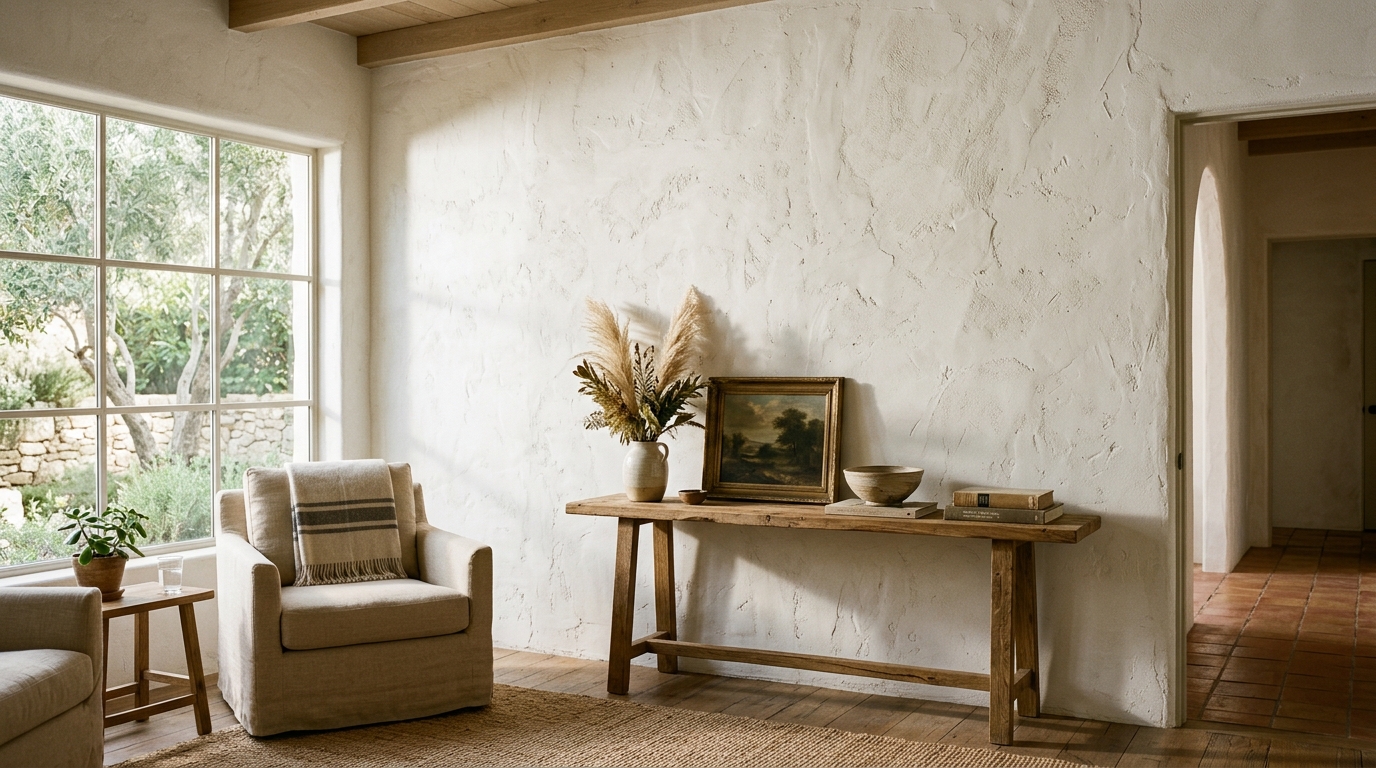
Smooth drywall simply does not belong in a space trying to emulate historical Spanish colonial or Mexican architecture. Applying a stucco or plaster finish to your walls adds essential tactile texture and mimics the traditional adobe building methods. Whitewashing these textured walls provides a clean, bright canvas that bounces natural light around the room, which is especially important if your space features small windows or heavy furniture. The slight irregularities in the plaster catch the shadows beautifully, adding immense depth that flat paint can never achieve. It is a subtle background detail that makes a massive impact on the overall authenticity of the room. Tip: If real plaster is too expensive, you can achieve a very similar look using a thick application of joint compound and a wide trowel before painting.
5. Arched Doorways and Windows
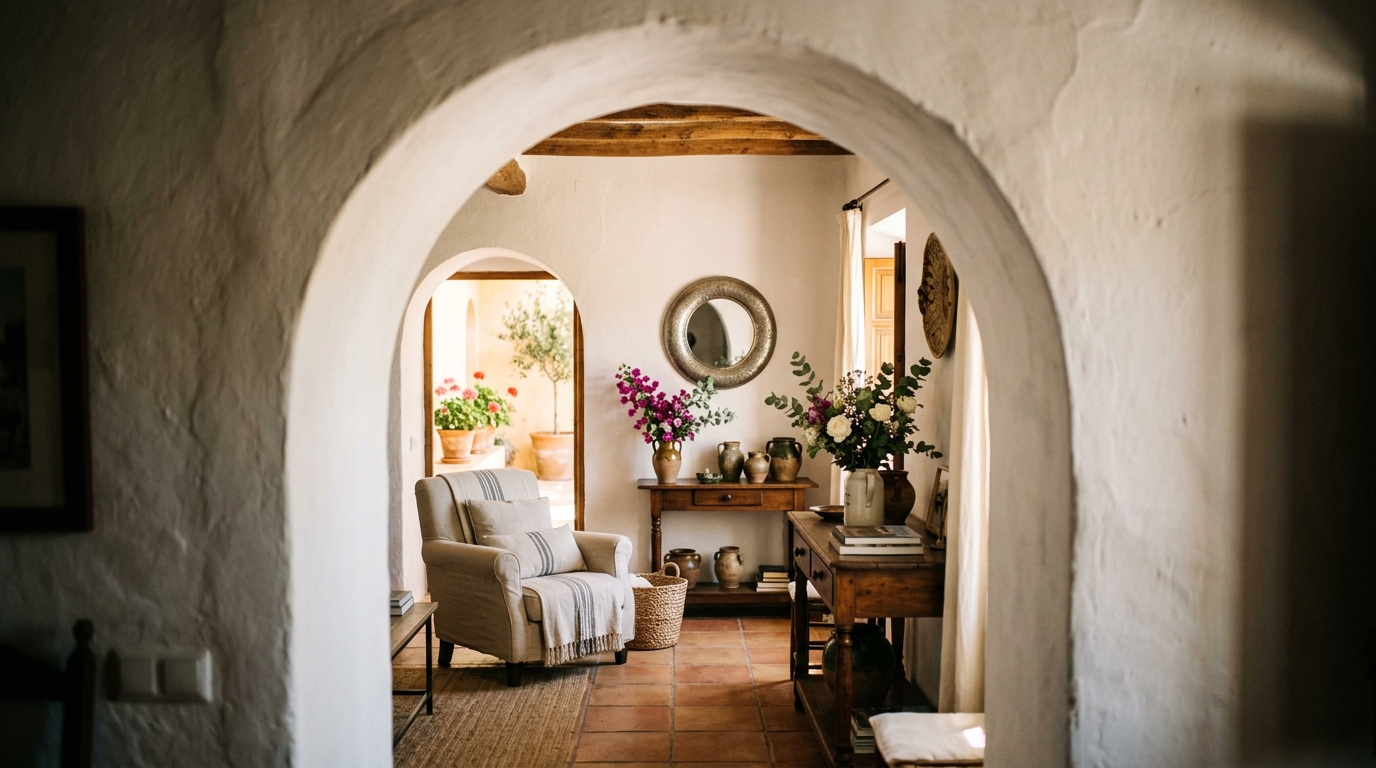
Soft curves are a defining characteristic of Mediterranean and Spanish architecture, acting as a gentle counterpoint to heavy, square furniture. Introducing arched doorways, windows, or even architectural wall niches completely changes the structural flow of the room. The curved lines feel incredibly romantic and welcoming, guiding people naturally from one space to the next. If remodeling your actual doorways is out of the question, you can introduce this shape through large arched floor mirrors or arched bookcases. Just as you might rethink the shape of entertainment wall layouts to make a room feel larger, incorporating arches visually lifts the ceiling and adds a touch of classic elegance.
6. Wrought Iron Chandelier Lighting
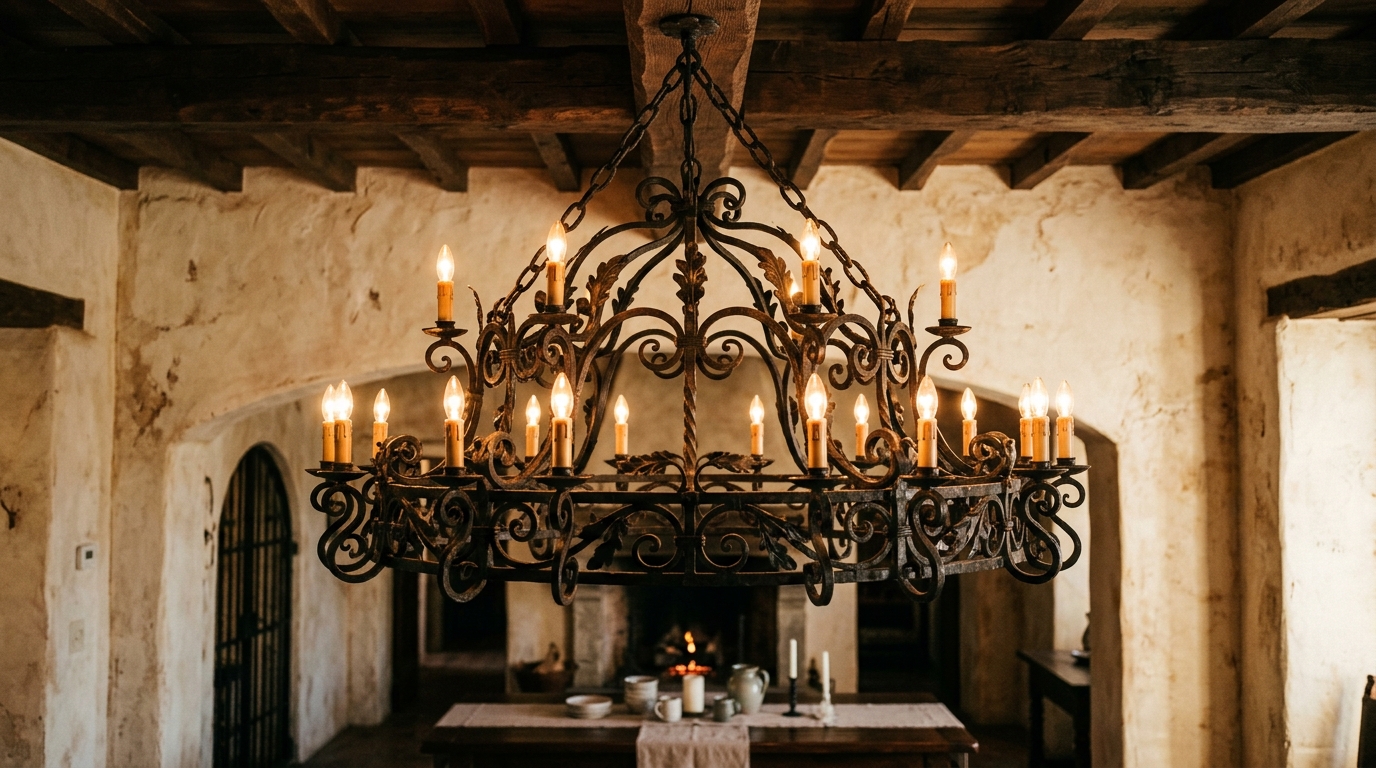
Lighting in these traditional spaces should feel heavy, dramatic, and handcrafted. A massive wrought iron chandelier hanging in the center of the room acts as a spectacular focal point. Look for fixtures featuring intricate scrollwork, dark black or rusted finishes, and candle-style bulbs. The dark metal provides a striking visual contrast against white stucco ceilings and complements any dark wood beams perfectly. Avoid shiny brass or polished chrome, as these modern finishes will clash with the rustic aesthetic. Hanging the chandelier slightly lower than you normally would helps create an intimate, cozy atmosphere when you are entertaining guests in the evening.
7. Traditional Talavera Tile Details
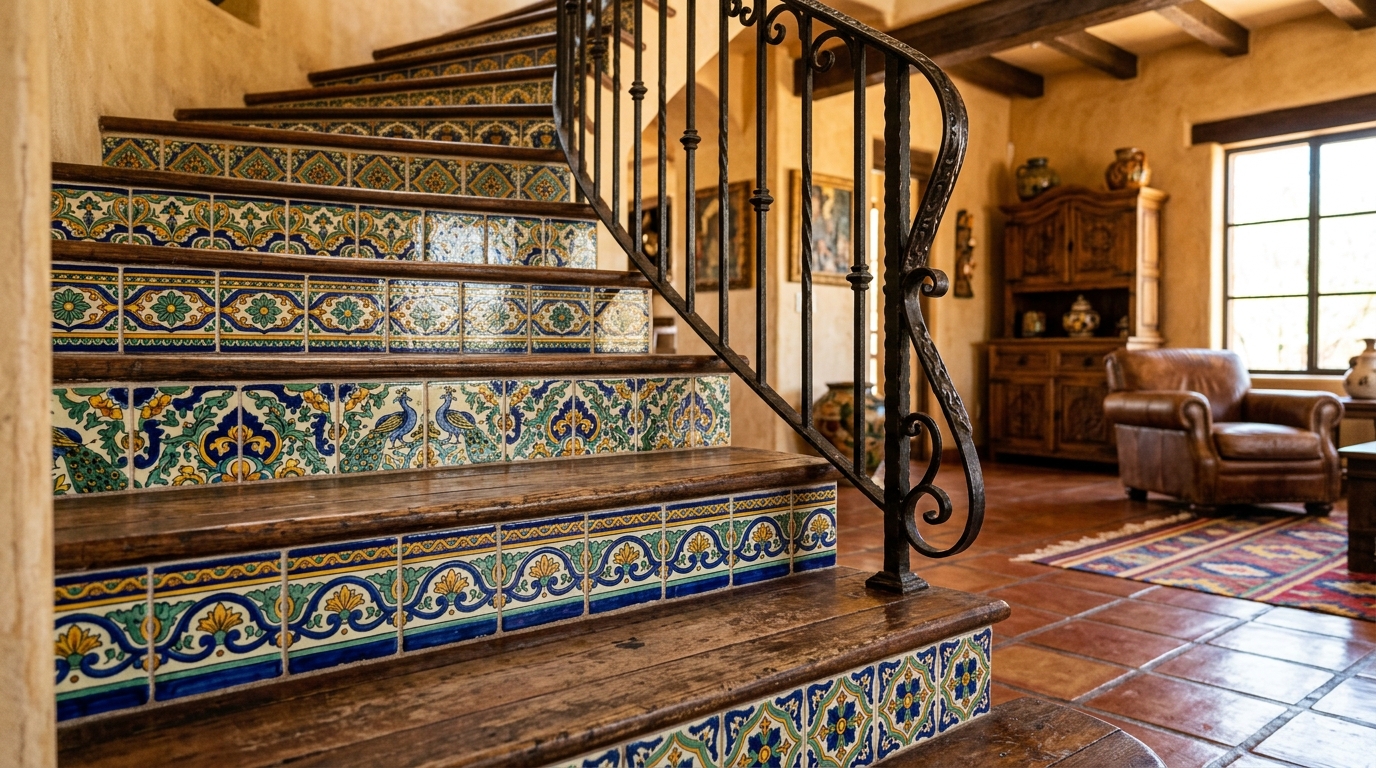
Talavera tiles are hand-painted, vividly colored ceramic tiles that instantly signal Mexican heritage and artistic tradition. While they are often used in kitchens and bathrooms, you can brilliantly incorporate them into your main seating area. Consider using them to line the stair risers leading out of the room, framing a large wall mirror, or decorating the baseboards. The intricate floral and geometric patterns, typically featuring rich blues, yellows, and greens, add a surprising pop of detail. If you are already thinking about bathroom tile patterns for a remodel, buying a few extra Talavera tiles to use as custom coasters on your coffee table is a clever way to tie the whole house together.
8. Mexican & Spanish Living Room Aesthetics
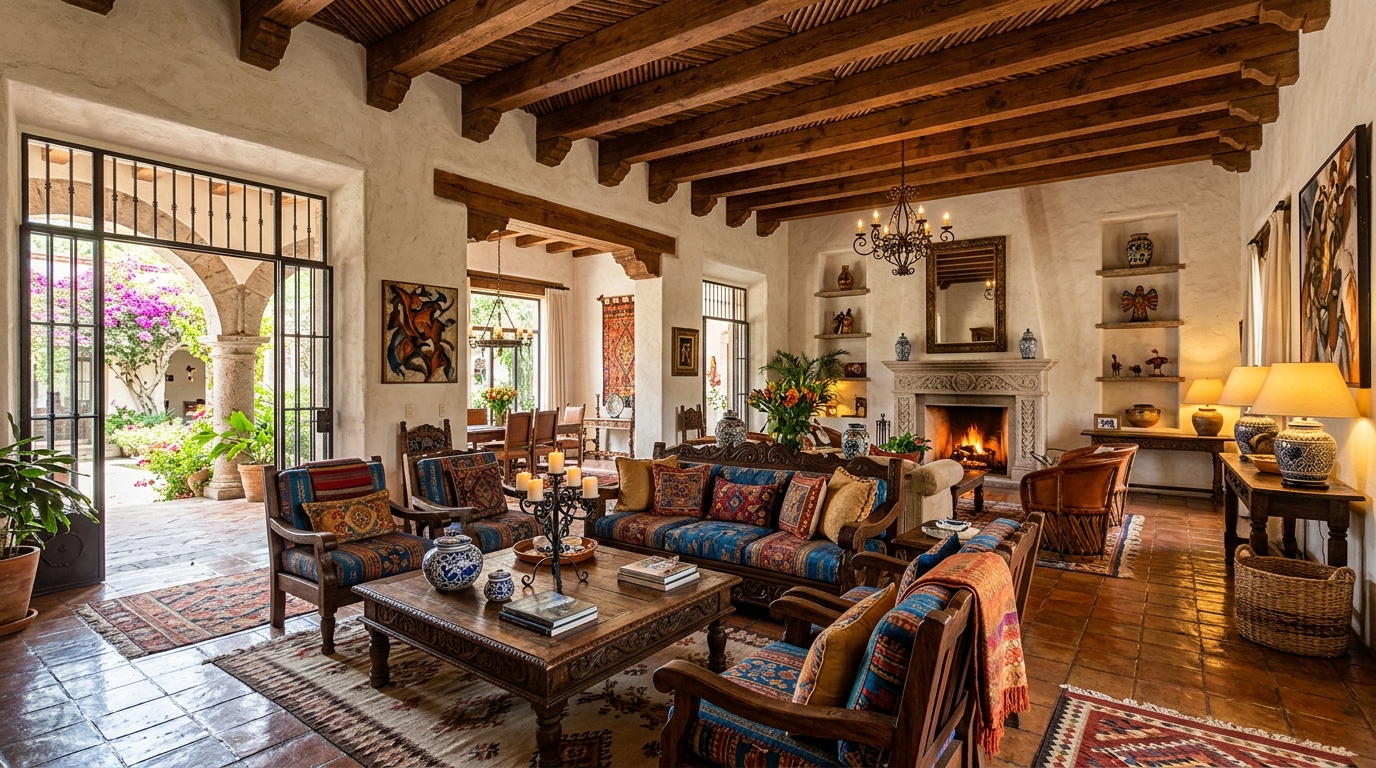
Fully embracing Mexican & Spanish Living Room Aesthetics requires a commitment to raw, natural materials and artisanal craftsmanship. You want the space to feel as though every item was carefully selected from a local market or passed down through generations. Avoid matching furniture sets that look overly manufactured; instead, focus on unique, standalone pieces that share a similar rugged quality. The aesthetic thrives on the tension between the harshness of wrought iron or stone and the softness of brightly colored woven wools and cottons. Creating this balance ensures the room feels both highly curated and incredibly livable. It is an approach that values history, warmth, and a welcoming spirit above all else.
9. Carved Dark Wood Furniture
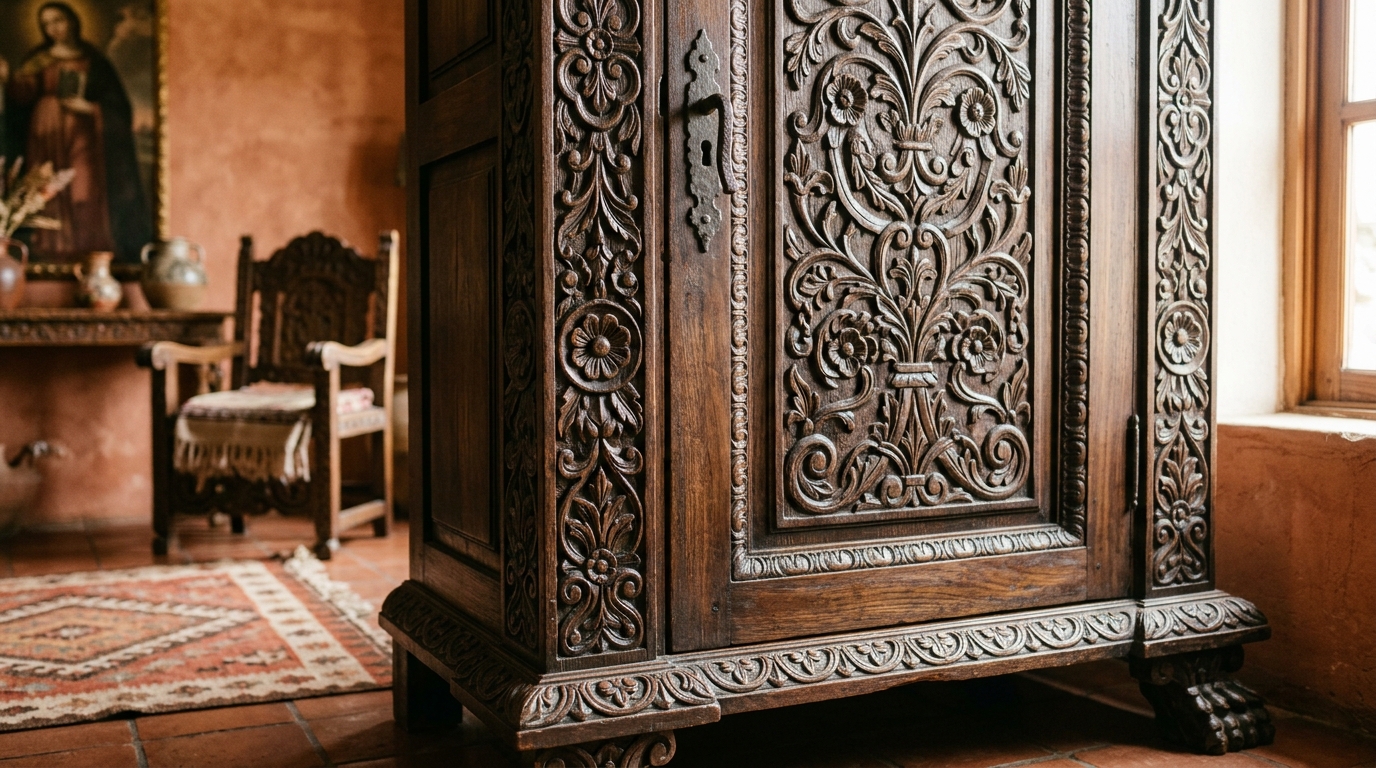
When selecting furniture for this style, weight and texture are everything. Look for heavy, solid wood pieces featuring intricate, hand-carved details along the legs, doors, or trim. Dark woods like mahogany, walnut, or stained pine work best, providing a rich, masculine contrast to the brightly colored textiles you will use for accents. A large, carved wooden armoire is perfect for hiding a modern television, while a thick, solid wood coffee table anchors the center of the room. The carvings often feature floral motifs, stars, or geometric patterns that reflect colonial design influences. These pieces should feel sturdy enough to last a lifetime.
10. Warm Terracotta Color Palettes
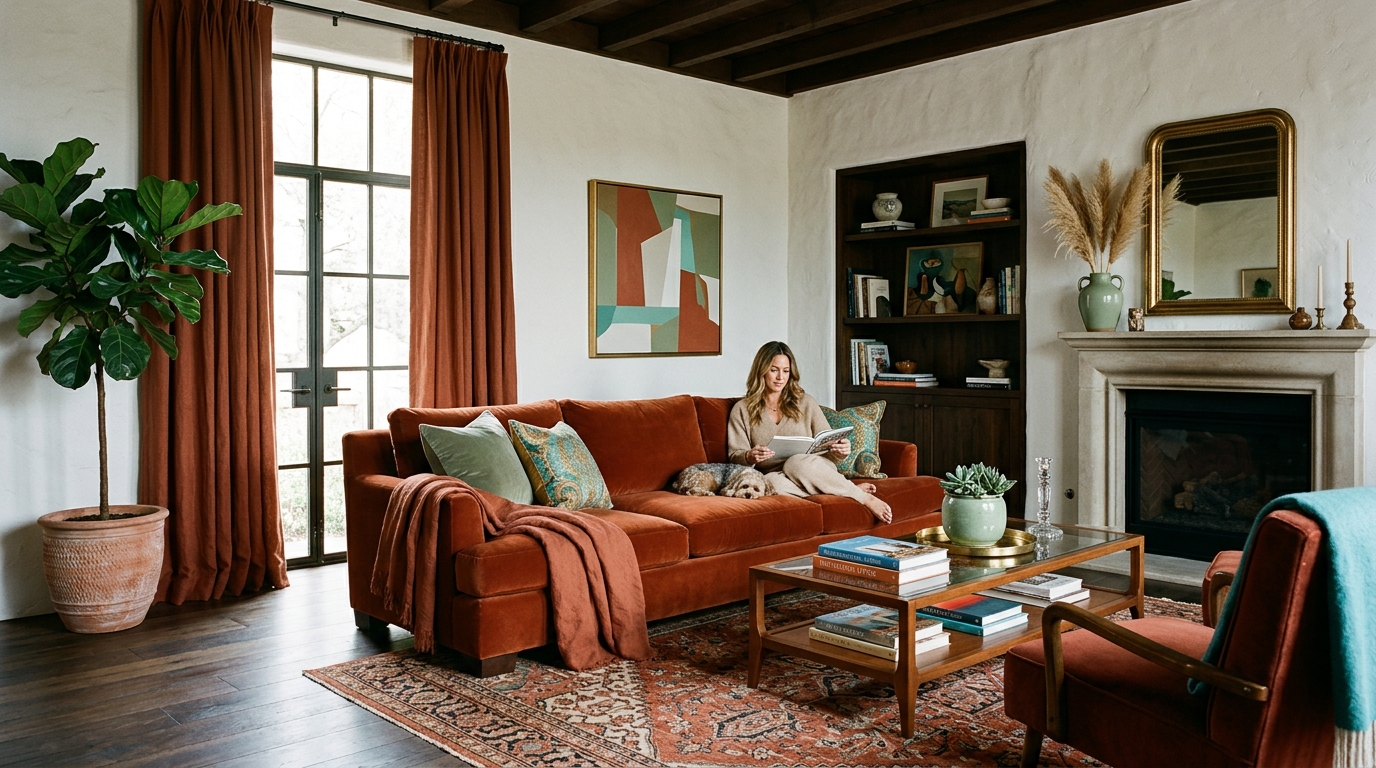
Even if you choose to keep your main walls white, you need to introduce the warmth of baked clay into your color scheme. A terracotta color palette mimics the natural earth and clay materials used in traditional desert architecture. You can bring these burnt orange, rust, and clay tones in through your upholstery, heavy drapery, or large area rugs. These colors are inherently comforting and make large, airy rooms feel much more intimate and grounded. They pair beautifully with touches of sage green or deep turquoise, reflecting the colors of the desert landscape. Using warm tones effectively prevents the room from feeling stark or cold.
11. Oversized Indoor Cacti Plants
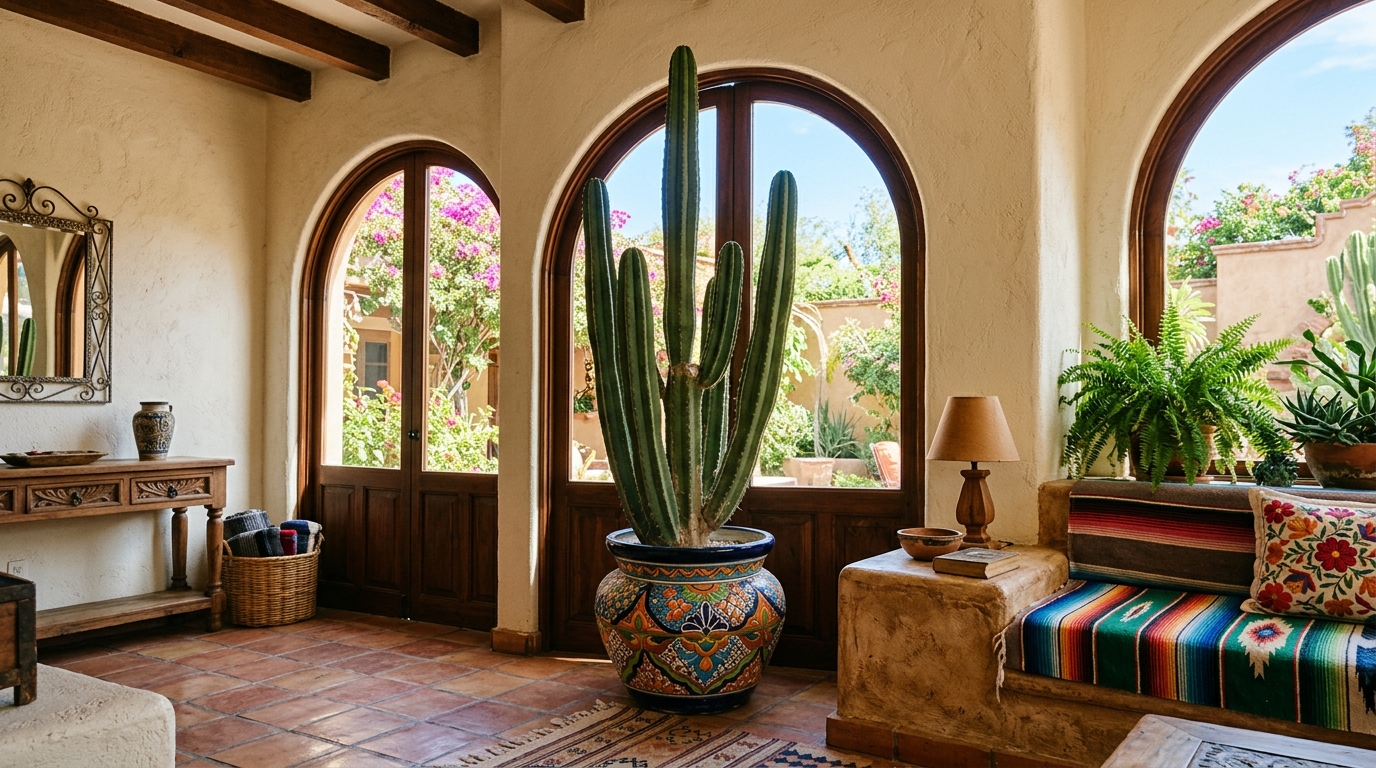
Bringing the desert landscape indoors is a fantastic way to reinforce the Southwestern or Mexican vibe of the room. Large, sculptural plants like a towering San Pedro cactus, an oversized Agave, or a massive Euphorbia act as living pieces of art. Place a large cactus in a woven basket or a hand-painted ceramic pot in a sunny corner of the room. The structural, spiky shapes of these plants provide a wonderful visual contrast to the soft curves of arched doorways or plastered walls. They are also incredibly low-maintenance, requiring very little water, making them perfect for homeowners who lack a green thumb but still want dramatic indoor greenery.
12. Built-In Wall Niche Shelving
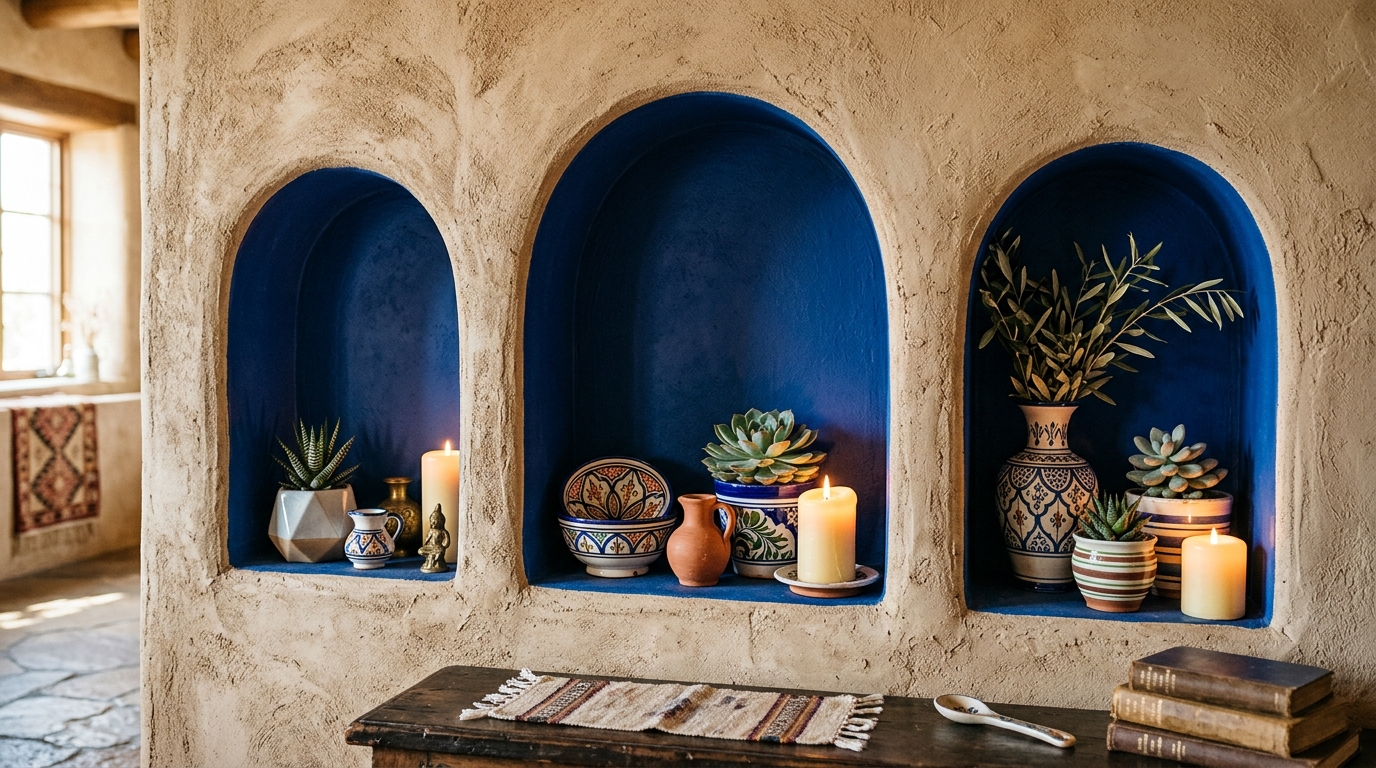
Traditional adobe homes often feature small, arched niches carved directly into the thick plaster walls. These built-in shelving units are ideal for displaying your favorite decorative items without taking up valuable floor space with bulky bookshelves. You can paint the inside of the niche a vibrant accent color, like deep blue or mustard yellow, to make the items inside pop. Use these spaces to display hand-carved wooden saints, small potted succulents, or glowing pillar candles. If you are trying to maximize space in small lounge areas, adding faux niches between your wall studs is a brilliant way to add character and storage simultaneously.
13. Hand-Painted Pottery Displays
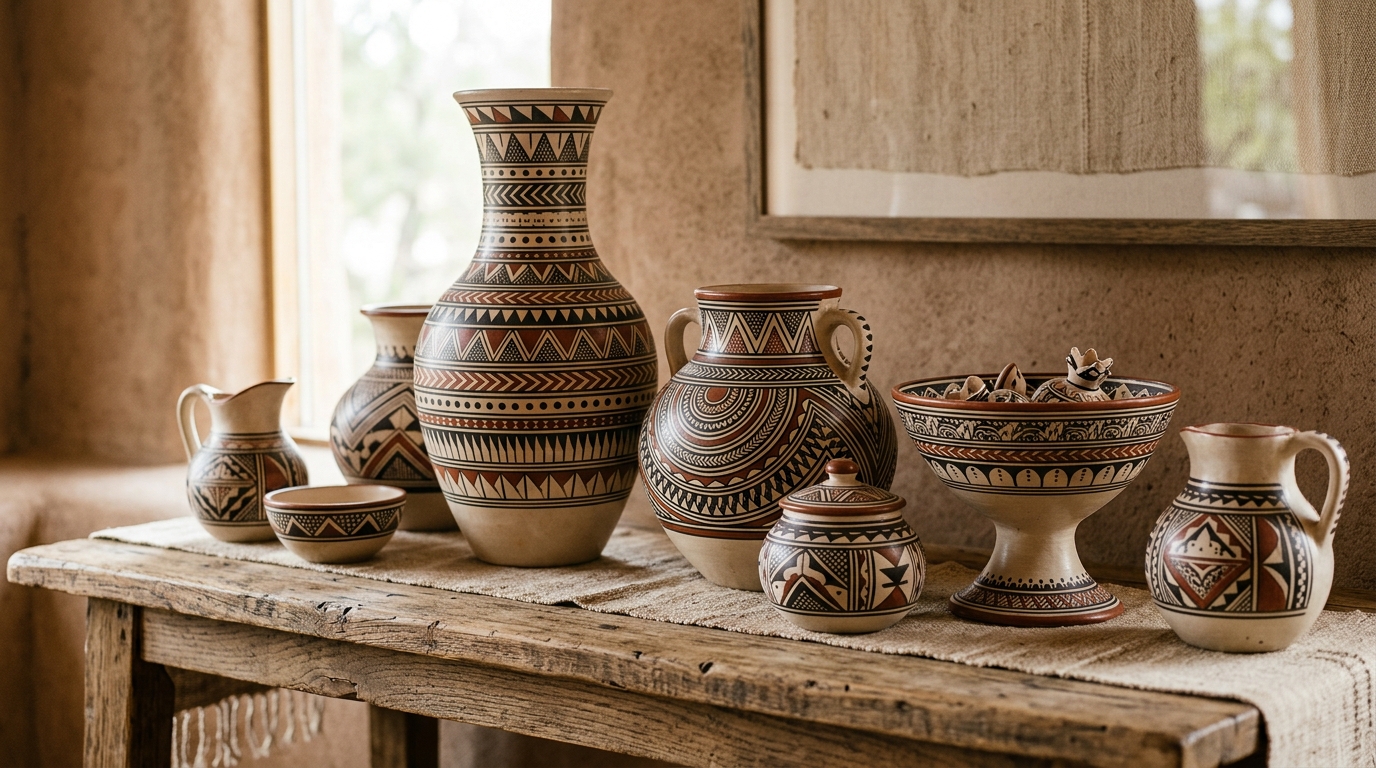
Artisanal ceramics are a massive part of the cultural heritage we are exploring, and displaying them proudly adds authentic charm. Seek out hand-painted Mexican pottery, such as Mata Ortiz or traditional black clay pottery from Oaxaca. Grouping several pieces of varying heights and shapes together on a console table or a floating shelf creates a beautiful, curated collection. Do not worry about the patterns matching perfectly; the beauty lies in the distinct, handmade nature of each piece. You can use larger pots to hold firewood or extra blankets, while smaller bowls are perfect for catching keys and daily clutter.
14. Exploring Mexican & Spanish Living Room Aesthetics
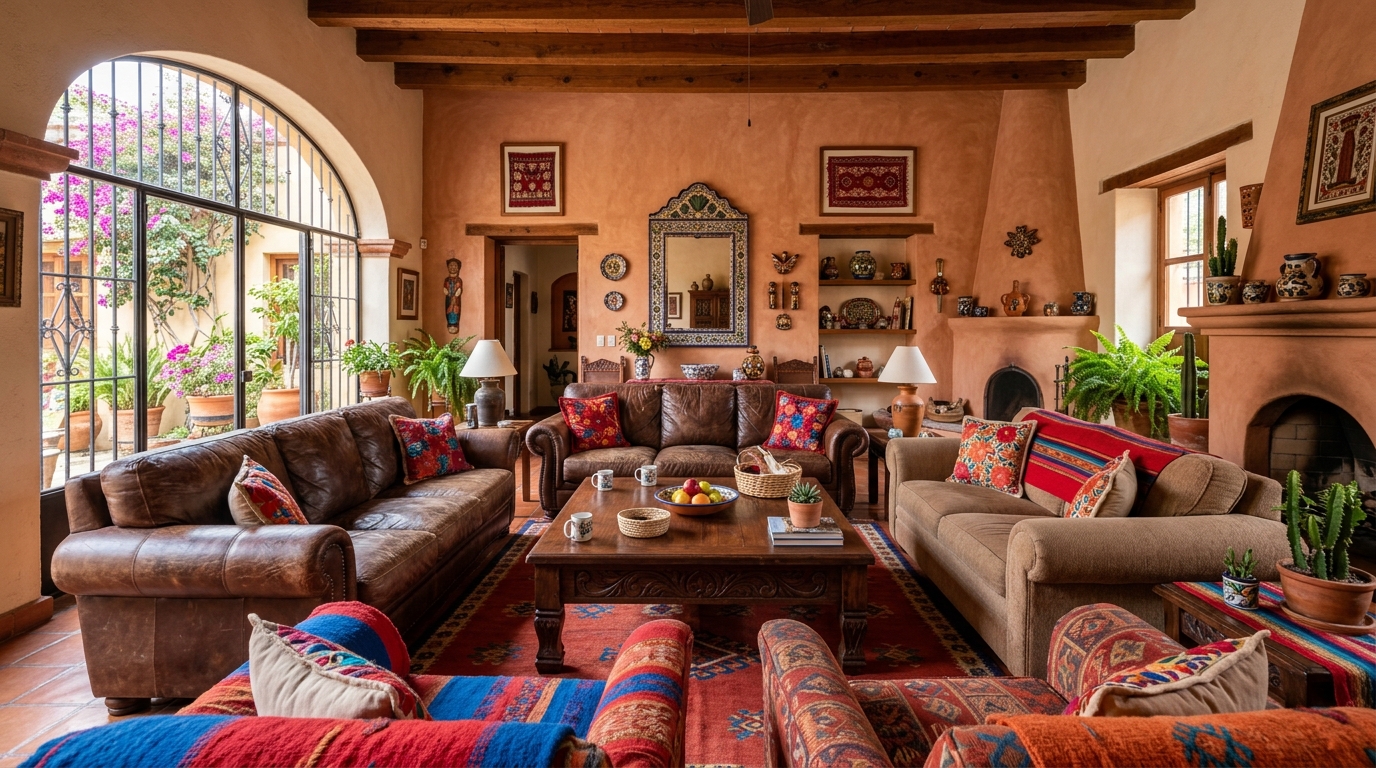
When you really start exploring 24 Mexican & Spanish Living Room Aesthetics, you notice how much emphasis is placed on creating a social, gathering-focused environment. The furniture layout should always encourage conversation and connection rather than pointing everything toward a television screen. Arrange your heavy sofas and leather chairs in a circular or U-shaped pattern around a central coffee table or the fireplace. Ensure there are plenty of small side tables nearby so guests have a place to rest their drinks. This welcoming, communal approach to space planning is a core tenet of the culture, ensuring the room feels just as good as it looks.
15. Distressed Leather Seating Options
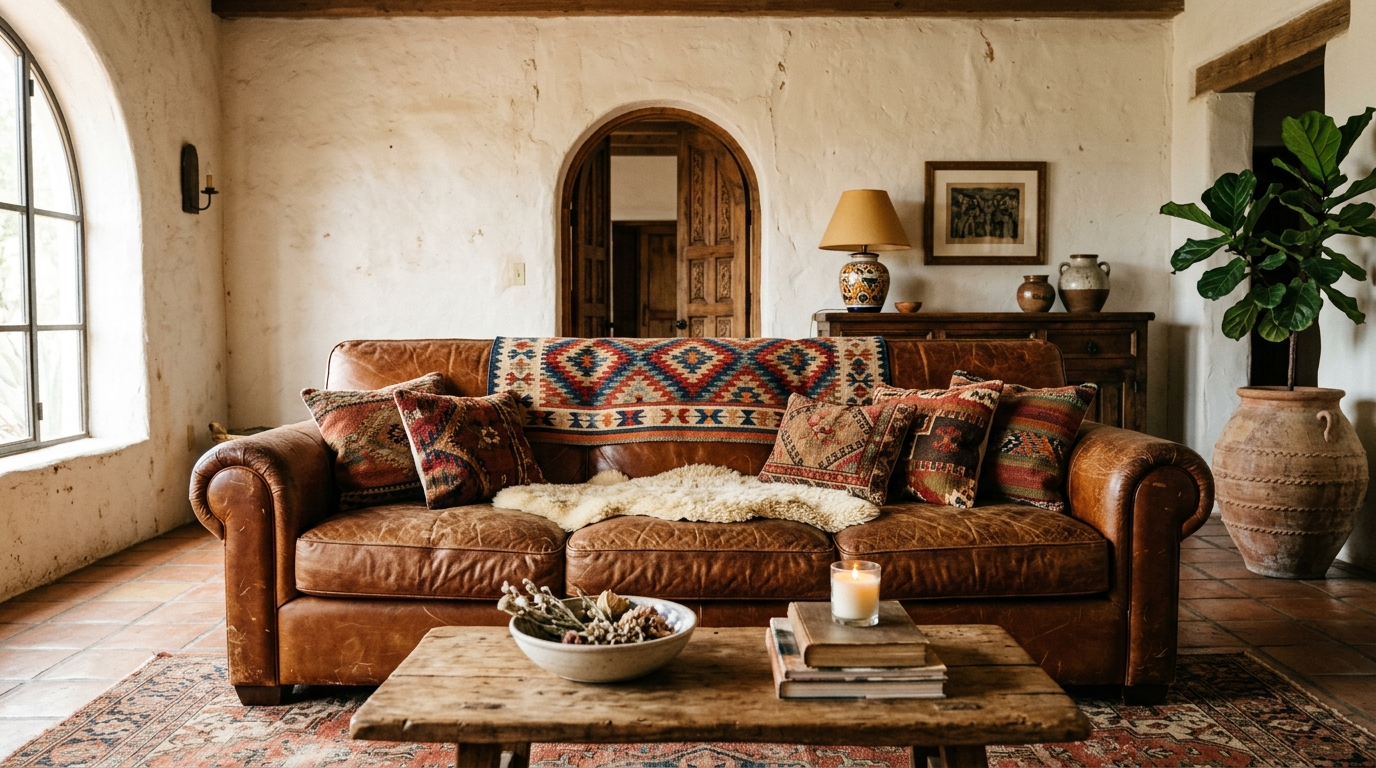
To balance the bright colors and heavy wood, distressed leather seating is an absolute necessity. A rich, buttery leather sofa in a warm cognac or dark chocolate color adds a touch of rugged luxury to the space. The leather should look lived-in and slightly weathered, completely avoiding shiny, modern finishes that feel too cold and pristine. Distressed leather only gets better with age, developing a beautiful patina that fits the historical vibe perfectly. Adding a few dining space floor coverings underneath your main leather seating arrangement can further define the area and protect your floors from heavy foot traffic.
16. Colorful Accent Throw Pillows
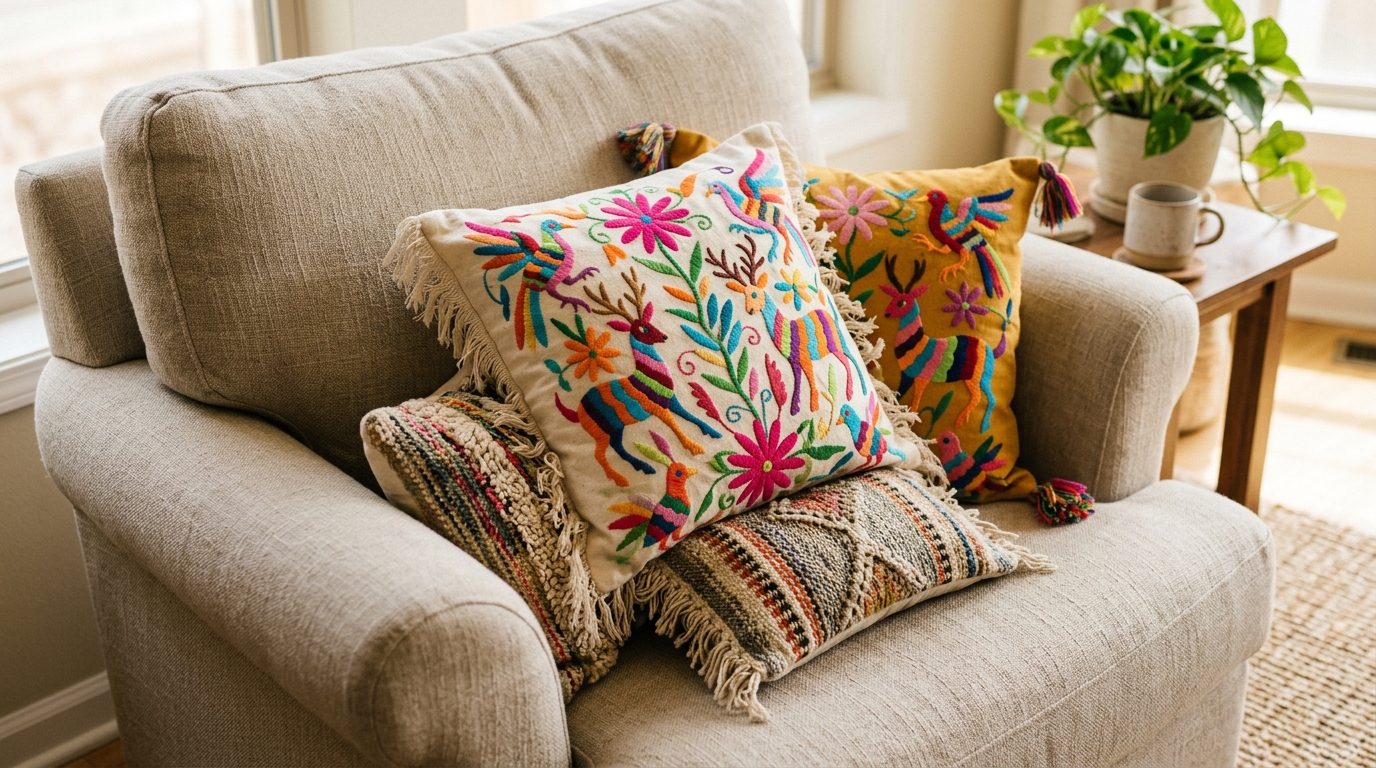
If you prefer keeping your main furniture neutral, colorful accent throw pillows are your best tool for injecting the necessary cultural flair. Look for pillows featuring traditional embroidery, vibrant Otomi animal patterns, or thick woven textures. You can mix bright pinks, deep blues, and sunny yellows together without fear of clashing, as these bold colors naturally belong together in this design style. Adding tassels or fringe to the edges of the pillows provides extra tactile interest. They are inexpensive to swap out, allowing you to easily adjust the color balance of the room depending on the season or your mood.
17. Iron Wall Sconce Lighting
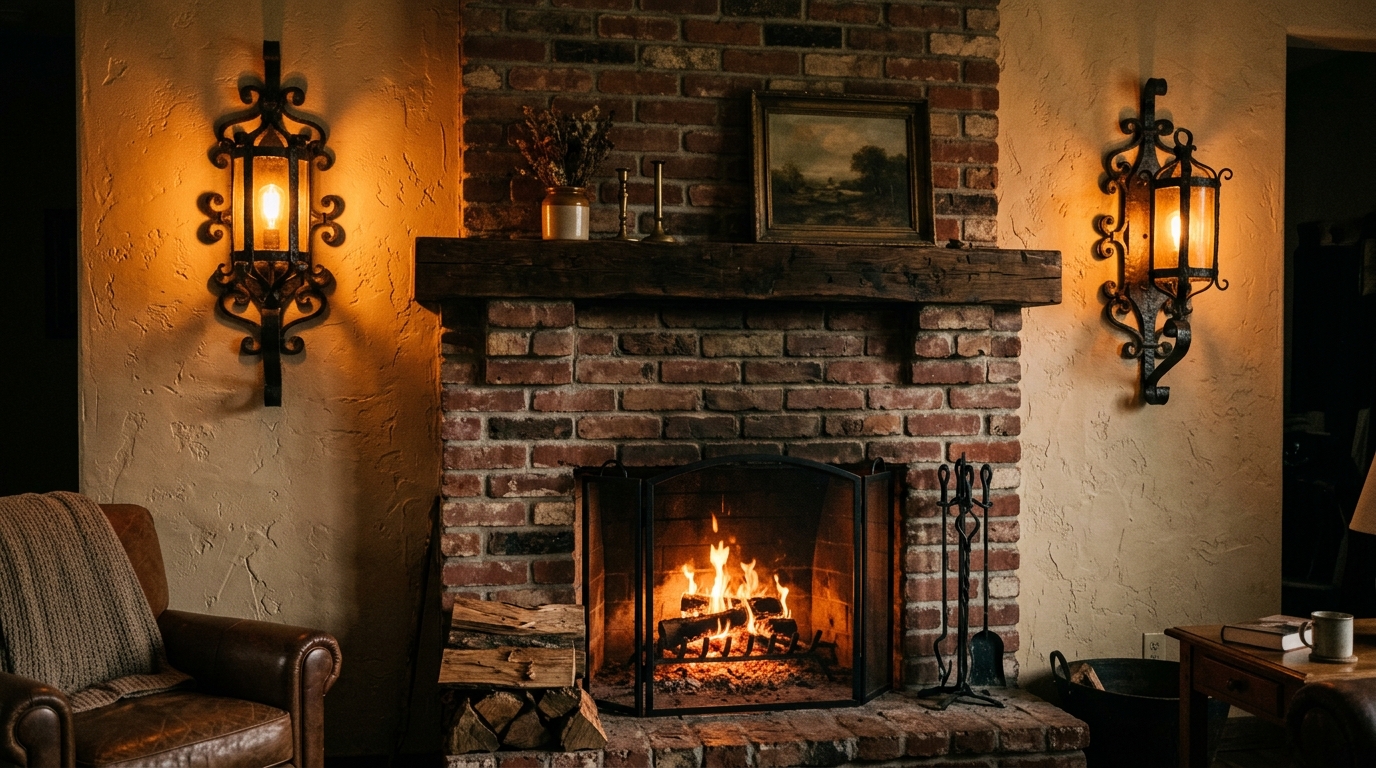
To complement your main chandelier, adding wrought iron wall sconces provides essential layered lighting. These fixtures look fantastic flanking a large fireplace, an arched doorway, or a prominent piece of art. The dark metal ties in with the ceiling fixtures and curtain rods, creating a cohesive hardware theme throughout the space. Choose sconces with seeded glass or amber-tinted shades to ensure the light they cast is warm and forgiving. This secondary lighting is crucial for creating a moody, relaxing atmosphere in the evenings, shifting the focus away from harsh overhead lights and bringing a cozy glow to the textured walls.
18. Layered Woven Jute Rugs
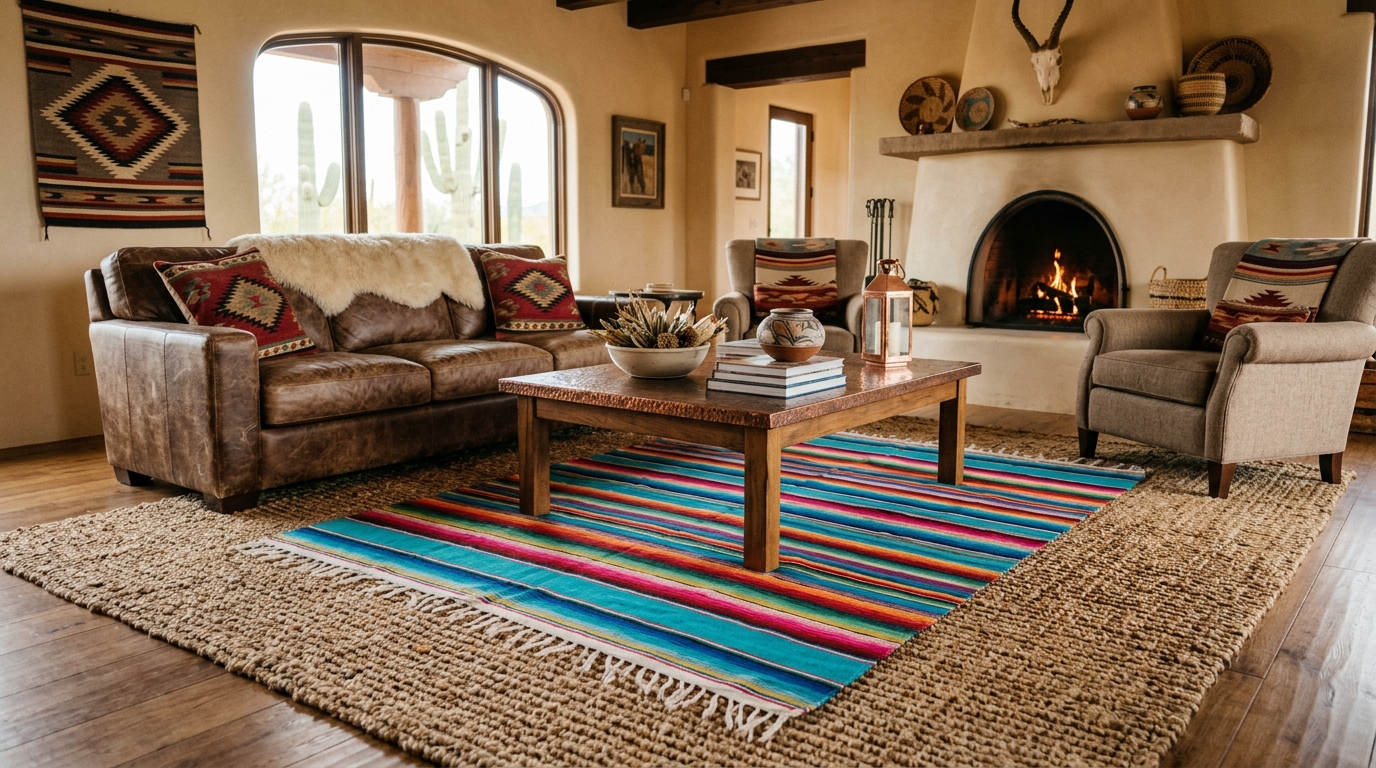
While authentic woven wool rugs are beautiful, laying down a large, natural jute or sisal rug as a base adds fantastic organic texture. The chunky, woven fibers of a jute rug reflect the natural materials found in traditional rural architecture. You can leave the jute rug bare for a more subdued look, or layer a smaller, brightly colored Serape rug on top for a massive pop of color and comfort. This layering technique helps define the seating zone and provides a comfortable surface underfoot, especially if you have hard tile floors. The natural tan color of the jute blends perfectly with the terracotta and wood tones in the room.
19. Ornate Wooden Console Tables
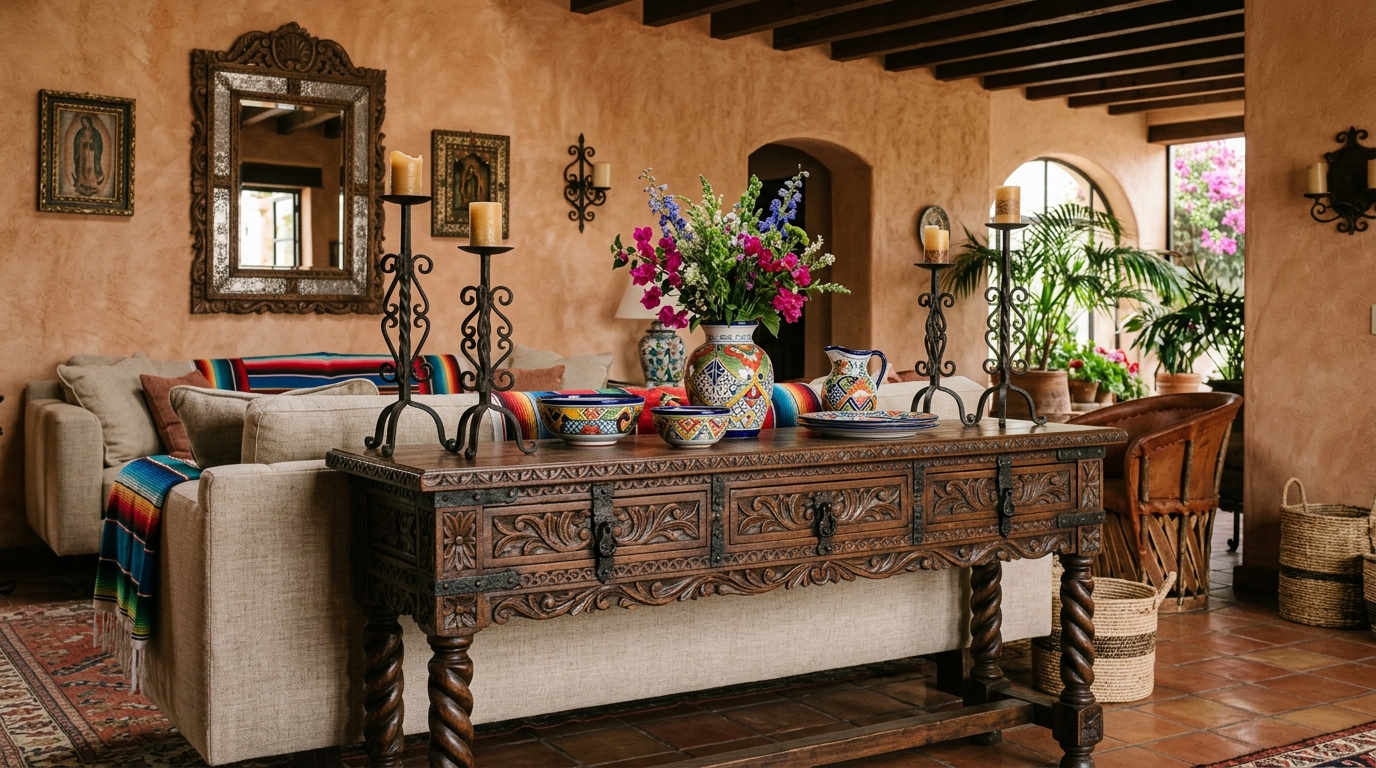
An ornate, heavily carved wooden console table pushed against a blank wall or the back of a floating sofa offers both storage and styling opportunities. These tables often feature thick, turned legs and heavy iron hardware that feels incredibly solid and historical. It serves as the perfect drop zone or display area for your ceramics, candles, and framed photos. By placing a heavy table behind the sofa, you ground the furniture arrangement and prevent the room from feeling like a sea of upholstery. Tip: Flank the ends of your console table with matching tall iron candlesticks to add height and symmetry to your decorative display.
20. Statement Copper Decorative Elements
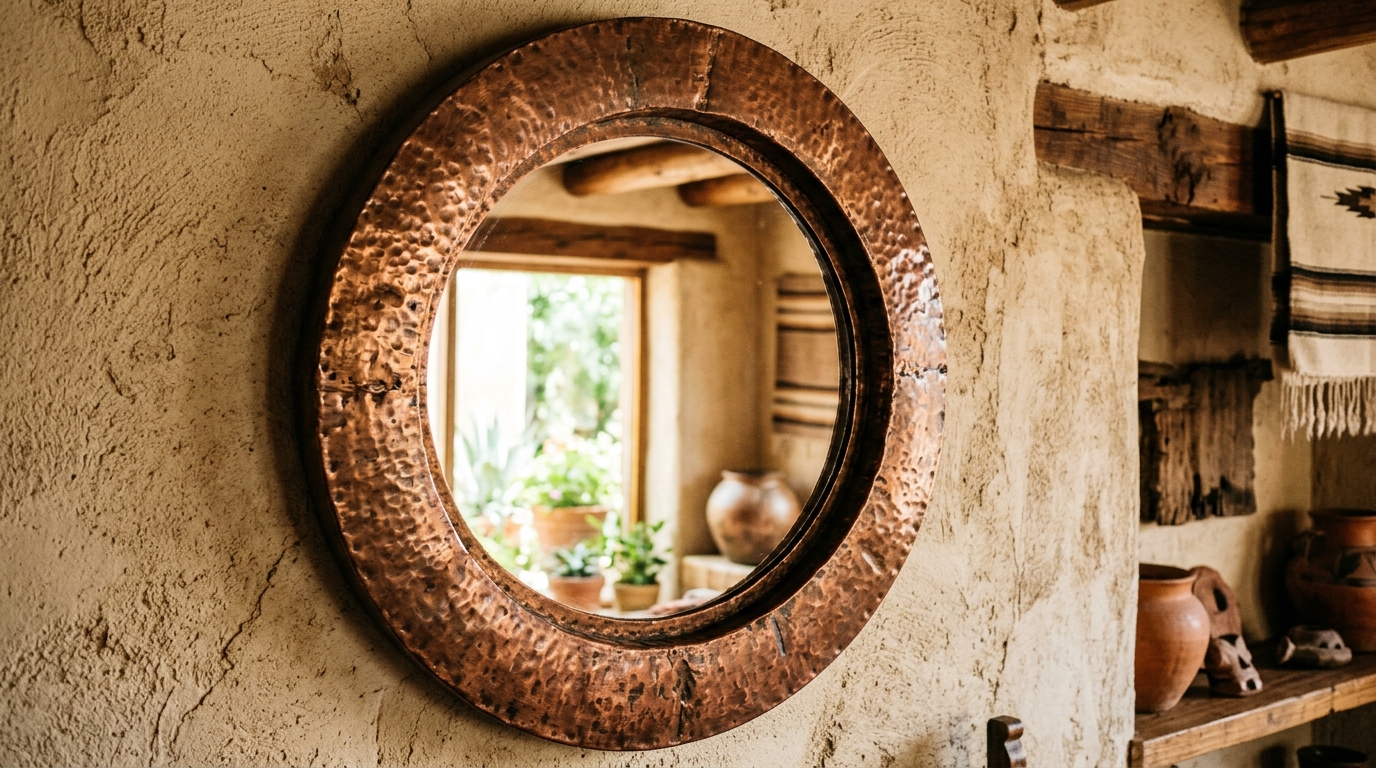
Copper is a traditional material often used in Mexican craftsmanship, and introducing it to your decor adds a beautiful, warm metallic shine. Avoid using too much modern brass or silver; instead, opt for hammered copper bowls, large copper vases, or even a copper-topped side table. The reddish-orange hue of the metal plays beautifully with terracotta colors and dark wood finishes. Over time, the copper will develop a natural patina, darkening and becoming even more interesting. If you love positioning wall mirrors to bounce light around a dark room, choosing a large mirror with a hammered copper frame is a stunning way to incorporate this material.
21. Brightly Colored Accent Walls
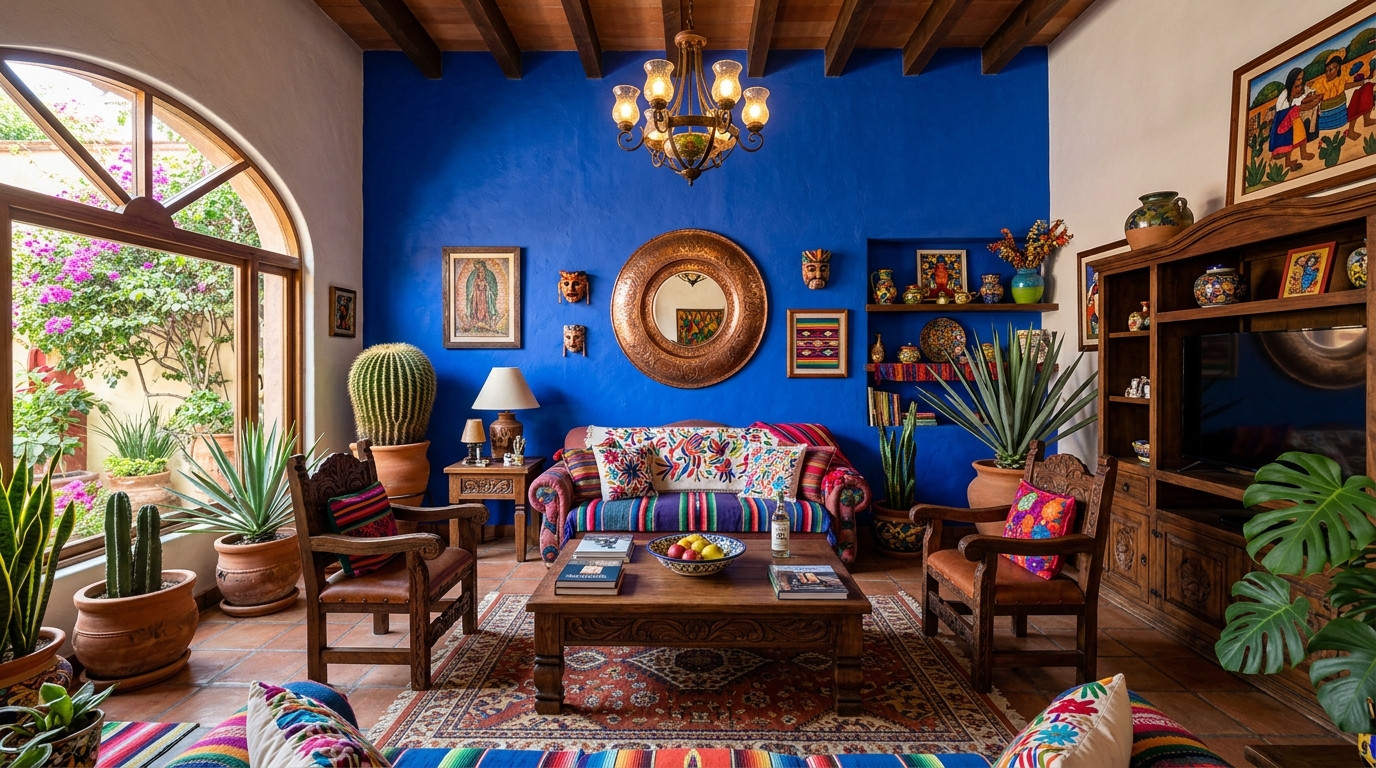
If whitewashed walls feel too plain, embracing a brightly colored accent wall is a bold, culturally accurate design choice. Renowned Mexican architects often use massive walls of saturated color – like vibrant cobalt blue, fiery orange, or deep magenta – to define a space. Choose one focal wall, perhaps the one behind your main sofa or the fireplace, and paint it a rich, unapologetic hue. This technique completely energizes the room and provides an incredible backdrop for your dark wood furniture and green indoor plants. It requires confidence, but the payoff is a space that feels passionately designed and full of life.
22. Hanging Woven Macrame Tapestries
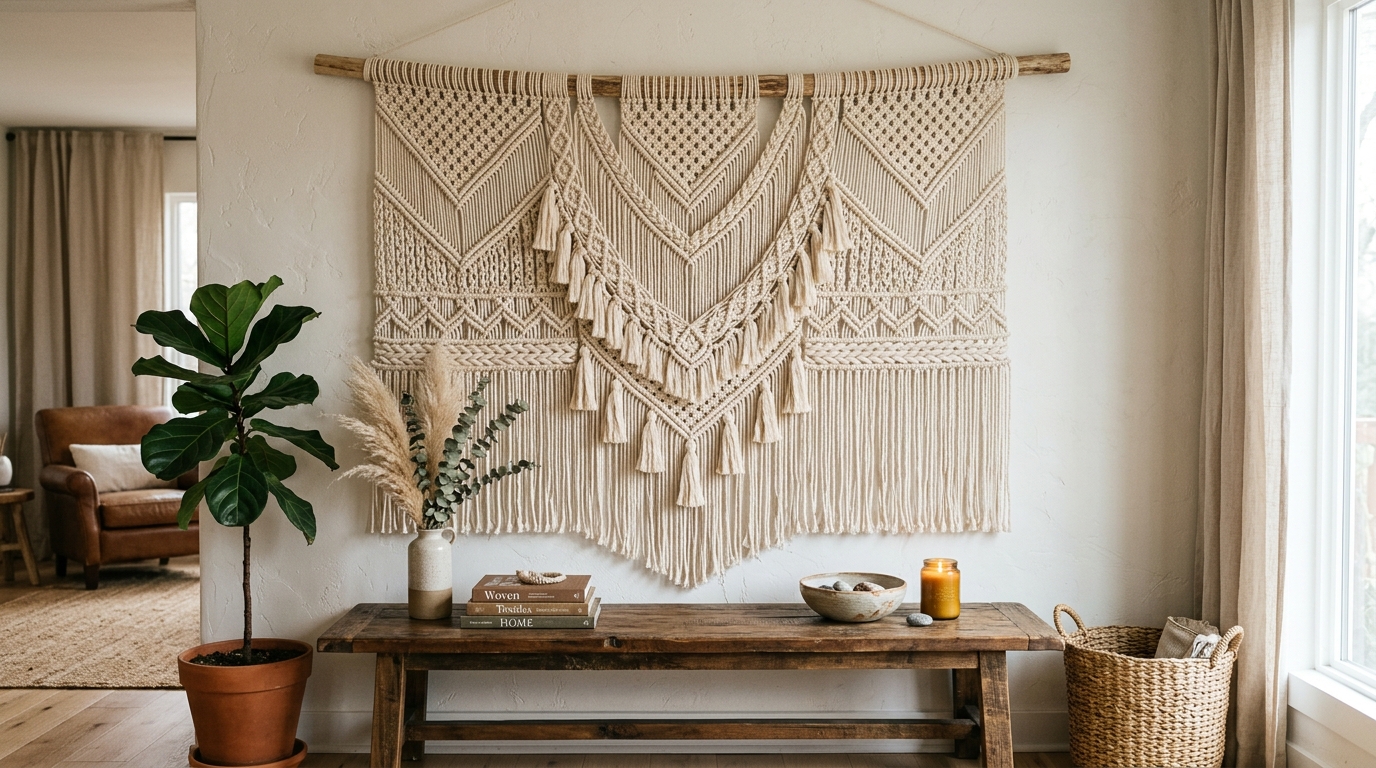
Textile art extends beyond throw blankets; hanging woven macrame or large woolen tapestries on the wall adds fantastic dimension. These pieces soften the hard, echoing surfaces of tile floors and plastered walls while acting as large-scale artwork. A heavy, intricate wall hanging can serve as the focal point above the sofa or the fireplace mantel, introducing subtle geometric patterns and natural cotton textures. If you admire the clean lines of minimalist workspace setups, choosing a simple, cream-colored macrame piece adds the necessary texture without overwhelming the room with too much color.
23. Authentic Mexican & Spanish Living Room Aesthetics
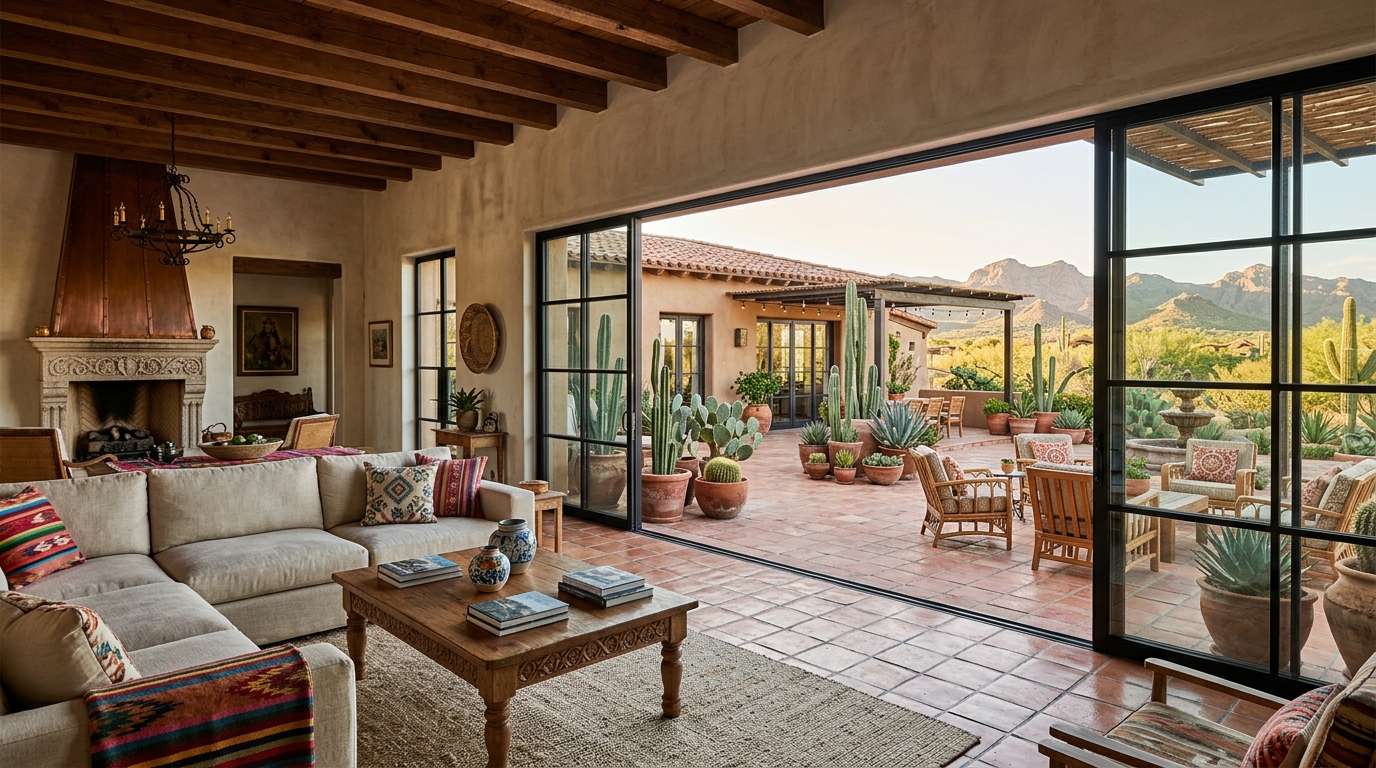
To maintain authentic Mexican & Spanish Living Room Aesthetics, you must focus on the concept of indoor-outdoor living. If your room features French doors or large sliders, treat the adjacent patio as a direct extension of the interior space. Use similar flooring materials, or carry the same terracotta color palette outside. Ensure the transition feels effortless by keeping window treatments minimal or opting for simple iron curtain rods with breezy linen panels. Whether you are browsing modern living spaces or traditional setups, blurring the lines between the inside of your home and the natural world outside makes the area feel significantly larger.
24. Cozy Adobe Fireplace Designs
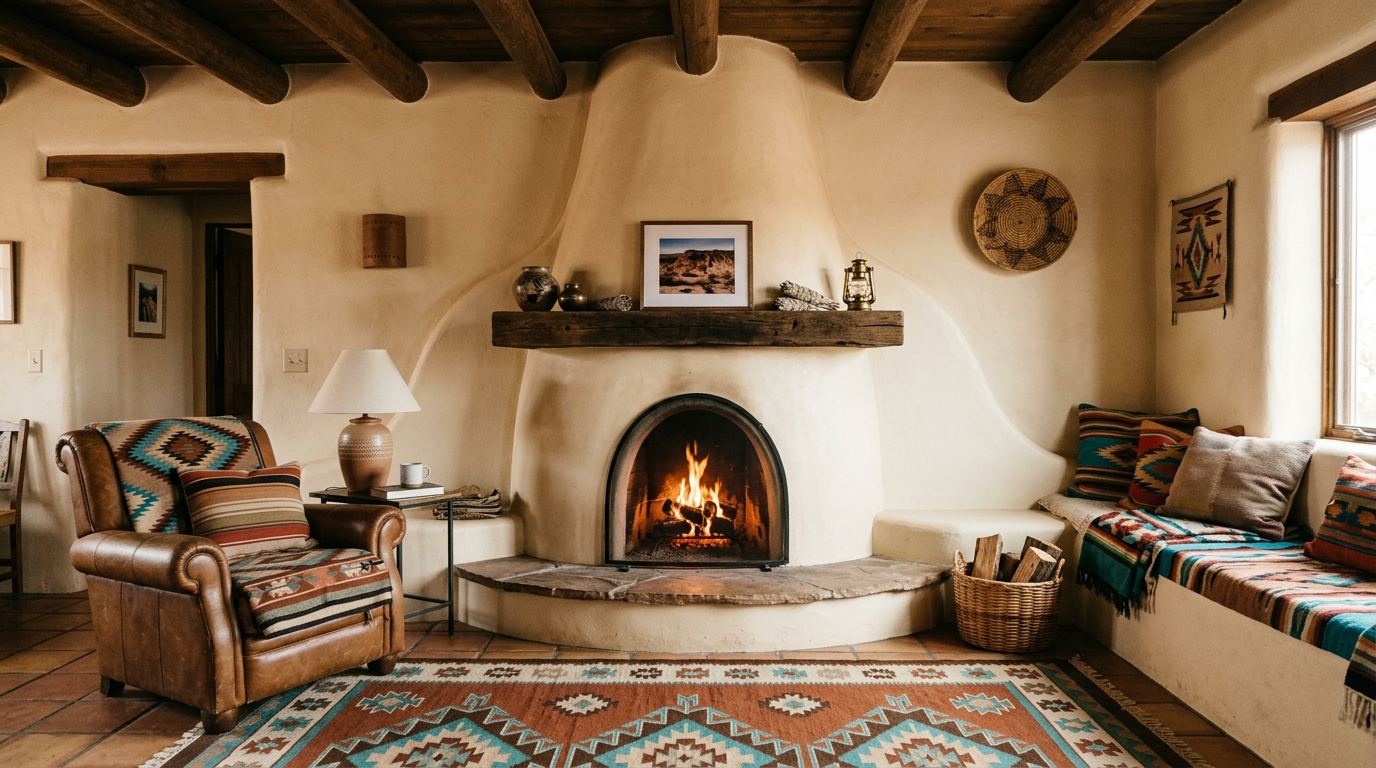
The ultimate centerpiece for this style is a traditional adobe-style fireplace. Characterized by its smooth, curved plaster finish and often featuring a rounded, hive-like shape known as a kiva, this fireplace design is entirely unique. It provides an incredible sculptural element that anchors the entire room. Even if you cannot build a true kiva, finishing your existing fireplace surround with smooth stucco and an arched firebox opening can replicate the look. Keep the mantel incredibly simple, using a single thick piece of reclaimed wood, and let the sweeping curves of the plaster do the talking. It becomes the warm, beating heart of your house.
Final Thoughts
Bringing all 24 Mexican & Spanish Living Room Aesthetics together is about celebrating warmth, texture, and cultural artistry. You do not need to rush and buy everything at once; start by warming up your color palette with terracotta and layering in a few authentic, hand-woven textiles. The goal is to build a room that feels gathered and deeply personal, reflecting a love for natural materials and rugged craftsmanship. Focus heavily on your lighting and architectural details, as wrought iron and dark wood beams set the foundation for this look. Whether you are adding a subtle arched mirror or committing to a bold Saltillo tile floor, these choices will ensure your layout feels inviting, historically rooted, and effortlessly beautiful.
Frequently Asked Questions
What are the main colors used in Spanish and Mexican design?
The foundation usually consists of warm earth tones like terracotta, rust, clay, and crisp white stucco. These earthy bases are then contrasted with vibrant pops of highly saturated colors, including cobalt blue, magenta, mustard yellow, and deep turquoise.
How can I make my living room look more Mexican?
Focus on incorporating traditional craftsmanship. Add authentic Serape or Zapotec rugs, display hand-painted Talavera tiles or pottery, and use wrought iron lighting fixtures. Introducing large indoor cacti and choosing furniture with heavy, dark wood carvings also strongly establishes the style.
Do I need to change my floors to achieve this look?
While authentic Saltillo tile is ideal, you do not absolutely have to change your floors. If you have standard hardwood or neutral carpeting, you can easily implement Mexican & Spanish Living Room Aesthetics by layering large, richly colored woven area rugs to hide the existing flooring and introduce the right textures.
What kind of lighting works best for this style?
Wrought iron fixtures are the absolute best choice. Look for heavy, dark metal chandeliers with intricate scrollwork, matching wall sconces, and candle-style bulbs. The lighting should cast a warm, moody glow rather than harsh, bright light to complement the rustic atmosphere.
If you loved these ideas and are looking for more ways to update your space, head over to our home styling blog for endless inspiration. We would love to help you build the home of your dreams!