
We’ve all been there: scrolling through architectural digests and beautifully curated social media feeds, admiring soaring ceilings, bespoke furniture, and perfectly styled rooms, only to look up and face the reality of a standard, builder-grade apartment. The frustration of possessing champagne taste on a sparkling-water budget is a universal rite of passage for renters and new homeowners alike. You want a home that feels like a sophisticated retreat, but you also need to afford groceries and rent.
The secret to high-end design, however, isn’t necessarily a high-end budget. “Expensive” is not a price tag; it’s a feeling. It is an illusion created through cohesion, scale, lighting, and intentionality. An expensive-looking space feels serene, curated, and deliberate. Whether you are dealing with strict landlord rules, a tiny footprint, or a genuinely tight budget, you can radically elevate your apartment’s aesthetic. Here are ten highly actionable, budget-friendly strategies to make your apartment feel undeniably expensive, organized from the lowest cost (and highest immediate visual impact) to modest, strategic investments.
Zero to Low Cost, High Visual Impact
1. Master the Art of Scale and Layout
The most transformative thing you can do for your apartment costs absolutely nothing: repositioning your furniture. Cheap-looking rooms often suffer from the “perimeter effect,” where all the furniture is pushed flat against the walls in a desperate attempt to make the room feel larger. Ironically, this just makes the space look hollow, like a doctor’s waiting room.
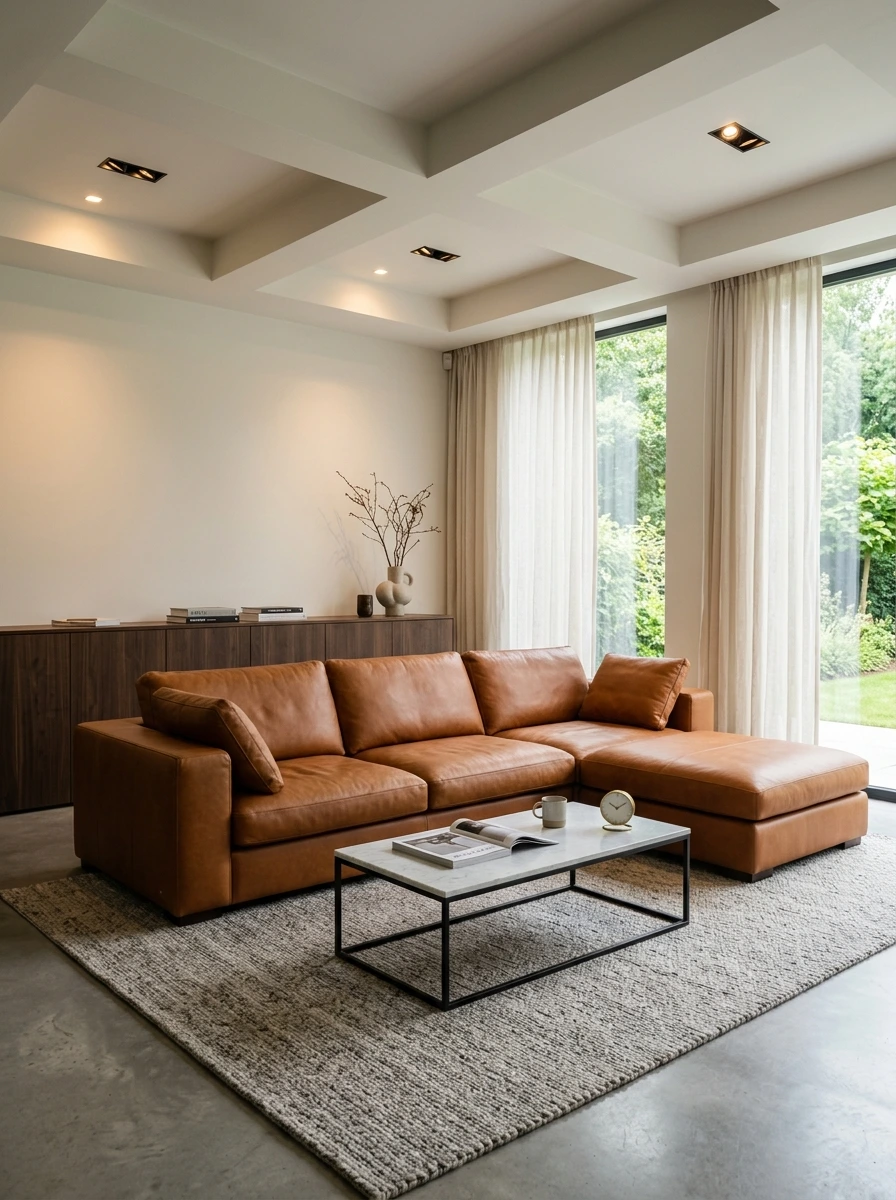
Instead, pull your sofa a few inches or even a few feet away from the wall to create a floating layout. Group furniture to encourage conversation, anchoring the arrangement with a rug. Furthermore, pay close attention to scale. A common mistake is buying tiny, apartment-sized furniture for a small apartment, which visually clutters the space with “matchbox” pieces. Having fewer, larger-scale pieces – like one substantial, comfortable sofa and a large, grounding coffee table – makes a room feel far more expansive and luxurious than a dozen small, spindly items fighting for floor space.
2. Cultivate Visual Silence Through Decluttering
High-end spaces breathe. They possess “visual silence.” When a space is packed with everyday items, mail, tangled cords, and an excess of small decorative trinkets, it feels chaotic, stressful, and cheap. Decluttering is your most powerful, cost-free design tool.
Start by ruthlessly clearing your flat surfaces. Coffee tables, kitchen counters, and dressers should only display intentional items. Hide your ugly electronic cords using cheap cable management boxes, raceways, or zip ties. When styling bookshelves, leave at least 30% of the space entirely empty. This negative space allows the eye to rest and elevates the objects you do choose to display. Group small items on trays; a random bottle of lotion, a key bowl, and a candle look messy on their own, but placed together on a small marble or brass tray, they suddenly look like a curated boutique display.
3. Harness the Power of Paint (and Trick the Eye)
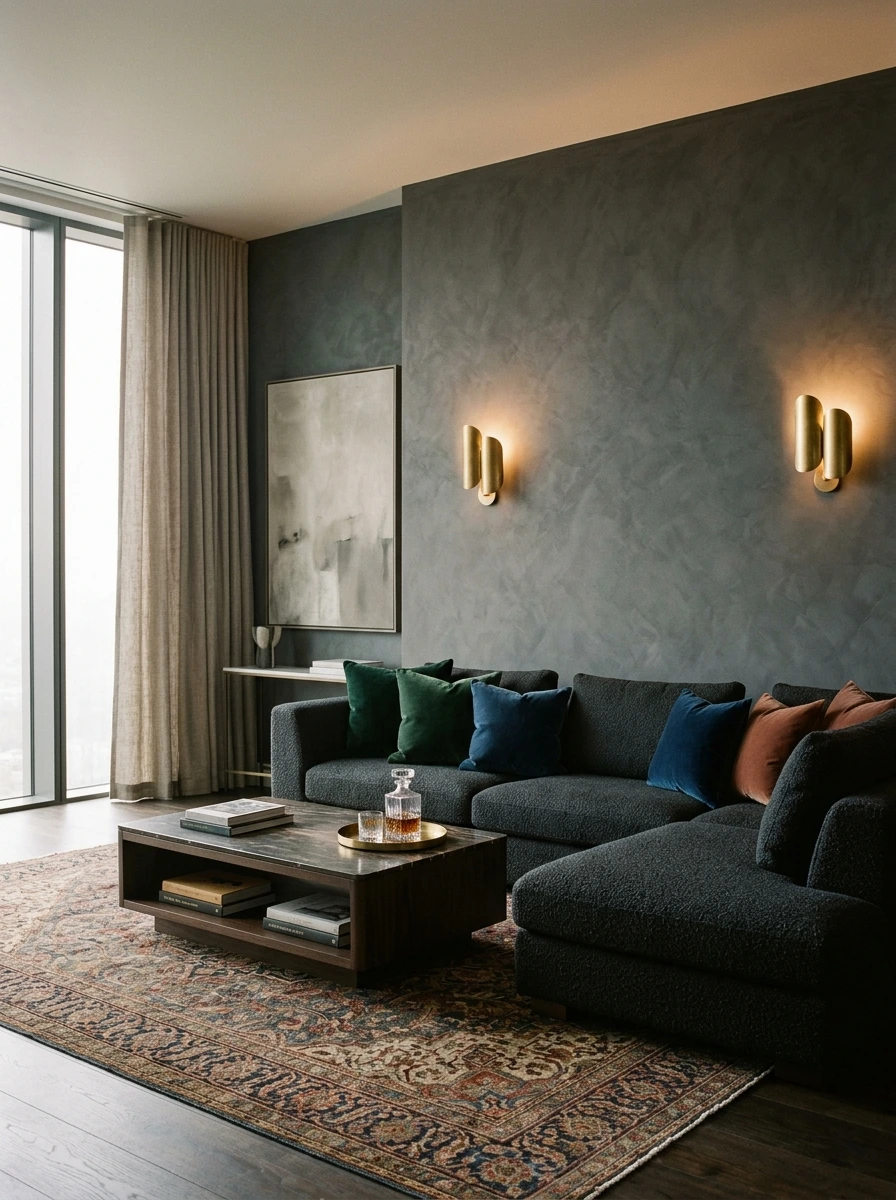
If your lease allows painting, this is where you get the most design mileage. But don’t just paint one standard accent wall – that trend can often visually chop up and date a space. Instead, try “color drenching.” This involves painting the walls, baseboards, window trim, and doors the exact same color. Doing this blurs the harsh architectural lines of a room, making the ceiling feel higher and the millwork feel custom.
If you are strictly forbidden from painting your apartment walls, paint your furniture. A cheap, beat-up wooden dresser can look like a high-end designer piece when sanded down and painted in a rich, moody hue like forest green, burgundy, or charcoal, finished with new hardware. Another zero-paint trick for renters: swap out the standard plastic light switch and outlet covers for metal ones (brass or matte black). It costs about $5 a plate but instantly removes the “builder-grade” feel.
Modest Investment, Transformative Effect
4. Layer and Upgrade Your Lighting
Lighting is the ultimate make-or-break element of interior design. Relying solely on the “big light” – the harsh, overhead flush-mount fixture that comes standard in most apartments – will make even the most expensive furniture look dreary and flat. High-end spaces always utilize layered lighting.
Aim for at least three sources of light in a living room or bedroom: ambient (overhead), task (reading lamps), and accent (picture lights or small table lamps). Swap out standard cool-toned bulbs for warm white bulbs (look for 2700K to 3000K on the box) to create a cozy, flattering glow. If you have a horrible overhead fixture, you can often easily swap it out for a chic, affordable pendant or paper lantern (just keep the original fixture in a closet to put back when you move out). If hardwiring isn’t an option, plug-in wall sconces and strategically placed floor lamps can completely alter the room’s atmosphere after dark.
5. Swap Hardware and Fixtures
Standard apartment hardware is usually chosen by landlords for cost and bulk availability, not beauty. Swapping out cabinet pulls, drawer knobs, and even bathroom faucets is incredibly easy, requires only a screwdriver or basic wrench, and yields a massive visual return.
Replace cheap, hollow nickel knobs with solid unlacquered brass, matte black, or polished nickel pulls. In the bathroom, simply changing the standard, crusty showerhead to a luxurious rainfall fixture and swapping the cabinet hardware can make a dated rental bathroom feel surprisingly akin to a spa. Always store the original hardware in a labeled Ziploc bag so you can reinstall it before moving out to safely secure your deposit.
6. Hang Floor-to-Ceiling Window Treatments
Nothing screams “temporary rental” louder than cheap plastic blinds or flimsy curtains that awkwardly cut off right below the window sill. To fake architectural height and make your apartment look custom-designed, you need to trick the eye with your window treatments.
Hang your curtain rod as high as possible ideally just an inch or two below the ceiling line and extend the rod out six to twelve inches wider than the window frame on each side. Hang curtains that gently kiss or slightly puddle on the floor. This makes the windows appear massive and the ceilings significantly taller. Skip cheap, shiny polyester. Instead, opt for affordable linen-blend curtains or heavy, room-darkening velvet. To make cheap curtains look incredibly expensive, buy metal drapery hooks and rings, and “pinch pleat” them in the back to give them a tailored, custom-made structure.
7. Prioritize Oversized Art over Cluttered Gallery Walls
While gallery walls can be beautiful, they are incredibly difficult to get right on a tight budget. A cluster of small, inexpensive frames often looks exactly like what it is: a cluttered collection of cheap frames.
Instead, pool your decor budget for one massive piece of statement art. A single, oversized canvas or framed print hung above the sofa or bed instantly acts as a focal point and gives a space gallery-like sophistication. To do this cheaply, purchase a large digital download from an artist online, have it printed at a local print shop as an “engineer print” or large poster, and put it in a large, simple IKEA or Target frame. Alternatively, buy a massive canvas from a local craft store and paint a simple, highly textured abstract piece using leftover wall paint mixed with drywall joint compound.
Smart Shopping & Finishing Touches
8. Strategic Secondhand Shopping (The Right Way)
“Shop secondhand” is incredibly common budget advice, but how you shop determines whether your apartment looks like a curated vintage haven or a chaotic thrift store. You are looking for materials that age beautifully, which modern fast-furniture simply does not do.
When scouring Facebook Marketplace, estate sales, or local thrift shops, skip the generic searches. Set your search parameters to specific, high-quality materials: “solid wood,” “burl wood,” “travertine,” “marble,” “chrome,” or “brass.” Pay strict attention to construction. Pull out dresser drawers to look for dovetail joints (interlocking wood at the corners), which is a clear sign of quality craftsmanship. An older, scratched solid wood side table can be sanded and re-stained for a luxurious finish, whereas a chipped particleboard table with peeling veneer belongs in the trash. Mix eras intentionally: a modern, clean-lined sofa pairs beautifully with a vintage, ornate wooden coffee table.
9. Lean into Texture Over Pattern
Loud, heavily patterned fabrics can easily look dated or overwhelming in a small space unless expertly mixed by a seasoned designer. The shortcut to an expensive-looking room is a tonal color palette that is incredibly rich in varied textures.
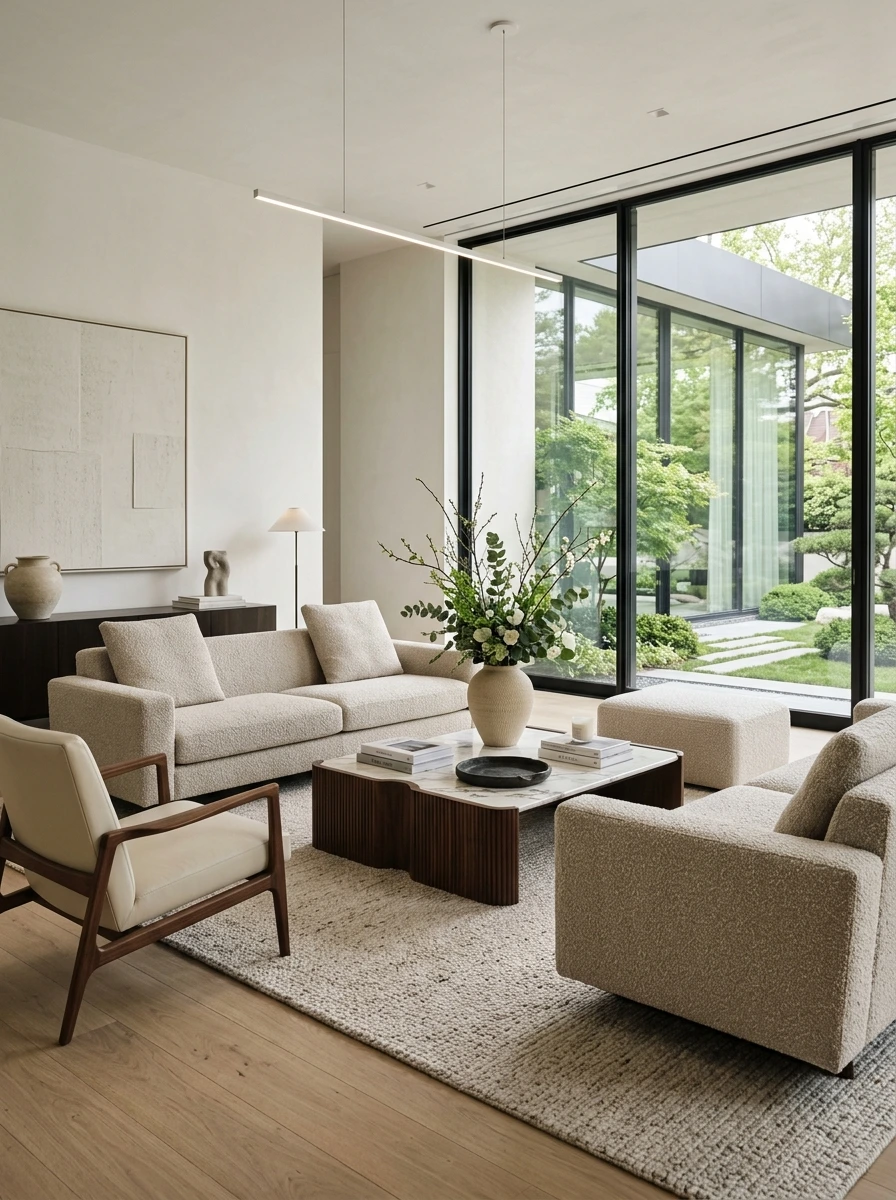
If your room is mostly neutral – creams, beiges, warm grays, or soft browns – create visual interest through touch. Pair a nubby boucle throw pillow with a smooth leather chair. Layer a chunky, oversized knit blanket over a crisp linen sofa. Put a heavily textured jute, sisal, or thick wool rug on the floor. When natural light hits these different textures, it creates deep shadows and warmth, mimicking the layered, bespoke look of high-end interior design without needing bold, risky patterns.
10. Incorporate “Living” Elements
A completely static room feels sterile, like a furniture showroom rather than an actual home. The final layer of a luxurious apartment is life.
Houseplants are the most obvious answer here. A large, structural plant like a Ficus Audrey, an Olive Tree, or a Bird of Paradise immediately draws the eye upward and adds vibrancy. If you don’t have a green thumb, skip the fake plastic plants (which usually look aggressively cheap) and forage instead. Cut large, dramatic branches from a tree outside and put them in a heavy ceramic vase on your kitchen island or dining table. Even a simple, beautifully carved wooden bowl filled with fresh lemons or artichokes adds an organic, expensive touch to a kitchen counter.
Where to Splurge vs. Where to Save
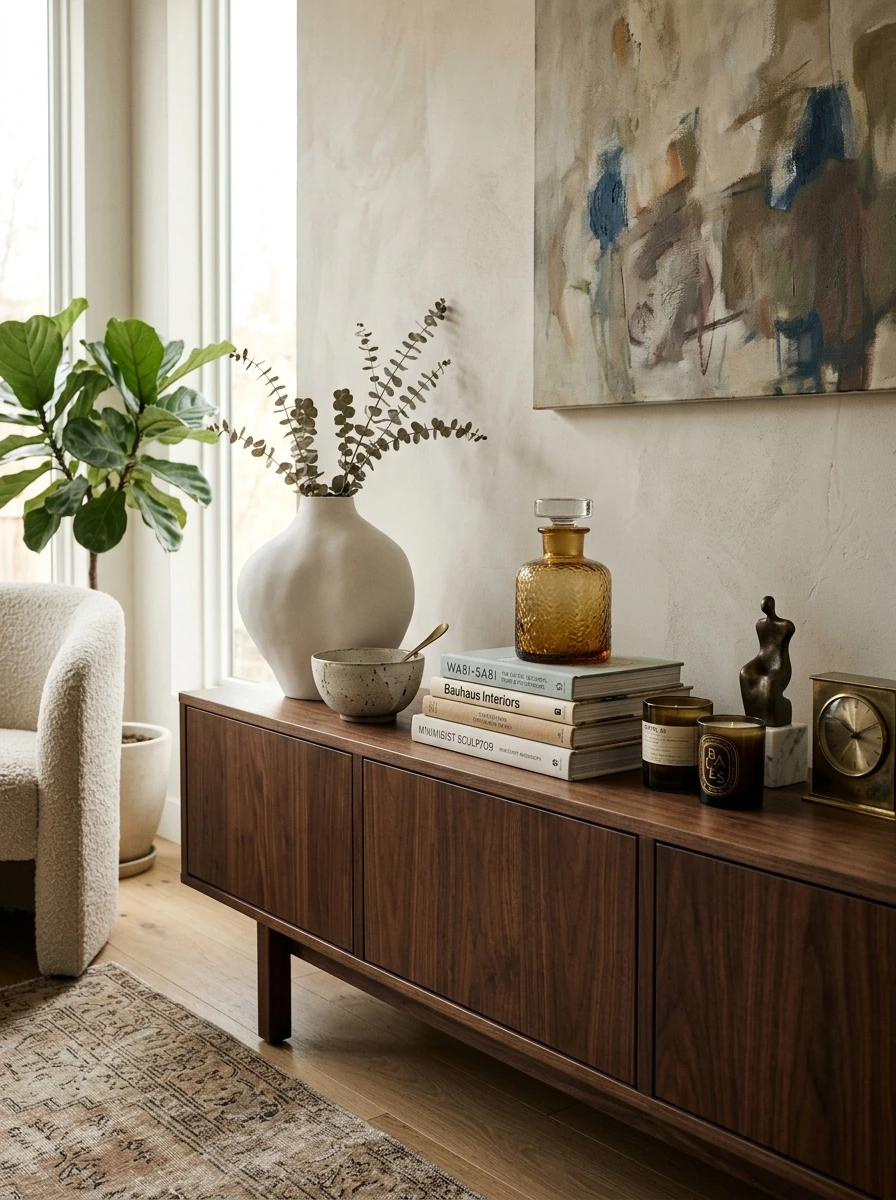
A realistic budget means allocating your funds where they matter most, rather than spreading your money thin across every item in the room.
Where to Splurge:
- The Sofa: This is the anchor of your living room and takes the most physical wear. A cheap sofa will sag, creak, and pill within a year. Invest in the best frame and fabric you can afford.
- The Area Rug: A rug that is too small makes the room look miniature. Splurge on a rug large enough for all the front legs of your major furniture pieces to sit comfortably on it.
- Statement Lighting: A beautiful, sculptural pendant light or a high-quality floor lamp acts as functional art.
Where to Save:
- Accent Tables: Side tables, consoles, and coffee tables don’t need to support human weight or provide comfort. Thrift these heavily.
- Throw Pillows: Buy cheap, high-quality feather inserts online and simply swap out affordable linen or velvet zipper covers as your style changes.
- Small Decor: Books, vases, trays, and candlestick holders can easily be sourced from thrift stores, estate sales, or budget retailers for pennies on the dollar.
Frequently Asked Questions
How do I decorate a rental without losing my deposit?
Focus entirely on temporary upgrades. Heavy-duty Command strips and hooks are perfect for hanging art and mirrors without drilling holes. High-quality peel-and-stick wallpaper or contact paper can temporarily cover ugly kitchen backsplashes or dated bathroom counters, peeling off cleanly when you leave. As mentioned, swap out hardware, light fixtures, and showerheads, but keep the originals safely boxed up to reinstall on move-out day.
What paint colors make a room look the most expensive?
While highly subjective, tonal and “muddy” palettes consistently look the most elevated. Monochromatic schemes – using varying shades of a single color like warm taupe, sage green, or deep navy – create a cohesive, wrap-around effect. Muddy colors (colors with a bit of gray, brown, or black mixed in, rather than bright, primary, saturated colors) tend to look much more sophisticated, complex, and high-end.
How do I mix furniture styles without it looking like a thrift store?
The key to mixing styles (like Mid-Century Modern with Antique Victorian) is finding a deliberate, unifying element. This could be a consistent color palette, a repeated wood tone, or a shared level of visual weight. Follow the 80/20 rule: let one distinct style dominate 80% of the room to establish the baseline, and use the second style for the remaining 20% as surprising accents. This purposeful ratio looks intentional, curated, and highly customized.